Work in the garden

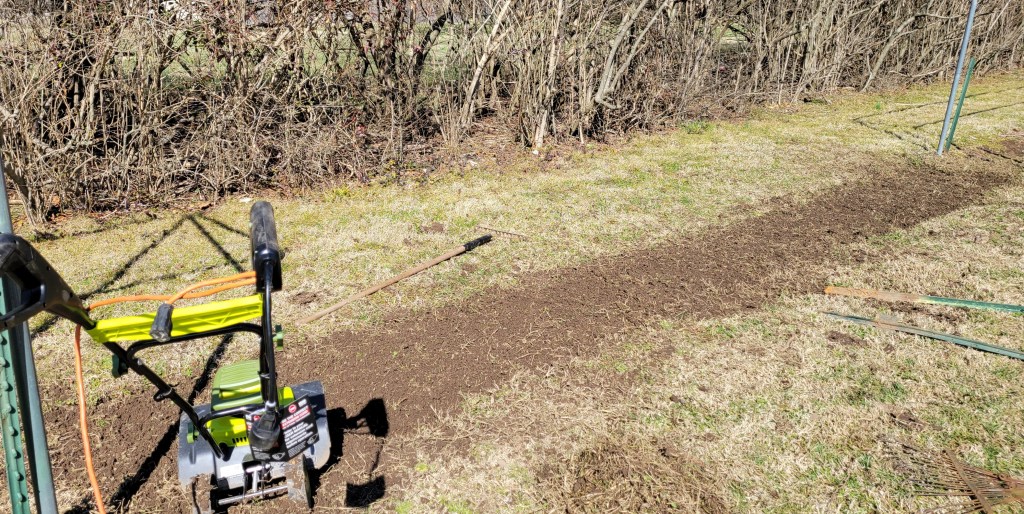
It’s annoying to me that gardening takes so much work. It’s annoying to me that Christianity takes work. Maybe I’m just lazy, but shouldn’t life and faith be, well, easier?

The earliest followers of God struggled with this same question. God gave us the answer over 4000 years ago: Nestled in the real life experiences of growing food to eat, God explains that we struggle because we are not in perfect communion with Him.

Our story, as told in the Bible, begins with a garden and fruit-bearing plants.  

And the Lord God planted a garden in Eden, … Out of the ground the Lord God made to grow every tree that is pleasant to the sight and good for food. Genesis 2:8-9

Easy. God walked in the garden and talked to Adam and Eve, and they had all they needed.

But that wasn’t good enough for them. They wanted to know more than God have permitted them to know. They wanted to satisfy their desires. They wanted to make their own rules. The result? Crops would no longer grow without effort;; man would have to work at his relationship with the ground and with God. 

And to the man He said, … cursed is the ground because of you; in toil you shall eat of it all the days of your life. Genesis 3:17

Fortunately, this is the beginning of our story, not the end. We have been promised, through Ezekiel and John, that this bountiful, toil-free garden will return when Jesus returns and man is once more in perfect communion with God.

Fruit trees of all kinds will grow on both banks of the river. Their leaves will not wither, nor will their fruit fail. Every month they will bear fruit, because the water from the sanctuary flows to them. Their fruit will serve for food and their leaves for healing. Ezekiel. 41:12

But we are not there yet.

While in this life, we have to toil in the garden. God is providing the food like He always has, but it requires some effort on our part. We must want the produce badly enough to work for it; we must want the relationship badly enough to work for it.

Because in this life, our relationship with God is broken. He presents Himself to us at every turn, but God does not force Himself on us. Until we are with Him in His kingdom, we must continue to “toil.”

And so we pray, “Thy Kingdom come.” We look forward to a time when life is not a struggle. We look forward to a future where we are in perfect communion with God. Most likely, we will “die in faith without having received the promises” like millions before us, still “desiring a better country, that is, a heavenly one. ” (Hebrews 11:16 ) And here’s the promise, the hope:

Therefore, God is not ashamed to be called their (or our) God; indeed, he has prepared a city for them. Hebrews 11:18

A city with a river running through it. Where we do not need to toil for food. Where we do not need to struggle to be in communion with God.

Then the angel showed me the river of the water of life, bright as crystal, flowing from the throne of God and of the Lamb through the middle of the city. On either side of the river is the tree of life with its twelve kinds of fruit, producing its fruit each month. Revelation 22:1-2

Hang in there, my friends. Do the work, keep the faith.

Let us hold fast to the confession of our hope without wavering, for He who has promised is faithful. Hebrews 10:23

Thanks for sharing your time with me.

Betsy

The Tithe

Tithing, like gleaning, was a harvest law established when the people of God entered the promised land.

Set apart a tithe of all the yield of your seed that is brought in yearly from the field. Deuteronomy 14:22

The annual tithe, interestingly, was to be consumed by the giver, in the presence of the Lord, at the place that God chose, “so that you may learn to fear the Lord your God always.” v.23.

Every third year you shall bring out the full tithe of your produce for that year, and store it within your towns; the Levites, because they have no allotment (of land) or inheritance with you, as well as the resident aliens, the orphans and the widows in your towns, may come and eat their fill so that the Lord your God may bless you in all the work that you undertake. Deuteronomy 14:28-29

This is the tithe that most churchgoers know. Ten percent of our earnings go to the church for support of the staff and facility, and for charitable gifts to the community and the world.

The Levites, like the foreigners, widows, and orphans, did not have land allotted to them by Joshua. Therefore, they had no means of providing food for themselves. The Levites, instead, were to dedicate themselves to the service of God, the care of the temple, and the offering of sacrifices.

To the Levites, I (God) have given every tithe in Israel for a possession in return for the service that they perform, the service in the tent of meeting. Number 18:21

How the Levites handled this influx of grain and wine, who got how much and why, is not known, but Moses instructs them to “set apart an offering from it to the Lord, a tithe of the tithe. v.26

God, through Moses, set up tithing as an obligation, not as a charitable act. More like the taxes which support our first responders, teachers and civil servants. Unlike countries with state religions, our taxes do not support our religious institutions, but we, as the people of God, are still called to support them.

Bring the full tithe into the storehouse, so that there may be food in my house, and thus put me to the test, says the Lord of hosts; see if I will not open the windows of heaven for you and pour down for you an overflowing blessing. Malachi 3:10

We live in a time of financial disclosure, salary negotiations, and 501(c)s. Churches cannot rely on income anymore than businesses can. We review how non profits and business use the money they receive; we demand tax returns from our candidates for office. Do we monitor how we spend our own resources as closely as we monitor how others spend theirs? Are we bringing the full tithe into the warehouse? Are we supporting those who are maintaining our temples and offering their service to God? Are we presenting our tithe to the Lord, at the place of His choosing, so that we remember to fear the Lord?

I also found that the portions of the Levites had not been given to them; so the Levites and the singers who had conducted the service, had gone back to their fields. So I remonstrated with the officials and said, “Why is the house of God forsaken?” Nehemiah 12:10

It was not the Levites and singers that Nehemiah considered forsaken; it was God and His house.

I am often tempted to consider my wants and needs before I consider the needs of God’s house. God reminds us to not forget the source of our wealth, the source of our resources, but to remember and honor Him with a small portion, a tithe, of all we have received.

Take care that you do not forget the Lord your God. When you have eaten your fill and have built fine houses and live in them, … and all you have is multiplied, then do not exalt yourself … Remember the Lord your God, for it is He who gives you power to get wealth. Deuteronomy 8:12,18

Who am I honoring with my gifts, my wealth, my treasure?

For where your treasure is, there your heart will be also. Matthew 6:21

Betsy

Gleaning

One of the more intriguing practices mandated by Mosaic law was gleaning.

When you reap the harvest of your land, you shall not reap to the very edges of your field, or gather the gleanings of your harvest. You shall not strip your vineyards bear, or gather the fallen grapes of your vineyard; you shall leave them for the poor and the alien. I am the Lord your God. Leviticus 19:9-10

When God’s people entered the promised land, Joshua allotted land to 11 of the twelve Israelite clans by sacred lots, based not on wealth or position or merit, but on God’s manipulation of chance. Joshua did not allot land for the foreigners, the non-Hebrews, who traveled and lived with the Israelites. And with few exceptions, women and children had no land. But without land to harvest, how would these people eat? Where would their food come from? God’s law made it very clear that these peoples were not to be allowed to go hungry just because they had no land; gleaning was God’s provision for the stranger living among the Israelites.

God’s law entitled any foreigner or landless individual to glean in anyone’s field; every land owner was to leave some of the harvest for them to glean. 

When you reap your harvest in your field and forget a sheaf in the field, you shall not go back to get it; it shall be left for the alien, the orphan and the widow, so that the Lord your God may bless you in all your undertakings. Deuteronomy 24:19

This was not charity by the landowner. The land was only “his” because God had allotted it to him; part of the responsibility of owning the land was following the gleaning laws. And the gleaners still had to work to harvest the portion set aside for them.

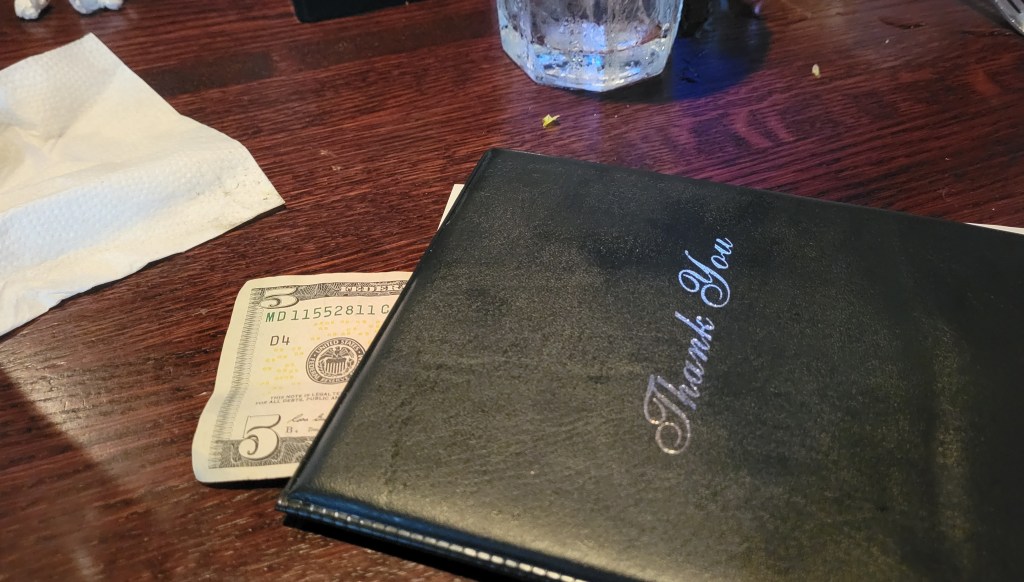
Sometimes, when I am figuring out tips or budgeting to the penny, these verses come to me. We are told to be good stewards, but also be generous with the gifts God has given us; leave a little wiggle room for those needier than me. Perhaps I should be willing to hire someone to do something I could do simply because they need the work more than I need the money?. After all, the landowner could easily harvest his land to the edges. Perhaps I just need to loosen my hold on “my possessions,” recognizing that they are all gifts from God.

And there’s no telling what may come from our willingness to follow God’s laws about sharing His gifts to us with others. Boaz was a landowner following God’s laws concerning gleaning, when he noticed Ruth, probably the most famous gleaner in the Bible.

She is the Moabite who came back with Naomi from the country of Moab. She said, “please let me glean and gather behind the reapers.” So she has came, and she has been on her feet from early this morning until now, without resting for even a moment. Ruth 2:6-7

Ruth, the foreign woman working in the field, grandmother to King David.

Gleaning may take many forms in today’s economy. Some non-profit organizations still glean the fields of commercial farms to add to food banks. Many grocery stores and restaurants donate unused food stuffs to homeless shelters. Some business intentionally hire disabled workers and ex-convicts, giving them dignity and a living wage. Many companies donate goods, services, and profits to help others.

Do I really need everything my field produces? Could there be someone who needs at least a little of it more than I do? Has God granted me land, not based on merit, but on His grace, requiring that I share the land’s produce with others? The Israelites did not consider gleaning charity. It was an obligation to God. I believe it still is.

Whoever has two coats must share with anyone who has none; and whoever has food must do likewise. Luke 3:11

Must. What must I share today?

Betsy

More than Enough

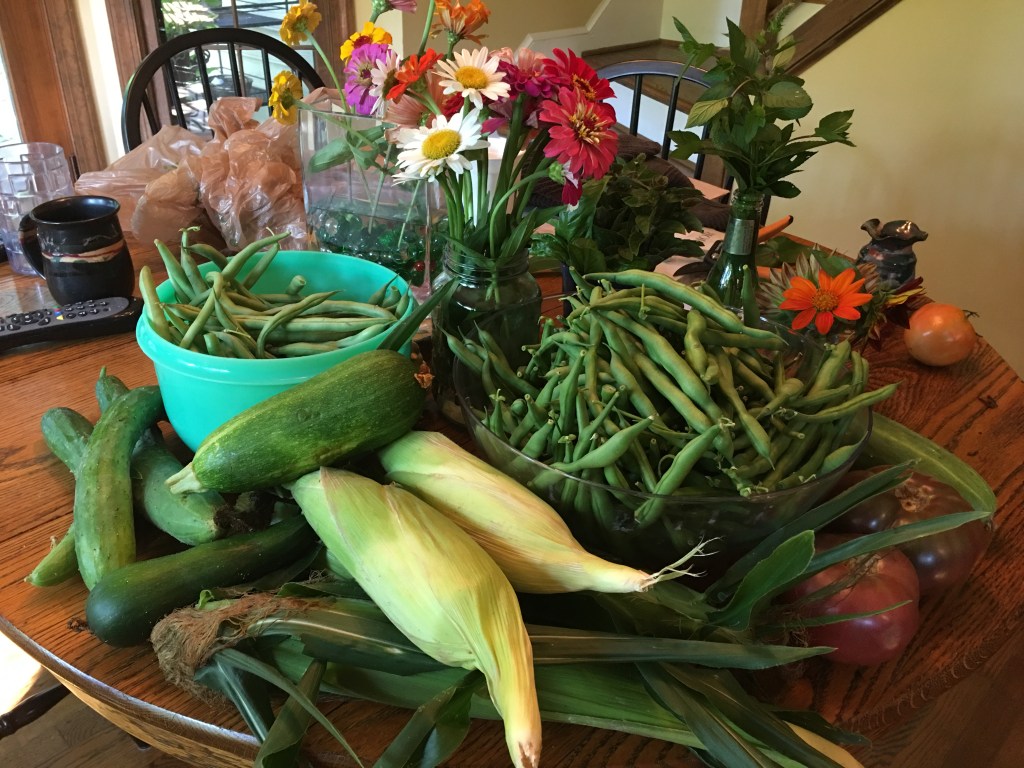
I have pulled up my garden for the year, but there seems to be more to talk about! Although I didn’t have much of a harvest this year, there have been years when the harvest was overwhelming. While harvesting the fruit may feel like the last step, it is far from it. That fruit can rot on the kitchen counter every bit as easily as it can rot on the vine. My first choice is to eat it, usually raw. My second choice is to give it away. Over the years, I have frozen a lot of homegrown veggies; my freezer is still full of sliced bell peppers in vacuum sealed bags. My children may inherit them! In the past, I have made tomato sauce, jarred cooked tomatoes and filled mason jars with pickles. If I lived in a time of scarcity or poverty or no refrigeration, preserving these products would be a vital part of gardening. As it is, I rarely used these foods and ended up throwing most of them out. Better to just give them away.

Giving the fruit away still entails some work. I need to pick out the best looking fruit and take them to people while they are fresh. I need to have a basket for carrying my produce to folks and bags for them to carry the fruit home. Not a hard task, but still a task. Do I feel so tasked with sharing other gifts God has given me? Am I being generous with my time and money? Am I using my skill set to honor Him? Am I making the effort or letting the fruit rot on the counter?

Like good stewards of the manifold grace of God, serve one another with whatever gift each of you has received. 1 Peter 4:10

I have a friend who makes bread and butter pickles every year from her harvest. She and her mom used to do that every fall, and the process connects her to her heritage. Family and friends expect this gift from her, and the pickles are a welcome addition to any gathering. Like all things homemade, they represent a gift of time and effort, more valuable than most things from Amazon.

These gifts are no small thing. God has gifted us with food and money and time and grace and faith and love. God has gifted some of us with business acumen or artistic skills. Some of us are gifted researchers or organizers or encouragers. When we share these gifts with each other, we strengthen the body of Christ, the community of believers.

Now there are a variety of gifts, but the same Spirit. To each is given the manifestation of the Spirit for the common good. I Corinthians 12:4,7

God has given you a gift. It may seem as small as a mustard seed, but what wonders God can perform with it! (Matthew 13:31) Two fish and five loaves, that’s all the boy had to contribute, but what God did with it! (John 6:9). Am I contributing what God has given me, no matter how small? Are you?

Thank you for continuing to read my thoughts on the garden and the Christian life. I hope to continue these posts for a while, although some will have little to do with gardening. I appreciate the gift of your time, and I hope God has made my words somehow meaningful to you.

For we are what He has made us, created in Christ Jesus for good works, which God prepared beforehand to be our way of life. Ephesians 2:10

Betsy