Why do we need to eat?

Preparing my garden for winter is a slow and mindless task; at least I am doing it in a slow and mindless way. Sitting in the garden, pulling up the weeds around me, I am using my muscles, but my mind wanders.

Isn’t it an amazing thing that we need food? That all living things need food?

It would be far more practical if we didn’t. How much easier our lives would be, what a greater chance of survival we would have, if we didn’t need food.

No need to endanger ourselves hunting, exhaust ourselves foraging, or expose ourselves to the elements.

But God did not create his universe to live in isolation.

We must all live in connection with each other, the plants, the animals, the humans, even the atmosphere. We all need each other to grow and survive. The plants need the air and sunshine and water to grow; they need the pollinators and seed eaters to profligate. Herbivores need the plants to sustain themselves, and carnivores need the plants to sustain the herbivores. We, and other omnivores, need all of creation to sustain us.

We cannot live without the rest of God’s world. At the very least, we need a plant to eat. We need to get off our couch, go outside, interact with the world around us, and find an edible plant.

This feels very simplistic, but too often food just comes from the grocery store, or door dash. That’s like saying babies come from the hospital. It misses the vital connection.

God created His world to need each other, forced all of nature to live in dependence on each other, made it impossible for any plant, animal, or human to live in complete isolation.

What does that tell us about God?

Ever since the creation of the world his eternal power and divine nature, invisible though they are, have been understood and seen through the things he has made. Romans 1:20.

God wants us to live in connection not just with each other, but with all of nature. God essentially forced us to live in connection with nature by creating us to need food.

As I have mentioned before, my husband Nick was a hunter. He used to say that if you wanted a species to survive and thrive, make it a food source. Then the harvesters will ensure the survival of the herd, even if for purely selfish reasons. It is when we harvest animals for non-food reasons – whale oil, fur coats, ivory, bragging rights – that their extinction becomes likely.

Because when we realize that their success as a herd helps ensure our success as humans, we take care of them.

When I realize that your success as a human being helps ensure my success as a human being, I am more inclined to take care of you.

Because we are all dependent on each other and on the world around us.

That’s kind of wonderful, and kind of annoying.

Because we’d like to think that we can manage anything that comes our way by ourselves, thank you. But we cannot even manage the most basic of needs, hunger, by ourselves. At bare minimum, we need a plant.

For me to live my life, it takes plants and animals, thousands of unknown people who supply my everyday needs, my friends and family, even you who are reading this. I need you all. I need the homeless man on the corner, the immigrant woman trapped in poverty, and the abused child. I even need the squirrels who raid my garden. God connected us all. God made us all to need each other.

Beloved, let us love one another, because love is from God; everyone who loves is born of God and knows God. Whoever does not love does not know God, for God is love. 1 John 4:7-8.

Hug a tree, thank a plant, speak kindly to a crow, and love the people God puts around you. You need them, just as I need you.

Betsy

Garlic

I am planting garlic this year. A friend I visited last summer had some in her garden, a bulb of which she pulled early for me to see. I was mesmerized. Just pull this aromatic, flavorful treat from the ground and use it in supper. I want to grow my own.

Unlike everything else in my garden, I am to plant garlic in the fall. After the worst of the heat; before the worst of the cold. You put it just barely in the ground, cover it with mulch or straw, and let it lie dormant for months. I am not to harvest it until mid or late summer.

In fact, if the garlic sprouts in the spring, I am to snip off the growth so all the nutrients can go to the bulb.

Each garlic clove will grow into a large garlic bulb. At least, that is the plan. Then, come summer, a top plant will grow. When it dies, the garlic is ready to be harvested.

I am intrigued by the garlic’s need to lie dormant in the ground. Obviously, the clove is not completely dormant in the ground, or it could lie on my kitchen table. The dark, dank blanket of nutrient rich soil is interacting with the clove. Though not visible, the clove is gathering what it needs for future growth.

Do we not have times like this in our lives? We may look dormant, but God is infusing us with His nutrient rich soil.

I have often wondered about Jesus in His twenties. When I was in my twenties, I thought I could and would change the world! Master of their domain, fearless, impervious to consequences, there is a reason the military wants 20-year-olds as soldiers. Although Jesus could and did change the world, he apparently spent His twenties as a small-town carpenter, unknown to the wider world. Dormant.

And Paul, before he wrote all those letters, wandered around in Syria. Dormant.

Then after fourteen years I went up again to Jerusalem with Barnabas. Galatians 2:1.

Fourteen years. I may have been tempted to give up my mission.

We often think about rest as something we do at the end of our work. On the seventh day, God rested. But when we wake up refreshed after a good night’s sleep, we realize rest is also something we need before we act.

Sometimes, maybe most times, we need to be at rest before we act. We need to lie dormant in God’s rich soil, letting His Word and His plan infuse our lives, preparing us to do exactly what he needs and wants us to do. This is not wasted time. God is preparing us, just as He is preparing that garlic clove for its growth next summer.

Be patient, therefore, beloved, until the coming of the Lord. The farmer waits for the precious crop from the earth, being patient with it until it receives the early and the late rains. You also must be patient. James 5:7-8.

Our culture has told us that if you are not moving forward, you are falling behind. But not all motion is progress; some is a spinning of the hamster wheel.

It is in vain that you rise up early and go late to rest, eating the bread of anxious toil; for he gives sleep to his beloved. Psalm 127: 2.

Because:

Unless the Lord builds the house, those who build it labor in vain. Unless the Lord guards the city, the guard keeps watch in vain. Psalm 127:1.

Maybe God is calling you to rest for a while, soak up His Word, let His richness permeate the fibers of your being. When there is a house to be built, or a city to be guarded, trust that He will let you know and guide you on what to do.

Maybe I need to be like this clove of garlic and lie dormant for a while. Then, when God has adequately prepared me, I can be put to His use, making an aromatic, flavorful addition to the world.

Betsy

Garden Shoes

They sit by the back door expectantly, waiting for me to slip them on. Worn out, worn in, scuffed and muddy and comfortable, these are my garden shoes. These shoes are every bit as much a part of my garden as the fencing and the bird netting.

This morning I slipped them on as I headed to the garden. The yard, covered in dew, strewn with grass clippings, muddy with yesterday’s rain, riddled with thorny plants and industrious bees, can be a messy place. Inside my shoes, my feet are dry and clean and safe.

Without these shoes, dedicated to this less than glamorous role in life, either my feet would be in peril, or my fancier shoes would be.

Their appearance in no way diminishes their importance, quite the opposite. It is their worn out, worn in, scruffy, muddy, comfortable countenance that gives them value, makes them perfect for the role of garden shoe.

But God has so arranged the body, giving the greater honor to the inferior member, that there may be no dissension within the body, but the members may have the same care for one another. 2 Corinthians 12:24-25.

Has God assigned you a less than glamorous role in life? Are you worn out, scruffy, and covered in yard debris? Do you feel like an “inferior member?” Haven’t we all felt that way at some point?

Maybe your infant has just thrown up on your one clean shirt, or your mom has wandered down the street in her pajamas looking for the dog that died three years ago. Maybe the dishes have piled up in the sink and toilet backed up in the bathroom. Maybe your boss has trashed your work and told you to start again, again. Maybe your body has failed you, leaving only wishes with no option of action.

You have a very crucial role in the kingdom of God. You are every bit as much a part of God’s garden as the ministers and the missionaries.

In a large house, there are utensils not only of gold and silver, but also of wood and clay, some for special use, some for ordinary. 2 Timothy 2:20.

And all are valuable. Could you imagine using your silver goblet to measure flour? The silver goblet may be shiny and precious and placed where all can see, but the plastic measuring cup is far more useful, more functional, more necessary, more important to daily life.

I wouldn’t wear my garden shoes to a ladies’ luncheon, but I depend on them.

And Jesus tells us that God values the less glamorous servants highly.

Whoever wants to be first must be last of all and servant of all. Mark 9:35. (Also Matthew 20:26, Luke 22:26.)

Maybe in the tables-turned, topsy-turvy Kingdom of Heaven, God will give my garden shoes the place of honor.

Maybe in the tables-turned, topsy-turvy kingdom of Heaven, God will give the parent, the caregiver, the housekeeper, the worker, and the invalid seats of honor.

So the last will be first, and the first will be last. Matthew 20:16. (Also Matthew 19:30.)

So, if you are feeling like a worn-out pair of garden shoes today, take heart. If we are following Jesus, He will give us the work He needs us to do, glamorous or not. His Spirit within us will make us “dedicated and useful to the owner of the house, ready for every good work.” (2 Timothy 2:21.)

My garden shoes wait patiently for me to slip them on. Just a little walk out to the garden, around and through it, then back inside. Job done; they rest. How happy these shoes make me, doing their little job so well. I do not see their age, their misshapen body, their dirty exterior covered in yard debris; I see their faithful, useful, service.

Well done, good and faithful servant, You have been faithful over a little; I will set you over much. Enter into the joy of your master. Matthew 25:21.

Betsy

Still Going!

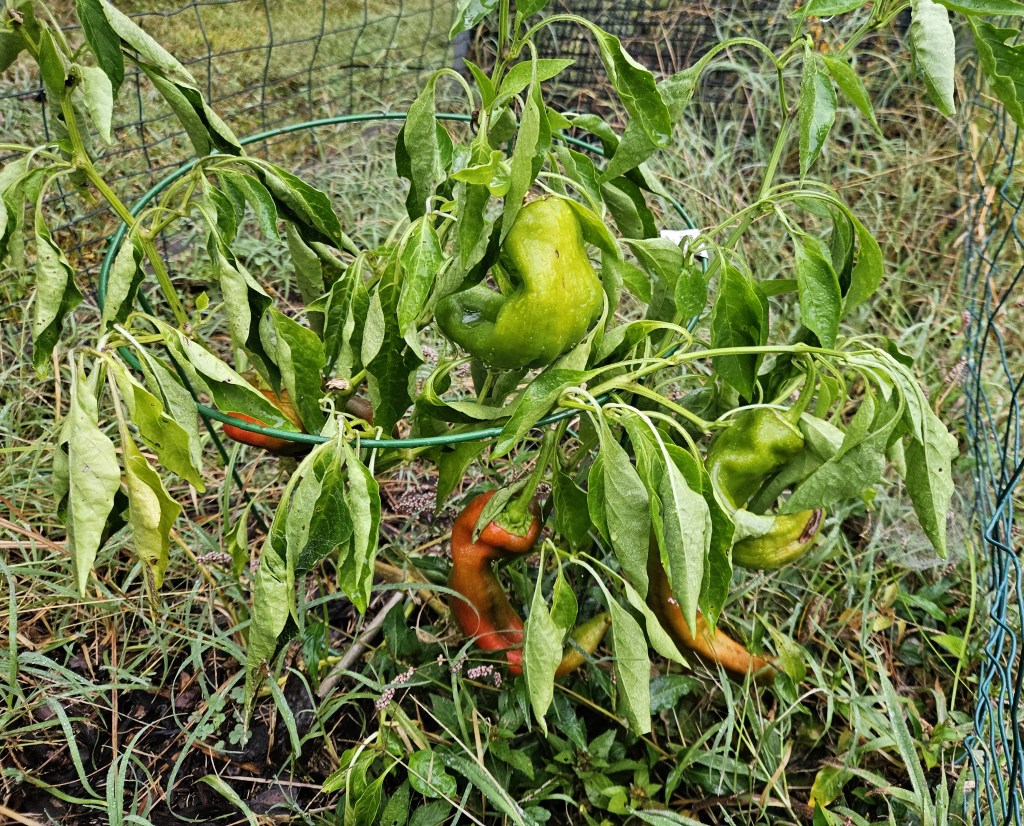
My garden is rather feral now. I am not watering it or weeding it or tending to it. Nor have I pulled up my plants and prepared for winter. My plants are in recess, a time of unstructured play. My pepper plants seem quite happy about this. Innately able to withstand hotter, drier temperatures, they seem to revel in the occasional rain and cooler nights.

I planted my peppers at the same time I planted my cucumbers and tomatoes. The cucumbers plants have been dead for many weeks. One lone tomato plant is hanging on, still producing, but all the rest are just brown stalks.

But these peppers, these proud elderly denizens of my garden still declare that God is not done yet!

Now it him who by the power at work within us is able to accomplish abundantly far more than all we can ask or imagine, to him be the glory in the church and to Jesus Christ to all generations, forever and ever. Amen. Ephesians 3:20-21.

I confess that I find it difficult to move this concept from my head to my heart. My head says God is capable of anything and everything. My heart says keep my expectations low to minimize disappointment.

Faith tells me that whatever God does in my life He does with the purpose of bringing me to a closer relationship with Him, whether it aligns with my expectations and desires or not.

And being able to have a close personal relationship with the creator of the universe is a truly amazing thing! He spoke our planet and all life on it into existence; He spoke through His prophets, His angels, and His Son; and He speaks through His Spirit today. He called life into existence, and He calls me by name. Why be disappointed if my puny plans don’t work out the way I had imagined? He is able to accomplish far more, abundantly far more.

Watching these peppers ripen in mid-October boosts my faith, and makes me yearn for longer-living plants, bushes, or trees even. Wouldn’t it be nice if my plants didn’t die and could regrow on their own next year? I love the fruit these annual plants bear, but I long for hardier, more deeply rooted vegetation. I see the allure of apple groves and pecan stands, blueberry bushes and fig plants.

To grow these plants takes a bigger commitment than my summer garden: more space, more time, more patience. Sometimes I find it difficult to wait two months for fruit; could I wait five years? If I am that impatient with my garden, am I that impatient with God?

The Lord is not slow about his promise, as some think of slowness, but it patient with you, not wanting any to perish but all to some to repentance. 2 Peter 3:9.

If I were to plant a pear tree today, there is a good chance that I would be unable to pick its fruit when it came in 5 years. Then again, the only way I can have a tree bearing pears in five years is to plant it today. Perhaps the fruit would be for someone else to harvest.

I hope that I am not a shallow plant, short-lived and easily uprooted. I hope that I have put down deep roots, found hidden streams of water, and bear eternal fruit. But my garden is full of short-lived shallow plants, which bear wonderful fruit, feeding myself, my friends, and the animals. Perhaps God’s garden needs all of them, all of us.

Perhaps, if I am rooted in God, He will provide fruit long after I expect Him to, even into late October, even after I am able to harvest it.

… If you remove the yoke from among you, the pointing of the finger, the speaking of evil, if you offer your food to the hungry and satisfy the needs of the afflicted, … the Lord will guide you continually, … and you will be like a watered garden, like a spring of water, whose waters never fail. Isaiah 58:8-11.

Betsy

A Struggle

I went out to the garden this morning to pull up the cucumber supports. It had rained in the past few days, and I thought they would pull up easily. Nope.

Dead vines were holding them to the ground. Weed roots wrapped around their bases. I could not simply pull them out of the ground. Back and forth I pushed the cages; pulled some up on the right, then on the left; wiggled it around some more; yanked on them with what little brute strength I have. Good grief!

Stick with it, Betsy, you can get them out. With a little self-encouragement, I persevered and got the cages out.

Let us lay aside every weight and the sin that clings so closely, and let us run with perseverance. Hebrews 12:1.

Sometimes, this is easier said than done, even if we are only talking about tomato cages and cucumber supports. Those support cages had spent the last 5 months living in that space. The desired cucumbers and the unwanted weeds had adapted to the cages’ presence and created a little home. Even though the weather had shifted, and the cucumbers had passed, those established connections were difficult to sever.

I have a deer head in my den, and one in my garage. I have never hunted. These were my late husband Nick’s deer. He was quite proud of them. At this point, I have adapted to them being there; they are just part of my home. Even though the weather had shifted, and he had passed, those established connections are difficult to sever.

Lay aside every weight.

Grief is a blanket that I sometimes wrap around myself. It is comforting and warm and smells deliciously of happy times. But it can be heavy on my shoulders. Next week would have been (will be?) our wedding anniversary. Putting aside the weight of grief is not something I can do quickly. I don’t even think I should do it quickly. Laying aside weights can take effort and energy and struggle, just like pulling those cucumber supports.

I didn’t pull all the tomato cages today. I still have two surviving tomato plants. Pulling up the cucumber supports took all the energy I had for the task. It was enough for today.

And it got me outside.

Between the garden and the lake, I spend a lot of my summer outside. As the garden needs less attention and lower temperatures discourage boating, I find myself indoors more. College and professional football entice me to stay on the couch. But the garden still needs my attention, at least until it sleeps for the winter.

And this is a gorgeous time of year to be outside. Cooler temperatures make work less draining. Bright blue skies lighten my mood; falling leaves fill the air with their earthy scent. Geese call out their presence as they fly in formation. Tinges of orange and yellow and red are visible on the trees.

Holy, holy, holy is the Lord of hosts, the whole earth is full of his glory. Isaiah 6:3.

I am incredibly grateful that the most arduous tasks of gardening, the establishment of the garden and its demolition, take place in the most beautiful seasons of the year, Spring and Autumn. It’s as if God is rewarding these less glorious gardening tasks with a beautiful space in which to do them. And isn’t that often the way with God? As I go about the more mundane chores in my life, God often rewards me with unexpected joys and beauties, if I will look up and see them.

So, as I am struggling with the cucumber supports, wrestling them out of the ground, freeing them from their clinging vines, the geese call for my attention. The blue sky and wispy white clouds dazzle me. The breeze blows orange and brown leaves to my feet from a nearby tree. I can almost smell the crispness in the air.

If I had been able to pull the supports easily, I may have missed this beautiful gift from God. If I had decided the task was too hard and refused to try, I may have missed this gorgeous day.

Betsy

Trying Something New

I’ve been hearing and reading a lot recently about no-till gardening. The theory is that when you till up all the weed roots, you are also disturbing the good micro ecosystems in the soil, so gardens are “healthier” if you can plant into untilled soil.  I am not sure I buy this line of thinking, but I have not stopped weeds by my previous efforts, so why not give it a try?

Usually, by this time of year I have pulled up the plants, taken down the fence, stowed the landscape timbers, and let the mowers turn my weedy garden back into yard.

This year I am trying something new – the no-till approach. The immediate benefit of this approach is that I do not need to take down my fence or remove the timbers. Much less effort! I also have the joy of cherry tomatoes and yellow tomatoes still growing on my two remaining tomato plants. I would have already pulled them up by this time last year.

The downside of this approach is looking out my window at knee high weeds filling my garden space!

I know that if I can put up with the weeds for a month or two more, these weeds will die on their own, but I am finding that difficult to do.

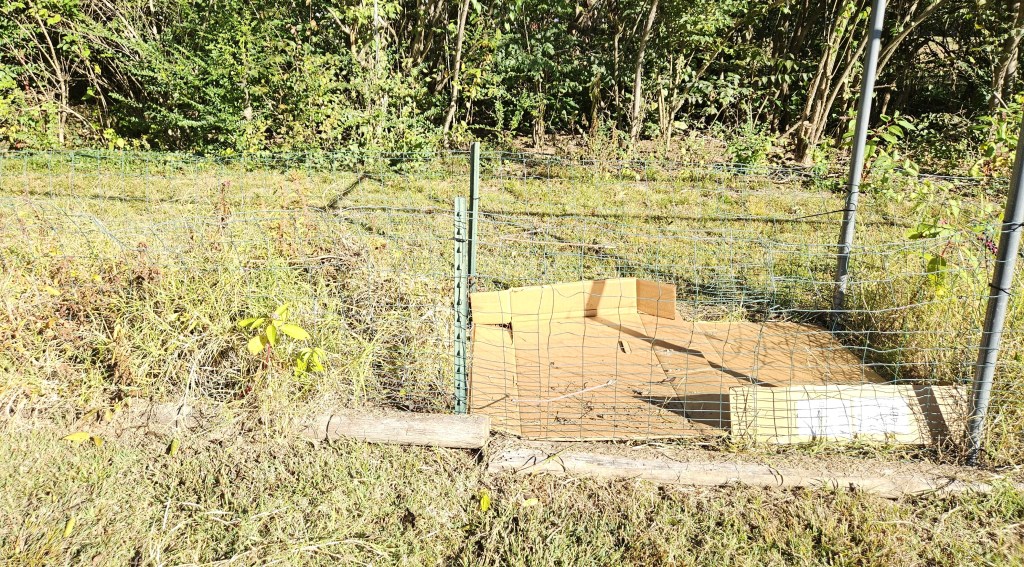
The plan is to pull the weeds and dead plants and lay them on the garden soil, cover all of it with cardboard to prevent regrowth, and weigh it down with a little mulch. Come spring, I can either remove the cardboard to plant, or cut out just as much space in the cardboard as the plants need.

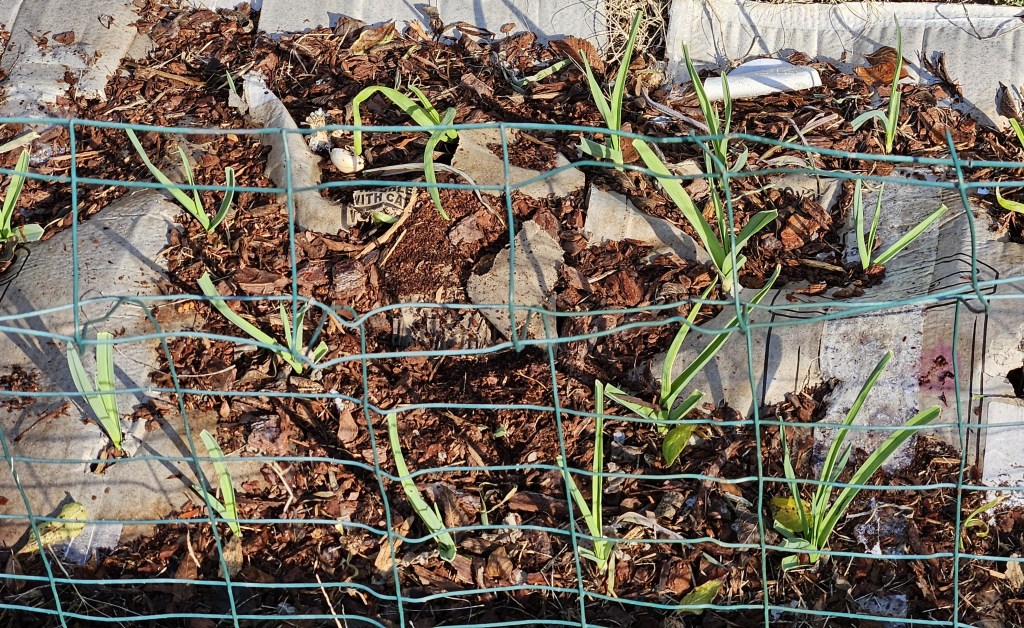
Since I am hoping to plant garlic next month, I start with the little area of the garden I have set aside for garlic. (Really, how much garlic does one person need?)

Ripping out the healthy weeds strains my arm muscles and challenges my arthritic wrist, but this is a small space. Within 20 minutes, I have pulled all the weeds and spread them across the barren soil. Under the cardboard they should return their nutrients to the earth.

We shall see. If this no-till approach doesn’t work, I can always till the following year.

God gives me the opportunity to try new things in my relationship with Him as well. Traditionally, I have chosen Lent as my “try something new” time. 7 weeks. Certainly, I can do without something, or add something, or change things up for 7 weeks. But I don’t have to wait until Lent, just like I don’t have to wait for my weeds to die. Sometimes, I want to change things up now because I am tired of looking at the weeds.

The Bible paints a beautiful picture of what our live could be, filled with God’s Spirit, bearing His fruit, overflowing with love and grace for all mankind. But when I look at my life, I often see a lot of weeds, worldly concerns, unkind thoughts.

Rejoice in the Lord always, again I say rejoice. Let your gentleness be known to everyone. The Lord is near. Do not worry about anything, but in everything by prayer and supplication with thanksgiving, let your requests be known to God. And the peace of God which surpasses all understanding will guard your hearts and minds in Jesus Christ. Philippians 4:4-7.

That is a beautiful garden! Since that really doesn’t describe me very well, I may need to try a new way to foster God’s transformation of me, and the growth of His fruit.

Maybe a new Bible study or small group; maybe more quiet time and meditative prayer; maybe a different Bible translation or a study Bible. Perhaps less time watching mindless TV? Perhaps I just need to be more conscious of my thoughts.

Finally, beloved, whatever is true, whatever is honorable, whatever is just, whatever is pure, whatever is pleasing, whatever is commendable, if there is any excellence and if there is anything worth of praise, think about these things. Philippians 4:8-9.

Such thoughts could be a marvelous weed barrier and maybe a no-till solution. Keeping my mind on such beautiful thoughts would definitely be worth trying!

Betsy

Hidden Treasure

It is late September; it’s time to harvest the carrots, whether they are ready or not.

Recent rains have softened the soil, but that is not enough to encourage the ground to let loose of its treasure. I sit amongst the flimsy fronds and claw around their base. Carefully I scrape away the dirt and mulch, and tear away the ever present crabgrass vines.

Picking ripe tomatoes and cucumbers takes much less effort!

Many of the carrot roots are tiny. Did I plant them too close together? Was I supposed to let them grow for a year? If I plant these again, I will gather more information from experienced carrot growers.

Some of my carrot roots are broken. Did this happen while I was harvesting them, or had some animal eaten them underground? If there is carrot root still in the ground, will it sprout next spring? I will leave this part of the garden unplanted next year, just in case!

I am eager to wash these carrots and have a taste. I have plans to roast them and share them with my family. But for now, I am still in wonder at the effort it took to unearth them.

Is there some gift to the world that lies buried within us, covered in the dirt of our past and the debris of our lives? Will God need to scrape away much of the comfortable space around us to expose that gift, to allow that gift to nourish others?

For the grace of God has appeared, bringing salvation to all, training us to renounce impiety and worldly passions, and in the present age to live lives that are self-controlled, upright, and godly. Titus 2:11-12.

Often, I would like God to manifest Himself in my life without having to change anything. And sometimes He does. Once those tomato plants have reached their prime, their fruit is easily available. But other times, the current situation may need to change. I may need to dig up the ground, scrape off the dirt, and remove the entanglements before I can access the gift God has given me.

Therefore, since we are surrounded by so great a cloud of witnesses, let us also lay aside every weight and the sin that clings so closely, and let us run with perseverance the race that is set before us. Hebrews 12:1.

Now the carrots are exposed, freed from the soil which held them tightly and the crabgrass entangling them. But they are not clean yet; they are not ready to be put to good use. I still need to rinse them, probably scrub them, maybe parboil them to get them ready. Is God doing this to me, for me? Is God cleansing me of all the dirt and grime in my life, so that I can be put to His good use?

How much more will the blood of Christ, who through the eternal Spirit offered himself without blemish to God, purify our conscience from dead works to worship the living God! Hebrews 9:14.

Sometimes we need to work in tandem with God, clearing away the debris, digging away the layers of dirt, until we expose the treasure buried deep. Only then can we use that good bounty to nourish others and further His kingdom.

If we confess our sins, he who is faithful and just will forgive us our sins and cleanse us from all unrighteousness. If we say we have not sinned, we make him a liar, and his word is not in us. 1 John 1:9-10.

Is there some unrighteous dirt covering the beautiful treasure God has given you? There was a lot of dirt covering the carrots and clinging tenaciously to them. Once they are clean, I will have a feast. God is preparing a feast and wants to add the treasure hidden within you to the bountiful harvest. Won’t you bring your good crop and join Him?

Betsy

Pesto

Nothing is stagnant in my garden. Everyday something is different than it was yesterday. My basil leaves are beginning to yellow. The bright green leaves are duller today; perhaps the shorter days are causing this. Even their scent seems muted. I love the flavor of basil, so I am going to harvest these leaves while they are still green and make pesto.

One of the many lessons that gardening has taught me is that procrastination is rarely a good plan. Because everyday something is different than it was yesterday. The cucumber you let grow another day yellows and sours. The broccoli you leave for tomorrow blossoms overnight. The basil left a few more days browns and withers. You must watch these plants closely, and act when the time is right.

See, now is the acceptable time; see, now is the day of salvation. 2 Corinthians 6:2b.

What fruit is God bringing forth in my life that I needs to use today? What act of care, what expression of comfort, what word of support needs to happen today?

There may be obstacles in the way. There were in my pesto making. My food processor died, full of half-made pesto. Additional leaves had been cut; I needed to make the pesto that day. My first couple of phone calls went unanswered. Then I remembered my sister who was only in town for a few days, staying at her son’s home. Almost 12 years older than me and living out of town, she and I didn’t have a history of working together on projects. Now we do!

Instead of losing my pesto and my patience struggling with unwieldy appliances, she and I made five batches of pesto and shared an enjoyable time working together. There was more than just pesto made that morning!

Two are better than one, because they have a good reward for their toil. For if they fall, one will lift up the other; but woe to one who is alone and falls and does not have another to help. Ecclesiastes 4:9-10.

I love that the organizers of the Bible titled this section “The Value of a Friend.” As a widow living alone, I could let fear and failure and falling dictate my life. But I don’t. I have friends, and family that are friends, and I am not alone. Even when my problems are comparatively minor in scope, say, a failing food processor, when I work with another, I can have a good reward for my toil.

And the comfort of friendly support and a shared experience is even more treasured than the pesto!

Sometimes the working together is more important than the project. As a task oriented individual, I feel I should tell myself this every day. My relationships are more important than my to-do list. Your needs may well be of greater importance than my plans. I have been put here in this time and place for a reason (Esther 4:15). Perhaps that reason is to be with you right now.

Do nothing from selfish ambition or conceit, but in humility regard others as better than yourselves. Let each of you look not to your own interests, but to the interest of others. Philippians 2:3-4.

I am grateful that my sister was available to help me make pesto before the leaves wilted. I am grateful that someone invented pesto to preserve that wonderful basil taste long after the plants rested. I am grateful that I will get to reap the benefits of my basil in the future, because I acted, with help, at the right time.

Even as much as I will enjoy this pesto in the future, I think the story of how my sister rescued me that morning will last longer. Isn’t that the way with God? What we accomplish may last a while; what He accomplishes lasts much longer, maybe forever.

Do what needs to be done today, but stay open to God including others in your tasks. His plans for you are far more rewarding than your plans for yourself. You may find yourself making memories as well as pesto!

Betsy

Sharing

The bird netting is down. For me, that declares the end of my tomato season. There are still green tomatoes on the vine, but I am sharing them with the wildlife that calls my backyard home. My last harvested tomato is ripening on my table. Soon it will be a delicious sandwich, my last until next summer.

I struggle a little with not picking every possible tomato from my garden. It feels wasteful somehow. There is a part of me that feels I should gather as much as I can and leave nothing to “waste.” There is another part of me that senses this is greed and a result of scarcity fears. And is it really “waste” to let the animals have some tomatoes? Didn’t God grow plants for them as well?

Interestingly, it is not the squirrels who are eating my tomatoes. Even without the ruby kisses hiding the plants (I have uprooted them), even with the netting down, the squirrels are staying out of the garden. Even I can smell the pungent marigolds over the fragrant tomatoes.

I suspect a deer, even though I haven’t seen one and I live a block off a major road. That my tomatoes could be feeding a deer brings me great joy. Nick was a very successful hunter; deer have fed my family for years. It only seems fitting that I should return the favor, repay the gift in some small way.

When God through Moses established a covenant community agreement with his people, He made sharing the last of the crop law.

When you reap the harvest of your land, you shall not reap to the very edges of your field, or gather the gleanings of your harvest. You shall not strip your vineyards bear, or gather the fallen grapes of your vineyard; you shall leave them for the poor and the alien. I am the Lord your God. Leviticus 19:9-10.

I don’t really have any poor or alien peoples in my back yard, nor do I have a big enough garden to invite them in. But I do have wildlife. Birds and bunnies, foxes, coyotes, squirrels and chipmunks, and, apparently, deer. I can share God’s gifts with them.

Can I expand this act of sharing to other areas of my life? Can I live with my hands more open?

Certainly Jesus lived that way. He was not concerned over matching linens or marble countertops. He was not concerned about gathering up as much as He could while He could. When the disciples gave him 5 loaves, He shared it with 5000 people. (Matt, 14, Mark 6, Luke 9, and John 6.) He shared His time and His life generously with all people. He instructed us to give to everyone who asks (Matt. 5), not to worry about food and clothing (Matt. 6), and to lay up our treasures in heaven not on earth. (Matt.6).

Jesus call us to practice gleaning, sharing on a universal scale.

What would it look like if we didn’t feel the need to hoard things for our own use? Could I actually share all the clothes I don’t wear with someone who might need them? Could some of the food in my pantry go to Second Harvest? (Great name, by the way!). Could the gleanings from my investment account change a needy person’s life?

Amazing things can happen when we follow God’s directives to share what He has given us.

Boaz was a landowner simply following God’s gleaning laws, when he noticed Ruth, probably the most famous gleaner in the Bible.

She is the Moabite who came back with Naomi from the country of Moab. She said, “please let me glean and gather behind the reapers.” So she has came, and she has been on her feet from early this morning until now, without resting for even a moment. Ruth 2:6-7

Ruth, the foreign woman working in the field, great-grandmother to King David.

Open your hand today. Share what God has given you. And watch our amazing God at work.

Betsy

Trapped

I went to pull down the bird netting this morning, and there was a bird trapped inside the netting. Frantic at my presence, she flew to the netting to try to get out.

Since I was taking down the netting anyway, I just went about my business getting it down. Surely she would notice the open sides as the netting was pulled away.

But she didn’t. As I opened up foot after foot of freedom, she flew a few feet in front of me, madly beating at the netting. As I rounded the garden space, she clung to the netting until she was at the end, trapped in the mesh. The entire garden was open. If she had not clung to the netting, she could have been free much earlier.

The bird netting is collected and balled together at the ends. When she reached the end, she became trapped, entangled, unable to free herself. Calmly and softly, and against her loud protests, I cut the mesh away from her. Finally the netting was away from her wings, and she flew free.

Christ has set us free. Stand firm, therefore, and do not submit again to a yoke of slavery. Galatians 5:1.

Do we do the same? Trapped inside a net of bad behaviors, do we cling to what we know, frantic to escape, but unable to see the freedom available to us? Do we seek to escape through the very means by which we were trapped? How many windows must God open for us before we stop banging on the closed door?

I remember a Ziggy cartoon that read: Every time I get depressed about being overweight, I drown my sorrows in a cup of hot chocolate and a box of chocolate chip cookies.

What entanglements am I clinging to instead of trusting in Jesus? Am I looking to Him or trying to save myself? Do I, like the bird, miss the available path to freedom?

The entire garden was open, but this poor bird was trapped in the netting bunched in one spot. My presence with the scissors drew vehement protests, but eventually I cut away the entanglements and set her free.

Has not God done the same for me? Such a life of freedom and joy await, if I can just look away from netting and fly free. When sin has ensnared me, have I complained as God cut away the trap? What great lengths God has gone to in order to free me!

For God so loved the world that he gave his only Son, so that everyone who believes in him may not perish but may have eternal life. John 3:16.

What joy I felt when the bird finally flew away. The netting was there to protect the tomatoes; I didn’t want a bird entangled and injured by it. My heart was moved as she struggled in vain to free herself. I gave her more and more opportunities to escape, but she wouldn’t take them.  If my selfish heart can care so much for this bird’s plight, how much more must God’s heart ache for us? How He must rejoice when we finally let Him save us!

Just so, I tell you, there will be more joy in heaven over one sinner who repents than over ninety-nine righteous persons who need no repentance. Luke 15:7.

Once the bird flew free, she had her friends and the entire neighborhood at her disposal. Unencumbered by the netting, her options seemed limitless. I would like to think that she would tell her friends that I was a loving human, but I am content that she is free.

What is trapping you today? What is trapping me? God wants to set us free. He does not want to see us die in our sins. He has created a beautiful world for us with seemingly limitless options. Will you let Him set you free?

So if the Son makes you free, you will be free indeed. John 8:36.

Betsy