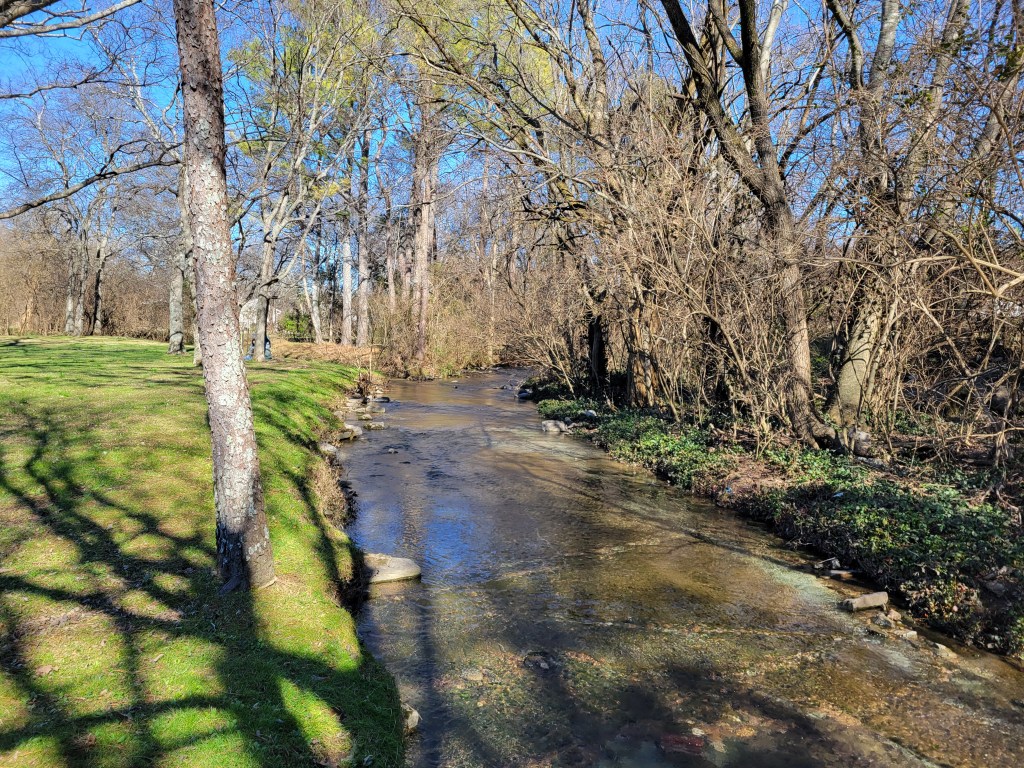
I fell in love with this lot the moment I first saw it. Two little creeks join in the back yard and flow beside the house. The sun glitters off the water; the rocks create little rapids of gurgling joy. Herons stalk the creek; ducks and fox build their nests beside it. My kids spent hours splashing through the water, collecting rocks and searching for frogs and crawfish. It is tranquil and transporting 99 percent of the time.
Once or twice a year, the rain comes in too fast for the ground to absorb. The gurgling creek becomes a roaring river and overflows its banks into my garage. Everything in the garage is elevated a few feet of the ground. When there’s a flood warning, I pick stuff off the floor and put it on the tables and shelves. I move the car to the street. An inch or two seeps under the garage doors and quickly recedes. Sometimes I pressure wash the garage; sometimes I just leave it dirty – it is a garage!
About every ten years, we get a big flood. The house is surrounded by water; there’s three feet in the garage. It’s dramatic. I lose duct work and the water heater. The water gets in the outside refrigerator and the buckets on the lower shelves. Equipment that is too heavy to raise above a foot or two gets damaged. The clean-up is more intense.
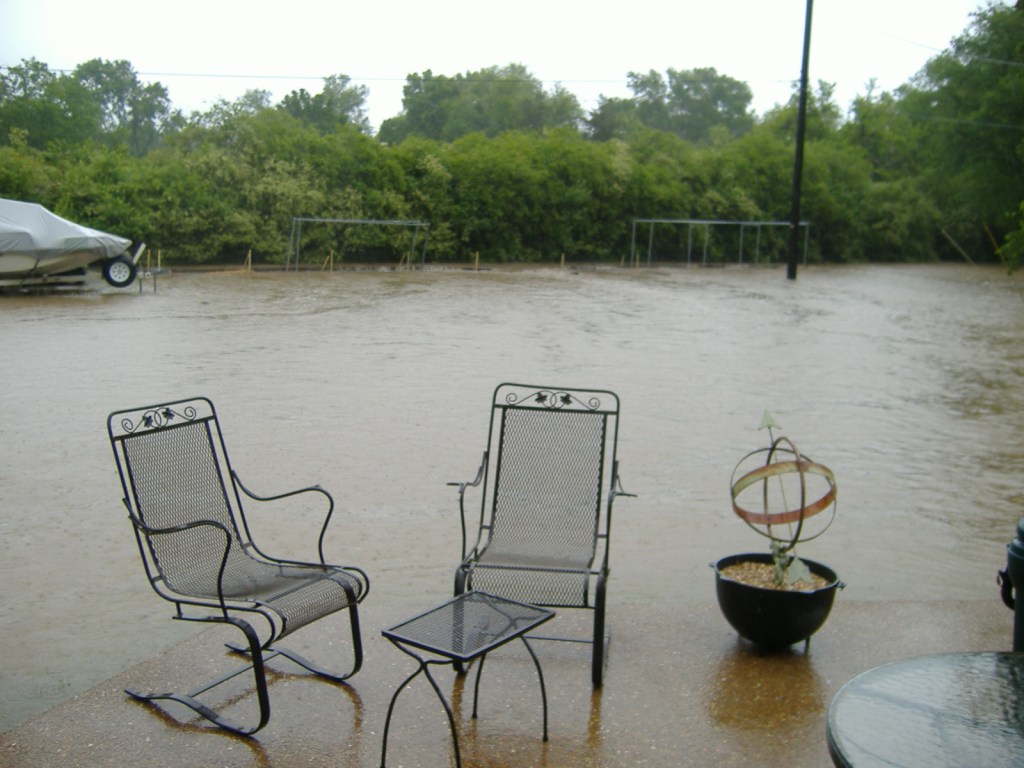
But the water has never gotten in the house. We’ve never had structural damage, and before Nick passed away, he and I together could handle the clean up. Nick was very mechanical and could repair whatever needed repairing.
We had a big flood in 2021. There was plenty of warning, but for some reason I didn’t heed it. I didn’t move the car and lost it to the water. I couldn’t fix the things Nick could fix. The clean up seemed daunting, and I called in family, friends and neighbors to help.
And then the creeks went back to their charming selves.
People ask me how I can live in a flood plain; why would I chose to live there? I love living here. Sure there’s a risk, and periodically some extra effort is required, but can’t that be said for a lot of places to live? The wonder of the creeks 99 percent of the time outweigh the risk of damage 1 percent of the time. It’s why people live on mountainsides and beaches and forests, and perhaps in urban areas as well. The benefits outweigh the risks.
And let’s face it, there is risk in living. In an NCIS episode, Abby takes up residence in the elevator because statistics show that fewer people die in an elevator than anywhere else. Of course, she can’t do her job or live her life, but she’s safe. Ridiculous, yes, but aren’t we all guilty of that to some extent?
I have to go now – there’s a heron wading in the creek, and the sun sparkling on the water is too magical to miss.
 The Victory Garden