Connected and Important

I inhale still morning air, damp with the overnight rain. Even the birds are quiet this morning, sleeping in, observing the sabbath. Or maybe it’s just too early. The cloud cover keeps the sun hidden and the cooler temperatures urge us to nestle in our beds.

The smell of summer has passed. No tart tomato leaves or scents of wild onions or grass clippings. The air is damp and dying. Leaves gather and decay along the driveway. Soon the shorten hours of sunlight will bring out the vibrant oranges, reds, and yellows of the trees, but this morning there is only stillness, as if the world waits in anticipation, in preparation.

Sometimes I am brought to my knees by the amazing complexity of the world around me. Distant worlds that rotate while suspended in the air by unseen forces. Bumblebees and butterflies go about their daily tasks and thereby ensure the survival of thousands of plant species. Trees stretch unground, toss their seeds into the wind, and provide homes and nourishment for all kinds of animals.

What a gift to be part of this dynamic, interconnected, and diverse community! What a blessing to stand in my yard and sense how God makes us all dependent on each other, on all His creation. I am every bit as much a part of His endless creation as the blades of grass, the trees, and the bumblebees. And the animals that live all around me – birds, and possums, and squirrels, and mice, and ants, and worms, and gnats. As well as the hundreds of different plants that grow at my feet, in the hedgerow, along the creek, in the creek. The world, the world in which He put us, is an amazing place.

Make a joyful noise to the Lord, all the earth. Worship the Lord with gladness; come into his presence with signing. Know that the Lord is God. It is he who made us, and we are his; we are his people, and the sheep of his pasture. Psalm 100:1-3.

One of the things that science has discovered is that even the tiniest, most insignificant creatures in nature are vital to the health of the planet. The worms, the microbes, the fungi, the bees. Even the scary, bad ones. If you haven’t seen the story about the reintroduction of wolves to Yellowstone, watch it here now. Wolves changed the ecosystem, the landscape, and the biodiversity of Yellowstone.

Each of us, every person, every animal, every insect and bird, every plant, has a role in God’s earth. We are not merely tamers of it or custodians of it or savers of it. We are part of it. The eye cannot say to the foot, “I have no need of you.” (I Corinthians 12:21)

I’m not making a political statement. I am just awed by how God made us all interconnected and interdependent. God is an all-powerful creator who made galaxies and volcanic mountains. God also designed delicate flower petals, created intricate designs in snowflakes and spider webs, and developed complex DNA stands and molecular structures. He is concerned with all the little things that work together to create the big picture.

I dare say that He is concerned with how you spend your day today, with how I spend my day.

We are a part of his creation, a small but significant part. We can acknowledge that or pretend that our lives don’t matter, any more than the life of a bumblebee or a wolf matters, or the leaves on a tree matter. They do. They have a purpose. You have a purpose. I have a purpose. We are all important in the intricate, beautiful, and awe-inspiring thing called life on this earth.

Enter his gates with thanksgiving, and his courts with praise. Give thanks to him, bless his name. For the Lord is good; his steadfast love endures forever, and his faithfulness is to all generations. Psalm 100:4-5.

Love in Christ, Betsy

Rain

Into every life a little rain must fall. Save for a rainy day. As if rain were a bad thing.

My brother-in-law and I planned to spend this weekend pressure washing and resealing the lake house deck. The pressure washing took place on a sunny, warm day, but the resealing was postponed – rain was in the forecast.

Rain often interferes with our plans. It snarls traffic and forces us to adapt to its presence. But as a gardener, I know that rain is essential. Water is essential – for life, for growth, for bearing fruit.

My creek has been dry for weeks, the grass has turned brown, and leaves drop brittle and cracked. We needed this rain.

When I was younger, major weather events were often referred to as “Acts of God.” Hurricanes, earthquakes, tornados, flooding – all “Acts of God.” Now we refer to them, and a host of other variations from the norm, as “extreme weather conditions.” As if God were not a factor, did not create the world, did not establish weather patterns and variations in it.

Our weather derives from an amazing and complex balance of factors, including solar flares from millions of miles away, the churning magma at the center of our planet, gravitational pulls, and variations in the atmospheres beyond our reach. These forces interact with a myriad of factors within our reach – water and trees and ecological diversity, as well as man-made factors – to lead our forecasters to predict rainy or sunny days.

Sometimes weather events happen that we don’t remember having happened before. They have. Our lives are short compared with the earth’s. In 1811 and 1812, major earthquakes along the Mississippi River caused it to flow backward and create Reelfoot lake. 1815 was dubbed “The year without a summer” after a volcanic eruption in Indonesia caused the coldest summer on record in Europe. If we had had a twenty-four-hour international news cycle at the time, this decade would have had us in a panic.

Then he said to them, “Nation will rise against nation, and kingdom against kingdom; there will be great earthquakes, and in various places famines and plagues, and there will ne dreadful portents and great signs from heaven.” Luke 21:10-11.

Are these ‘Acts of God?’ Somehow, these cataclysmic events have not destroyed the earth or its inhabitants. Perhaps they have worked to stabilize the planet and create an even better environment for those of us who live here. Perhaps from a distance, from God’s perspective, earthquakes and volcanos and rainfall and drought are threads in a weaving that yields beauty and strength and durability.

I stand beside my little creek and listen to the faint gurgle as the water flows over the rocks. The breeze cools my cheeks, and leaves flutter to the ground beside me. Such a simple little creek flowing through what once was farmland on its way to the Harpeth River, to the Mississippi, to the ocean. Alive now with the recent rain. Sunlight filters through the trees and bounces back to me in the water. I sense the hand of God in this place, in this moment. Because a little rain fell.

Yet he has not left himself without a witness in doing good – giving you rains from heaven and fruitful seasons, and filling you with food and your hearts with joy. Acts 14:17.

Perhaps even a gentle rainfall is an act of God. Perhaps it is a result of the complex system that only a wise and wonderful God could create.

We can see rain as a bad thing; we can see a lot of things as “bad” when they aren’t what we want in the moment. But my little creek is reminding me that rain can be a very good thing, a gift, a witness to God’s good and loving nature.

Let it pour.

Love in Christ, Betsy

Pesto

The cool morning air chills my cheeks. Fall seems to have finally arrived. Soon it will be time to plant the garlic and cover the ground for the winter. Today, the basil calls me.

The cooler weather means the basil will soon die. Already her leaves yellow. Soon, I will no longer be able to pick fresh basil to add to my salads, my pizza, my sauces. Today, I need to preserve that flavor and aroma for colder months. Today, I need to make pesto.

My history with pesto is short and not illustrious. In the garden, the plant grows faster than my need for it, especially as I only cook for one – and that rarely. But the scent of basil on my hands makes the growing of it worthwhile, and the taste is heavenly.

My first attempts at making pesto were poor. I didn’t have the correct equipment or ingredients. I was “winging it,” as I am prone to do, and the results were thick, bitter, and black. Too much garlic, too much parmesan, not enough oil, not enough lemon juice.

I have made several small batches since then, working on the texture and taste that appeals to me. The recipes are fairly consistent, and not difficult, but my lack of precision lends variety to my batches. Even with this year-end batch, most of which I will freeze, I ran out of lemon juice and made the last batch with lime juice. I kinda like it!

As I enjoy my pesto on pasta, I give thanks that God created such pleasures for my senses. The vestiges of the Puritans which still echo in our society tell us sensual pleasure is a sin. But God made such amazing aromas and tastes and textures. God gave us the ability to smell and taste and sense. He wants us to appreciate these marvelous gifts He gives us. Not to excess, of course; not to the point that the gift becomes more important than the giver, but what a gift!

You are worthy, our Lord and God, to receive glory and honor and power, for you created all things, and by your will they were created and existed. Revelation 4:11.

He created a world filled with beauty and flavor and aromas and an endless array of tactile experiences. Not all of them are lovely. Not everything smells as good as basil or tastes as good as pesto. But isn’t that the beauty as well? The world would be a drab place if everything were the same. (Images from dystopian movies fill my head!)

Henry Van Dyke, the noted poet and theologian from the turn of the 20th century, reminds us that the “the woods would be very silent if no birds sang except those who sang best.” While he was encouraging us to use our God-given talents no matter how inadequate they may seem, he also speaks to the beautiful and joyful noise created by different birds’ unique voices. Or different humans’ unique voices. Or different flavors and aromas and textures. What beauty there can be in a diverse array of thoughts and ideas and attitudes and talents and looks and abilities if all are joined to give thanks and glory to God.

Without being joined with the nuts and cheese and garlic and oil and lemon juice, the basil leaves would wither on the vine or brown on the kitchen sink. Now they have been transformed into a delicious sauce that will bring flavor and joy to my meals for months to come.

God saw everything that he had made. And indeed, it was very good. And there was evening and there was morning, the sixth day. Genesis 1:31.

May you rejoice in God’s glorious creation today and give thanks for the multitude of sight and sounds and smells that fill your day.

Love in Christ, Betsy

A garden at Rest

I take my coffee and step outside, inhaling the cool morning air. Geese honk as they fly in formation against a cloudless blue sky. The grass is still green and wet with dew. Warm weather has kept the leaves green, but little pops of color are peeking through. October is a wonderful time to be outside.

I walk my garden, but there is nothing to see, nothing that demands my attention this morning. The basil still grows. I will need to make a batch of pesto before it gets too cold for the plant, but not today. My raspberry and fig still bear fruit, one fig and three or four raspberries a week. Nothing to pick this morning, but their perseverance impresses me.

Soon I will need to pull up the old cardboard and lay a tarp over the ground for the winter. This is a technique one of you suggested as an alternative method of reducing weeds (Thanks LS!), but it won’t happen today.

Today, my garden and I are at rest.

Not all my idleness is restful. Often, I am caught up in books or movies or football games and the hours spent sitting leave me exhausted, or worse, agitated. This is what the people in Jesus’ time were missing about the Sabbath. The rules that kept people idle had generated so much stress that the Sabbath was no longer restful, no longer a day of rest.

Rest comes from the confidence that God has our situation in His hands, and He loves us. It is not always time to plant, to harvest, to work in the garden. Sometimes, it is time to rest.

I can’t speak for you, but rest is hard for me to accept. I want to wrest my situation from God’s hands, take charge, devise a plan, and make it happen. Why put anything off until tomorrow? The world in which I live supports this kind of thinking. We are supposed to be doing something, striving toward a goal, expanding our social group, moving up through the ranks, being all that we can be.

For a few years, when people asked me what I did, I said “Nothing.” You can imagine the reactions I got. I later amended that to say, “I entertain myself well.” Now I say I write, but that always leads to questions about publication and what I am working on and my plans for the future. Perhaps I should say I’m at rest.

Take my yoke upon you, and learn from me; for I am gentle and humble in heart, and you will find rest for your souls. Matthew 11:29

This time of rest is good for the garden. Plants take nutrients and water from the soil, and the earth needs time to replenish these. All the little critters and microorganisms in the ground need uninterrupted time to turn dirt into nutrient-rich soil. The garden at rest is not idle; it is resting. Similar to what happens when we sleep, the garden at rest is busy below the surface.

The world can’t see it. I can’t see it. But I know God is in action preparing the garden for the future demands I will make on it. Like sleep prepares us for the next day. Like this time of rest prepares me for what God has in store for me.

For we are what he has made us, created in Christ Jesus for good works, which God prepared beforehand to be our way of life. Ephesians 2:10.

Will you join me and my garden and rest today? No stress, no agitation, no wresting your life out of God’s hands. Just rest. Breath in the cool air. Listen to the geese. Admire the cloudless blue sky. Trust God. He created this world, and He loves you.

Love in Christ, Betsy

Garden Shoes

I first posted this in 2023. Couldn’t get it off my mind, so I am starting October with a first-ever repeat!

They sit by the back door expectantly, waiting for me to slip them on. Worn out, worn in, scuffed and muddy and comfortable, these are my garden shoes.

I slip them on before I head to the garden. The yard, covered in dew, strewn with grass clippings, muddy from the recent rains, and riddled with thorny plants and industrious bees, can be a messy place. Inside my shoes, my feet are dry and clean and safe.

Without these shoes, dedicated to this less than glamorous role in life, either my feet would be in peril, or my fancier shoes would be.

Their appearance in no way diminishes their importance, quite the opposite. It is their worn out, worn in, scruffy, muddy, comfortable countenance that gives them value, makes them perfect for the role of garden shoe.

But God has so arranged the body, giving the greater honor to the inferior member, that there may be no dissension within the body, but the members may have the same care for one another. 2 Corinthians 12:24-25.

Has God assigned you a less than glamorous role in life? Are you worn out, scruffy, and covered in yard debris? Do you feel like an “inferior member?” Haven’t we all felt that way at some point?

Maybe your infant has just thrown up on your one clean shirt, or your mom has wandered down the street in her pajamas looking for the dog that died three years ago. Maybe the dishes have piled up in the sink and toilet backed up in the bathroom. Maybe your boss has trashed your work and told you to start again, again. Maybe your body has failed you, leaving only wishes with no option of action.

You have a very crucial role in the kingdom of God. You are every bit as much a part of God’s garden as the ministers and the missionaries.

In a large house, there are utensils not only of gold and silver, but also of wood and clay, some for special use, some for ordinary. 2 Timothy 2:20.

And all are valuable. Could you imagine using your silver goblet to measure flour? The silver goblet may be shiny and precious and placed where all can see, but the plastic measuring cup far more useful, more functional, more necessary, and more important to daily life.

I wouldn’t wear my garden shoes to a ladies’ luncheon, but I depend on them.

And Jesus tells us that God values the less glamorous servants highly.

Whoever wants to be first must be last of all and servant of all. Mark 9:35. (Also Matthew 20:26, Luke 22:26.)

Maybe in the tables-turned, topsy-turvy Kingdom of Heaven, God will give my garden shoes the place of honor.

Maybe in the tables-turned, topsy-turvy kingdom of Heaven, God will give the parent, the caregiver, the housekeeper, the worker, and the invalid seats of honor.

So the last will be first, and the first will be last. Matthew 20:16. (Also Matthew 19:30.)

So, if you are feeling like a worn-out pair of garden shoes today, take heart. If we are following Jesus, He will give us the work He needs us to do, glamorous or not. His Spirit within us will make us “dedicated and useful to the owner of the house, ready for every good work.” (2 Timothy 2:21.)

My garden shoes wait patiently for me to slip them on. Just a little walk out to the garden, around and through it, then back inside. Job done; they rest. How happy these shoes make me, doing their little job so well. I do not see their age, their misshapen body, their dirty exterior covered in yard debris; I see their faithful, useful, service.

Well done, good and faithful servant, You have been faithful over a little; I will set you over much. Enter into the joy of your master. Matthew 25:21.

 Love in Christ, Betsy

Seagulls

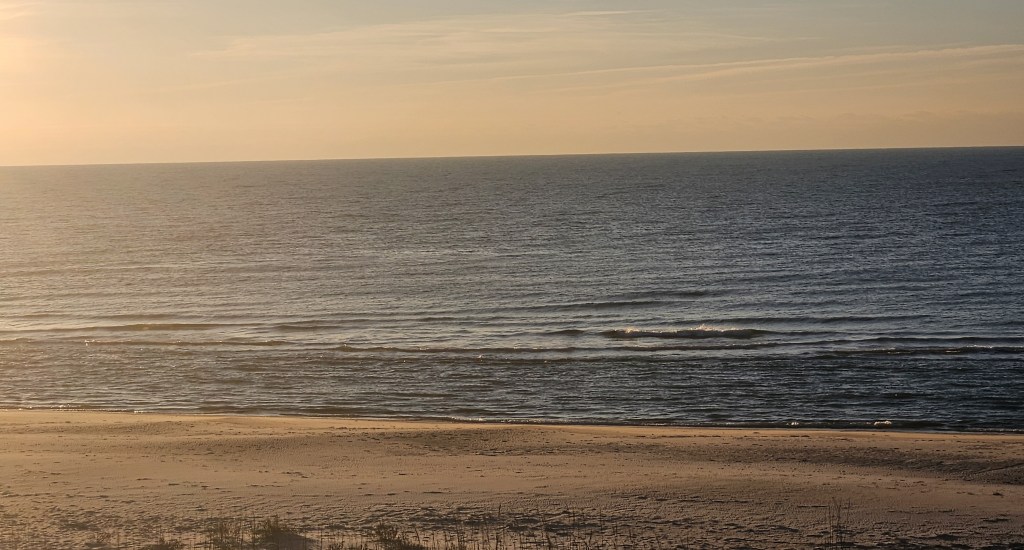
They stood like sentinels facing into the wind, aware of me but far enough away to maintain their ground.

I watched as one seagull plummeted repeatedly into the shallow waters offshore. Perhaps they were watching him as well.

At last, he lifted from the water with a small fish sideways in his beak. Squawking loudly through his clinched bill, he circled around to the birds on shore and landed among them. Most of the gulls hopped over to inspect his prize, or being seagulls, to steal it. I have watched them try to pry fish from a pelican’s beak.

The victorious gull rose into the air and circled out into the ocean again, screeching and squawking. He made a wide circle over the waters and returned to the herd of gulls on the shore. I wondered why he didn’t land somewhere away from the others to enjoy his meal.

Five birds hopped over to him again as he continued his loud boasting. Again, he lifted off and flew a wide circle over the waters and returned to the crowd. Only two birds responded to his constant screech as he landed, the small fish still gripped firmly in his beak. Perhaps he was more interested in showing off his success than eating his meal.

Been there; done that.

When he circled again with his uneaten fish, the other gulls ignored him when he landed and so did I. I closed my eyes to the sun and listened to the waves. I listened to the full-throated warble of a gull whose bill was not clamped tightly on a fish, and I heard the continued screeching of boastful fish catcher.

I don’t know if he ever ate the fish, I lost interest in his repetitive attempts to impress the crowd. I rather hope he dropped the fish and other gulls ate it, but that is, perhaps, unkind. He did make the effort to catch the fish. I have watched diving birds enough to know that it is not an easy thing to do. I wish for his sake that the fish would have been a reward enough for his efforts.

Beware of practicing your righteousness before other people in order to be seen by them, for then you will have no reward from your Father who is in heaven. Thus, when you give to the needy, sound no trumpet before you, as the hypocrites do in the synagogues and in the streets, that they may be praised by others. Truly, I say to you, they have received their reward. But when you give to the needy, do not let your left hand know what your right hand is doing, so that your giving may be in secret. And your Father who sees in secret will reward you. Matthew 6:1-4.

What fish am I holding in my beak and squawking about today? What act of generosity do I trumpet in the streets? What righteousness am I practicing just to be noticed by others?

The waves are calling. The wind sends them crashing on the shore and makes the heat bearable. There are seagulls standing on the shore, staring at the ocean, unaffected by their bragging neighbors. Perhaps their only focus is to appreciate the beauty of God’s creation and give thanks for His bountiful gifts.

I think I’ll join them.

Love in Christ, Betsy

Pretty

I’m trying to make my garden look pretty. I’m not sure why. My sisters are coming over, but it is much too late in life to try to impress them. Very few people see my garden. More to the point, I doubt they would care if it were pretty or not.

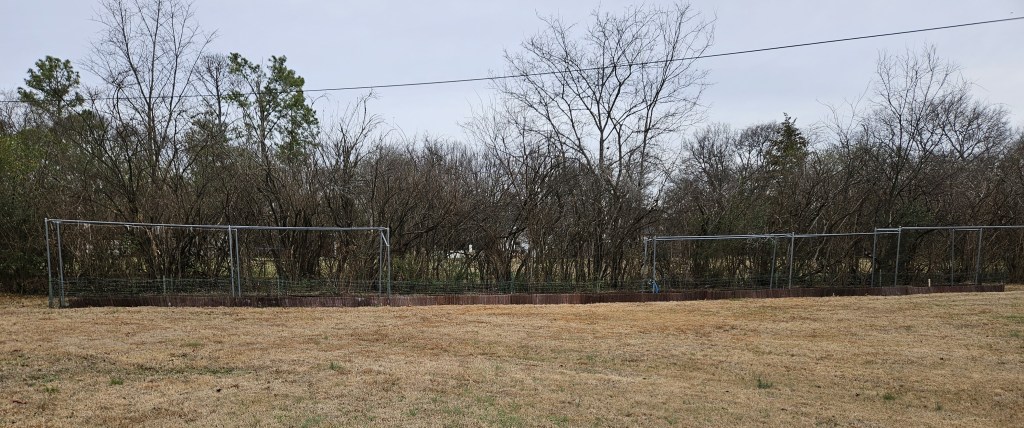
So why do I want the edging straight? To make it truly pretty, I would need to get a stronger fence, one that isn’t all bent and mushed from me leaning over it, but then I couldn’t lean over it to reach the ground. I could zip tie the edging more tightly to the raggedy fence, but that will make replacing the fencing more difficult if I choose to do so.

I am pleased that it hides the weeds growing on just the other side. I wouldn’t want anyone to know I had weeds in my garden! The weeds are still there, of course, doing their mischievous work. I have not made the effort to root them out or suppress their growth for the winter. But I would like others to think I have. I would like anyone who wanders into my back yard to think that I am industrious and organized and dedicated and marvelous. How ridiculous.

God is not fooled. He sees the garden as it truly is. I doubt anyone else is fooled either. The wavy fence line is visible from here. One small step closer and you’ll see over the edging and notice the weeds.

My attempts to make my garden pretty are not showing the world how marvelous I am. Instead, they are revealing my fear that you will see my imperfections and shun me for them.

My mind tells me that anyone who will shun me is not worthy of being my friend, but at times I am still that middle schooler entering the lunchroom. I want everyone to be impressed with me, to want me to sit at their table, to like my clothes, my hair, my abilities, my friendly and effervescent personality.

God is not fooled. He sees me as I truly am. I doubt anyone else is fooled either, at least not for long. If they look closely or step nearer, they will see my faults.

The odd thing is that I am rarely bothered by the weeds in other people’s gardens. Not everyone is a meticulous housekeeper. Not everyone is always kind and loving. Most people let vanity and pride, irritation and sarcasm grow in their gardens. We all have our weeds.

So, why do I want my garden to look pretty?

Am I now seeking human approval, or God’s approval? Or am I trying to please people? If I were still pleasing people, I would not be a servant of God. Galatians 1:10.

As with most things, my desire to have a pretty garden could be motivated by a desire to share God’s beauty with the world – an array of colorful flowers, the hues of ripe fruit, the luscious green of healthy plants. After all, God creates beauty every day in the shifting ombre shades of a sunrise or sunset, and my little garden can reflect a little of that.

But God sees my motivation as well as what I am showing to the world. He knows if I strive to honor Him or impress others. If I am reading Matthew 7:21-23 correctly, it is not pious actions, even those done in His name, that God seeks, but a relationship with Him.

But the Lord said to Samuel, “Do not look on his appearance or on the height of his stature, because I have rejected him; for the Lord does not see as mortals see; they look on the outward appearance, but the Lord looks on the heart.” 1 Samuel 16:7.

And no wobbly garden edging can hide my weeds from God. He sees them all. And He loves me anyway. He loves you anyway. Perhaps I need to let my weeds show and we can all stop pretending we are weed free, and love each other like He loves us, weeds and all.

Love in Christ, Betsy

A Ripe Fig

I’m tired, y’all.

That seems a poor way to start the “school year,” but as I age my year seems more attuned to my garden than to my kids’ activities.

My garden has been put to bed for the fall. Last year the tomato plants survived into September, but not this year. Brown leafless twigs, I pulled them up. My garden is ready for a rest, and so am I.

I have dedicated this year to learning about the publishing industry, especially as it pertains to publishing works of fiction. I have a renewed appreciation for anyone who has navigated this mine field successfully, for someone who has actually been paid to produce their book.

I have met hundreds of authors who have published books I have never heard of and authors who have published thirty, sixty, over one hundred books that I have never read, and I read a lot. Publishers purchase only three percent (three percent!) of the manuscripts they receive. There are also manuscripts that publishers buy but never publish for one reason or another. And yet there are thousands of published books that never cross my line of sight. When I see an author selling her book at a conference, I feel an urge to support them, filling my bookshelves with even more books to read someday.

All this to say that I am eager to return to my old life – card games and gardening, resting, and reading and enjoying meals with my friends.

And like a gentle reminder, I returned from my sixth writers conference this year (ugh!) to find ripe figs in my garden. Just a few. Just enough to let me know that dead as my garden is, God is not done with it yet.

Only one fig is ripe enough to eat today, dark red and soft to the touch. I left the soft pith melt in my mouth as its sweet juice entices my tongue, then enjoy the satisfying crunch of its tiny seeds. Heavenly. A gift. Fruit in a barren garden.

So, here is the question I plan to ponder this fall: When we fail to accomplish whatever goal we have set for ourselves, what is the lesson?

Is the goal unreasonable?

Is the timeline unrealistic?

Are my methods incorrect?

Is my work inadequate?

Do I double down or pivot to something new?

Is this goal in God’s plan or a selfish desire?

All this is because I have drafted a novel and would love to have a publishing house buy it from me, but there is little evidence to indicate that it will happen. The garden looks dead and ready to rest for the winter.

There are ripe figs in this barren land however, sweet moments that remind me that God is not done with me yet. I savor those gifts.

And I cannot begin to thank you for reading this, sharing this, commenting on my posts, and emailing me. Many times, your comments are the sweet figs that keep me going. Thank you.

Finally, as I enter this time of rest and reflection, I am feeding my soul-soil with scripture. Maybe these words from God will speak to your soul as well.

But strive first for the kingdom of God and his righteousness, and all these things will be given to you as well. Matthew 6:33.

Unless the Lord builds the house, those who build it labor in vain; unless the Lord guards the city, the guard keeps watch in vain. Psalm 127:1.

Whatever your task, put yourself into it, as done for the Lord and not for your masters. Colossians 3:23.

May you find a sweet fig in an otherwise barren garden today.

Love in Christ, Betsy

A Little Change

I made a little change in my garden to solve a nagging problem.

Change can be hard, but what if God is calling us to do just that, change?

I’ve had a problem with my lawn service this summer. They come when I am not home. And their mower sprays grass clipping all over my garden plants.

If I were home when they were mowing, I would ask them not to do this. I’m not sure why this is even so much of a problem this year since it hasn’t been in the past. Perhaps they have a new mower, but the problem may be mine. Since I did not pull up all my landscape timbers last year, they have sunk lower into the ground. Several of them are rotting away. The accumulation of grass clipping has hastened this process.

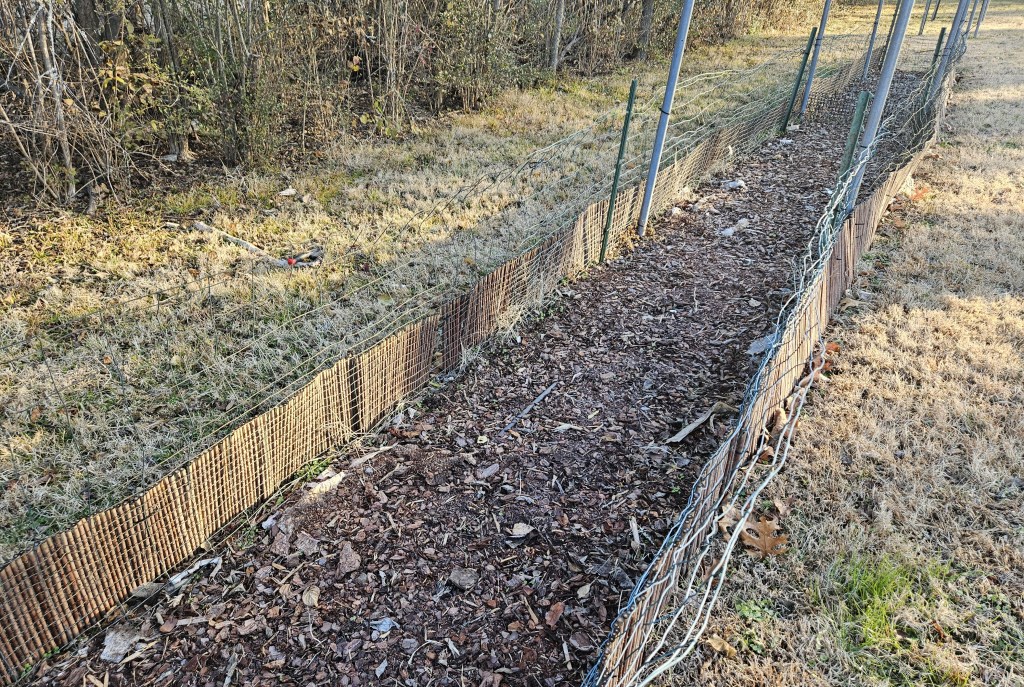
I could text my mower about the problem. I considered replacing all the landscape timbers. But I decided instead to edge the garden with a taller “clipping barrier.” Of course, the stores don’t carry foot-tall edging, so I had to order a trial sample to see if it would work. I like the look.

This edging may help with critter control as well. It’s different. Time alone will tell if it’s better.

My daughter, who works with ministry innovators, often writes about how change often happens slowly, develops through necessity, and occurs when we are focusing on something else. I look at my garden as the sixth summer without my husband draws to a close and I see change.

The bones of my garden are the same. Same poles, same fence posts, same location. But I no longer dismantle it; I no longer let the garden return to grass every year. I have perennial fruit trees and herbs. I pay helpers to assist me. And now I have foot high edging. I am adapting, slowly, by necessity, to gardening without him.

All in an effort to bear fruit.

There’s a lot of discussion about change in the church. When is change necessary to bear fruit for God and when is it conforming to the world? Jesus was an agent of change. He ate with simmers, broke sabbath laws, and overturned the tables in the temple.

The pharisees and their scribes were complaining to his disciples, saying, “Why do you eat and drink with tax collectors and sinners?” Jesus answered, “Those who are well have no need of a physician, but those who are sick. I have come to call not the righteous, but sinners to repentance.” Luke 5:30-32.

The established church leaders didn’t like the change. And Jesus didn’t stop at changing the status quo. He sent the Spirit to live within us and change our focus, our attitudes, our actions, and our lives. He takes our established garden and slowly transforms it into a more gracious, more loving, more fruitful place.

Several hundred years ago, women who used herbs to cure ailments were considered witches. Now it’s a multi-million-dollar business. Most Christians have no qualms putting aloe on a burn, drinking chamomile tea to relax, or taking garlic to reduce cholesterol. Some Christians even advocate turning away from established medicine to more homeopathic remedies. They should be grateful the church no longer labels them witches for this.

Is God calling you to make some changes this fall?

Perhaps minor changes like a better edging around your garden space, a more sacred quiet time alone with the Lord, a more intentional effort to keep the litter at bay.

Maybe He is calling you to make a radical change, eat with sinners and social outcasts, try an herbal remedy, go against established church tradition.

I pray that God will always keep me open to the changes He calls me to make. I pray that He will continue to call me, sinner that I am. And I pray that He will bear His fruit in my life and in yours.

Love in Christ, Betsy

Hope in a Raspberry

I step outside and breathe in the cool morning air. I shiver at the breeze, and the dew is almost cold on my feet. Such a change from the scorching temperatures of only a week ago. It feels like a gift.

I had a tough weekend. I went to a writer’s conference at which my book-in-progress was a finalist for an award. Not only did it not win, but it was also trashed in critiques sessions and firmly rejected by agents. I tell you this not to generate your sympathy, but because sometimes life is like that. We do our best at the time, but sometimes it is just not good enough.

I came home wondering if I could do better or if I should abandon this pursuit. How much effort do I continue to put in this garden when it is not bearing fruit?

These were the thoughts that swilled in my head when I stepped outside. The unexpected chill brought me out of that inner world and into the present.

It is a beautiful morning. Wisps of white clouds stretch across a Carolina blue sky. Birds sing and a bumble bee searches the flowers on my aging cucumber vines.

I’ve taken down the bird netting and pulled up the dead tomato plants. Most of my garden is ready to rest, tired from a fruitful summer. But not all of it.

The basil still grows, and I snip off the tall blossoms and inhale their sweet scent. My entire body smiles at this gift. The smell of fresh basil overpowers my sense of failure, and all the negative words fade away. What a simple and beautiful gift this tiny plant is.

For we are the aroma of Christ to God among those who are being saved and among those who are perishing. 2 Corinthians 2:15.

I lift my eyes in praise for this heavenly aroma and there, on the tips of my raspberry bush, are bright red berries. I was told not to expect fruit this year and was surprised by a few berries in the spring. I am even more surprised by these berries in August.

I have not paid attention to my raspberry bush this summer except to trim it back as it expanded into the yard. Without my notice, this plant had generated new life and now displays its fruit to the world.

Unexpected fruit. I had put the plant in the ground and kept it alive, but beyond that, this raspberry bush is simply doing what it was created to do – grow and bear fruit. No one is teaching it how to do this or telling it if it is doing it well or poorly. The bush is not waiting for another’s affirmation. It is not trying to solve world hunger. It is absorbing the heat of the day and the cool of the morning and bearing fruit.

This is something every one of us can do.

An old saying reminds us that the world would be a quiet place if only the birds with the best voices sang. And the world would starve if only the best plants produced fruit.

I pull off the red berries and eat them on the spot. Sweet and tender, they nearly dissolve on my tongue. This fruit may not be changing the world, but it is changing my world this morning.

Refreshed, I return to my office and start to type. I do not need the world’s affirmation to do what God has put upon my heart to do. I need simply to do it and let Him use that fruit however He sees fit.

For we are what he has made us, created in Christ Jesus for good works, which God prepared beforehand to be our way of life, Ephesians 2:10.

God is so good.

Love in Christ, Betsy