Planting Garlic

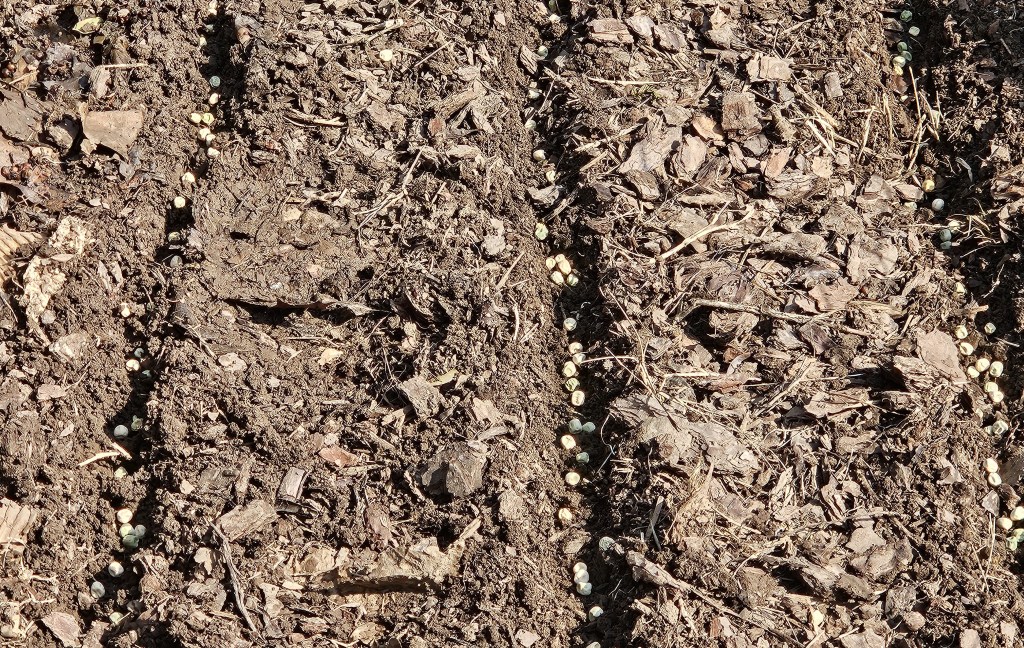
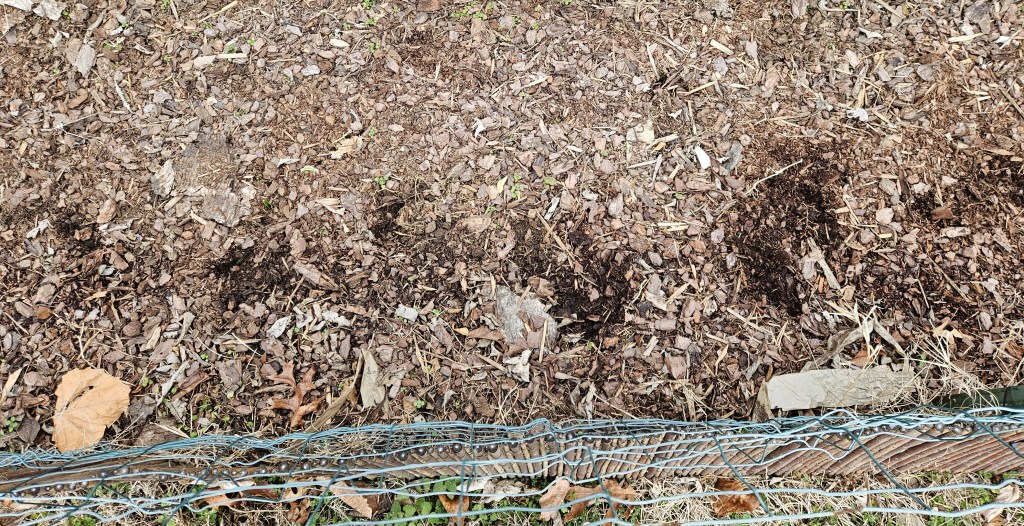
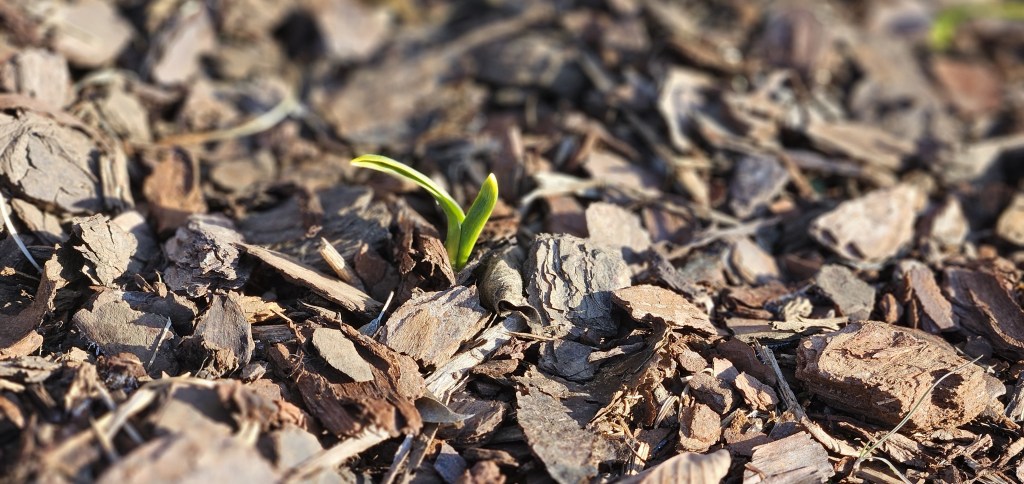
I planted my garlic this past weekend. It’s got me thinking about the seeds we plant in the “off season,” when all the focus is elsewhere.

December is a time when I am consumed with gatherings – family, friends, every group of which I am a part gathers this time of year. Ostensibly to celebrate the birth of Jesus the Christ, but usually just for the opportunity to dress up and gather, eat, drink, and perhaps exchange gifts. It’s a time to celebrate here and now, our family and friends. Anything beyond the here and now tends to focus on the past, childhood memories, family traditions.

The church calls this time Advent, the coming, and encourages us to look forward. We are asked to prepare ourselves in anticipation of the wonders God is about to perform. He planted a seed, the unformed nucleus of God enfolded into a perishable body, which grew into a man and lived among us for thirty-some years. He gave us a small child who changed the world, whose Spirit continues to change the world.

The word became flesh and dwelt among us, and we have seen his glory, the glory of the father’s only son, full of grace and truth. John 1:14

This is the week when I put away the pumpkins and fall colors and bring out the red and green. (I know, some of you are far ahead of me on this task.) And, in the middle of this, I planted garlic bulbs that I won’t dig up until summer.

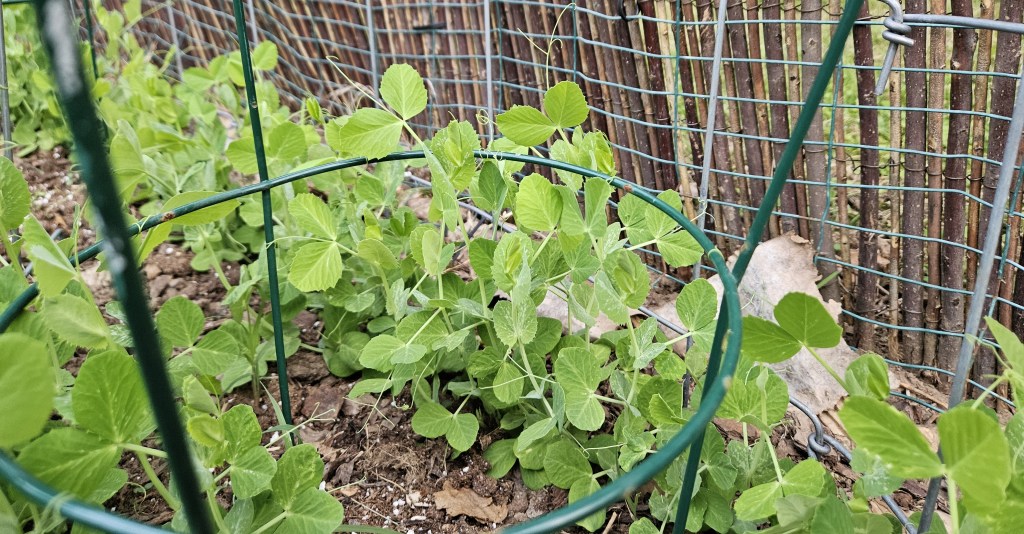
Garlic cloves need to be planted after the first frost and before the ground is frozen solid. Like many bulbs, they need to spend a season underground in the cold, storing up nutrients and preparing themselves to grow. Unlike my sugar snaps and tomatoes, I need to plant garlic long before its growing season. I plant in the cold looking forward to the hot sun and lazy days of summer.

God planted a seed in my heart as well when I was cold-hearted and consumed with my immediate needs and wants. That seed took a long time to bear fruit in me. Now I think of the seeds that I have planted, that I am planting in my own life and in the lives of those around me. It may seem pointless, burying a seed in the cold and dark and trusting that God will transform it into fruit for His kingdom. But that is how seeds work.

Amid all our celebrating and gathering and living our lives, we can take a moment to plant a seed, a seed of love, a seed of kindness, a seed of connection. We can trust that God can transform that seed into a relationship with Him, even if we never see it or know of it.

This is Advent, the coming of Christ into the world. Not only as a one-time event two thousand years ago, but also as a daily event here and now. Christ comes to live with us, within us, within those around us. Perhaps all that is needed to sense His presence in the world is for us to take a moment and plant a seed.

You have been born anew, not of perishable but of imperishable seed, through the living and enduring word of God. 1 Peter 1:23.

I hope to plant more than garlic this Advent season. I hope to plant love. I hope God uses me to answer someone’s prayer. I pray that another will see how much God loves them through my words and actions.

Gather in celebration this Advent. Gather in love and plant some seeds.

Love in Christ, Betsy

Salt

I’ve been thinking a lot about salt recently. A friend of mine has a dozen different colors and flavors of salt. I have Morton’s. We both use salt on a regular basis. I bet you do too. Salt is in everything, as those of who have had to limit its intake can attest.

Salt makes food taste better. It’s just a rock, a crystallized mineral. It takes no action on its own. It didn’t rise out the ground eight thousand years ago and tell the ancient Balkans, Bulgarians, and Chinese that it could change their lives. They found this mineral in springs and rocks. They experimented with it, tasted it, and rubbed it on the most recent animal kill. They let it dissolve in water and soaked their aging vegetables in it.

What an amazing and life changing gift from the earth, from God. And it is just there for our use. Sometimes just sitting in rocks beside streams for animals to lick on their way past. Sure, we humans have mined it, processed it, commercialized it, and fought over it. But that is because salt is vital and necessary to our survival.

Salt not only makes things taste better. It is an essential element, a necessary electrolyte to keep us healthy and functioning. Salt is used in brining and pickling and smoking and canning, allowing for the safe preservation of our food. We gargle salt to heal our mouth sores and soak in it to heal our wounds. Salt is also used in chemical processes, water treatment, land stabilization, and de-icing.

You are the salt of the earth. Matthew 5:13.

Can our mere presence make this much of a difference to the world around us? Can we, by simply being available, add flavor to other’s lives, preserve their dignity, enhance their lives, and cure their ailments? Are we an essential element in each other’s lives?

Salt can also corrode, destroy, and kill. It has long been used to eradicate weeds. Conquering armies would salt grain fields to prevent growth. I’ve heard it’s deadly to slugs. The salty breeze from the ocean destroys a/c units, corrodes paint, and rusts the chairs. Road salt eats away your car’s paint and makes the metal rust. Too much salt in your diet causes hypertension and can be fatal. Ingesting salt water can lead to hallucinations and death.

So, is salt a preserver or a killer? Does it enhance life or corrode it? As eager as we are to classify things as ‘good’ or ‘bad,’ salt is just salt. It is not making any moral choices or grappling with complexities. We slap those attributes on it based on what it feels like to us in the moment.

Some people struggle to say that God is good. How could such a loving God do such and so? He gives us life. He flavors it and enhances it and preserves it. At times He seems to destroy it. I can’t see the world as He sees it. I don’t think I even want to. God is God. I will not slap my moral judgement on His actions.

Jesus tells we are the salt of the earth and urges us not to lose our saltiness. The thing is that salt never loses its saltiness. It’s what it is. We sense it as “unsalty” when it has been diluted. With too much water, too much starch, salt can be absorbed by its environment. But it is still salt.

We are here to flavor and enhance and cure. We may be called upon to destroy – false gods, heretical beliefs, sin in our lives. We, His children, are salt. He sends us out into the world to be – salt.

You shall not omit from your grain offering the salt of the covenant with your God; with all your offerings you shall offer salt. Leviticus 2:13.

You are the salt, my friend. Not because you have made yourself salt, but because God made you salt.

Love in Christ, Betsy

A garden at Rest

I take my coffee and step outside, inhaling the cool morning air. Geese honk as they fly in formation against a cloudless blue sky. The grass is still green and wet with dew. Warm weather has kept the leaves green, but little pops of color are peeking through. October is a wonderful time to be outside.

I walk my garden, but there is nothing to see, nothing that demands my attention this morning. The basil still grows. I will need to make a batch of pesto before it gets too cold for the plant, but not today. My raspberry and fig still bear fruit, one fig and three or four raspberries a week. Nothing to pick this morning, but their perseverance impresses me.

Soon I will need to pull up the old cardboard and lay a tarp over the ground for the winter. This is a technique one of you suggested as an alternative method of reducing weeds (Thanks LS!), but it won’t happen today.

Today, my garden and I are at rest.

Not all my idleness is restful. Often, I am caught up in books or movies or football games and the hours spent sitting leave me exhausted, or worse, agitated. This is what the people in Jesus’ time were missing about the Sabbath. The rules that kept people idle had generated so much stress that the Sabbath was no longer restful, no longer a day of rest.

Rest comes from the confidence that God has our situation in His hands, and He loves us. It is not always time to plant, to harvest, to work in the garden. Sometimes, it is time to rest.

I can’t speak for you, but rest is hard for me to accept. I want to wrest my situation from God’s hands, take charge, devise a plan, and make it happen. Why put anything off until tomorrow? The world in which I live supports this kind of thinking. We are supposed to be doing something, striving toward a goal, expanding our social group, moving up through the ranks, being all that we can be.

For a few years, when people asked me what I did, I said “Nothing.” You can imagine the reactions I got. I later amended that to say, “I entertain myself well.” Now I say I write, but that always leads to questions about publication and what I am working on and my plans for the future. Perhaps I should say I’m at rest.

Take my yoke upon you, and learn from me; for I am gentle and humble in heart, and you will find rest for your souls. Matthew 11:29

This time of rest is good for the garden. Plants take nutrients and water from the soil, and the earth needs time to replenish these. All the little critters and microorganisms in the ground need uninterrupted time to turn dirt into nutrient-rich soil. The garden at rest is not idle; it is resting. Similar to what happens when we sleep, the garden at rest is busy below the surface.

The world can’t see it. I can’t see it. But I know God is in action preparing the garden for the future demands I will make on it. Like sleep prepares us for the next day. Like this time of rest prepares me for what God has in store for me.

For we are what he has made us, created in Christ Jesus for good works, which God prepared beforehand to be our way of life. Ephesians 2:10.

Will you join me and my garden and rest today? No stress, no agitation, no wresting your life out of God’s hands. Just rest. Breath in the cool air. Listen to the geese. Admire the cloudless blue sky. Trust God. He created this world, and He loves you.

Love in Christ, Betsy

Garden Shoes

I first posted this in 2023. Couldn’t get it off my mind, so I am starting October with a first-ever repeat!

They sit by the back door expectantly, waiting for me to slip them on. Worn out, worn in, scuffed and muddy and comfortable, these are my garden shoes.

I slip them on before I head to the garden. The yard, covered in dew, strewn with grass clippings, muddy from the recent rains, and riddled with thorny plants and industrious bees, can be a messy place. Inside my shoes, my feet are dry and clean and safe.

Without these shoes, dedicated to this less than glamorous role in life, either my feet would be in peril, or my fancier shoes would be.

Their appearance in no way diminishes their importance, quite the opposite. It is their worn out, worn in, scruffy, muddy, comfortable countenance that gives them value, makes them perfect for the role of garden shoe.

But God has so arranged the body, giving the greater honor to the inferior member, that there may be no dissension within the body, but the members may have the same care for one another. 2 Corinthians 12:24-25.

Has God assigned you a less than glamorous role in life? Are you worn out, scruffy, and covered in yard debris? Do you feel like an “inferior member?” Haven’t we all felt that way at some point?

Maybe your infant has just thrown up on your one clean shirt, or your mom has wandered down the street in her pajamas looking for the dog that died three years ago. Maybe the dishes have piled up in the sink and toilet backed up in the bathroom. Maybe your boss has trashed your work and told you to start again, again. Maybe your body has failed you, leaving only wishes with no option of action.

You have a very crucial role in the kingdom of God. You are every bit as much a part of God’s garden as the ministers and the missionaries.

In a large house, there are utensils not only of gold and silver, but also of wood and clay, some for special use, some for ordinary. 2 Timothy 2:20.

And all are valuable. Could you imagine using your silver goblet to measure flour? The silver goblet may be shiny and precious and placed where all can see, but the plastic measuring cup far more useful, more functional, more necessary, and more important to daily life.

I wouldn’t wear my garden shoes to a ladies’ luncheon, but I depend on them.

And Jesus tells us that God values the less glamorous servants highly.

Whoever wants to be first must be last of all and servant of all. Mark 9:35. (Also Matthew 20:26, Luke 22:26.)

Maybe in the tables-turned, topsy-turvy Kingdom of Heaven, God will give my garden shoes the place of honor.

Maybe in the tables-turned, topsy-turvy kingdom of Heaven, God will give the parent, the caregiver, the housekeeper, the worker, and the invalid seats of honor.

So the last will be first, and the first will be last. Matthew 20:16. (Also Matthew 19:30.)

So, if you are feeling like a worn-out pair of garden shoes today, take heart. If we are following Jesus, He will give us the work He needs us to do, glamorous or not. His Spirit within us will make us “dedicated and useful to the owner of the house, ready for every good work.” (2 Timothy 2:21.)

My garden shoes wait patiently for me to slip them on. Just a little walk out to the garden, around and through it, then back inside. Job done; they rest. How happy these shoes make me, doing their little job so well. I do not see their age, their misshapen body, their dirty exterior covered in yard debris; I see their faithful, useful, service.

Well done, good and faithful servant, You have been faithful over a little; I will set you over much. Enter into the joy of your master. Matthew 25:21.

 Love in Christ, Betsy

A Ripe Fig

I’m tired, y’all.

That seems a poor way to start the “school year,” but as I age my year seems more attuned to my garden than to my kids’ activities.

My garden has been put to bed for the fall. Last year the tomato plants survived into September, but not this year. Brown leafless twigs, I pulled them up. My garden is ready for a rest, and so am I.

I have dedicated this year to learning about the publishing industry, especially as it pertains to publishing works of fiction. I have a renewed appreciation for anyone who has navigated this mine field successfully, for someone who has actually been paid to produce their book.

I have met hundreds of authors who have published books I have never heard of and authors who have published thirty, sixty, over one hundred books that I have never read, and I read a lot. Publishers purchase only three percent (three percent!) of the manuscripts they receive. There are also manuscripts that publishers buy but never publish for one reason or another. And yet there are thousands of published books that never cross my line of sight. When I see an author selling her book at a conference, I feel an urge to support them, filling my bookshelves with even more books to read someday.

All this to say that I am eager to return to my old life – card games and gardening, resting, and reading and enjoying meals with my friends.

And like a gentle reminder, I returned from my sixth writers conference this year (ugh!) to find ripe figs in my garden. Just a few. Just enough to let me know that dead as my garden is, God is not done with it yet.

Only one fig is ripe enough to eat today, dark red and soft to the touch. I left the soft pith melt in my mouth as its sweet juice entices my tongue, then enjoy the satisfying crunch of its tiny seeds. Heavenly. A gift. Fruit in a barren garden.

So, here is the question I plan to ponder this fall: When we fail to accomplish whatever goal we have set for ourselves, what is the lesson?

Is the goal unreasonable?

Is the timeline unrealistic?

Are my methods incorrect?

Is my work inadequate?

Do I double down or pivot to something new?

Is this goal in God’s plan or a selfish desire?

All this is because I have drafted a novel and would love to have a publishing house buy it from me, but there is little evidence to indicate that it will happen. The garden looks dead and ready to rest for the winter.

There are ripe figs in this barren land however, sweet moments that remind me that God is not done with me yet. I savor those gifts.

And I cannot begin to thank you for reading this, sharing this, commenting on my posts, and emailing me. Many times, your comments are the sweet figs that keep me going. Thank you.

Finally, as I enter this time of rest and reflection, I am feeding my soul-soil with scripture. Maybe these words from God will speak to your soul as well.

But strive first for the kingdom of God and his righteousness, and all these things will be given to you as well. Matthew 6:33.

Unless the Lord builds the house, those who build it labor in vain; unless the Lord guards the city, the guard keeps watch in vain. Psalm 127:1.

Whatever your task, put yourself into it, as done for the Lord and not for your masters. Colossians 3:23.

May you find a sweet fig in an otherwise barren garden today.

Love in Christ, Betsy

Hope in a Raspberry

I step outside and breathe in the cool morning air. I shiver at the breeze, and the dew is almost cold on my feet. Such a change from the scorching temperatures of only a week ago. It feels like a gift.

I had a tough weekend. I went to a writer’s conference at which my book-in-progress was a finalist for an award. Not only did it not win, but it was also trashed in critiques sessions and firmly rejected by agents. I tell you this not to generate your sympathy, but because sometimes life is like that. We do our best at the time, but sometimes it is just not good enough.

I came home wondering if I could do better or if I should abandon this pursuit. How much effort do I continue to put in this garden when it is not bearing fruit?

These were the thoughts that swilled in my head when I stepped outside. The unexpected chill brought me out of that inner world and into the present.

It is a beautiful morning. Wisps of white clouds stretch across a Carolina blue sky. Birds sing and a bumble bee searches the flowers on my aging cucumber vines.

I’ve taken down the bird netting and pulled up the dead tomato plants. Most of my garden is ready to rest, tired from a fruitful summer. But not all of it.

The basil still grows, and I snip off the tall blossoms and inhale their sweet scent. My entire body smiles at this gift. The smell of fresh basil overpowers my sense of failure, and all the negative words fade away. What a simple and beautiful gift this tiny plant is.

For we are the aroma of Christ to God among those who are being saved and among those who are perishing. 2 Corinthians 2:15.

I lift my eyes in praise for this heavenly aroma and there, on the tips of my raspberry bush, are bright red berries. I was told not to expect fruit this year and was surprised by a few berries in the spring. I am even more surprised by these berries in August.

I have not paid attention to my raspberry bush this summer except to trim it back as it expanded into the yard. Without my notice, this plant had generated new life and now displays its fruit to the world.

Unexpected fruit. I had put the plant in the ground and kept it alive, but beyond that, this raspberry bush is simply doing what it was created to do – grow and bear fruit. No one is teaching it how to do this or telling it if it is doing it well or poorly. The bush is not waiting for another’s affirmation. It is not trying to solve world hunger. It is absorbing the heat of the day and the cool of the morning and bearing fruit.

This is something every one of us can do.

An old saying reminds us that the world would be a quiet place if only the birds with the best voices sang. And the world would starve if only the best plants produced fruit.

I pull off the red berries and eat them on the spot. Sweet and tender, they nearly dissolve on my tongue. This fruit may not be changing the world, but it is changing my world this morning.

Refreshed, I return to my office and start to type. I do not need the world’s affirmation to do what God has put upon my heart to do. I need simply to do it and let Him use that fruit however He sees fit.

For we are what he has made us, created in Christ Jesus for good works, which God prepared beforehand to be our way of life, Ephesians 2:10.

God is so good.

Love in Christ, Betsy

Still Growing!

The heat has decimated my tomato plants. They brought me plenty of tomatoes in July, but they are spent now, brown, sagging, and lifeless.

My cucumber plants, however, are still growing, still sprouting flowers, still bearing fruit.

Usually they too are brown, sagging, and lifeless by mid-August. But not this year. Although I can’t know for sure, I think the difference is that this year my creek has flooded – twice in the past six weeks.

Sudden downpours of heavy rain have overrun my little creek’s capacity and sent it across the yard dousing my cucumber plants in fresh water and leaving behind new dirt and nutrients. Far enough away for the current, the flood water in my yard accumulates but flows gently. As much as six inches of water may have flowed across my plants, but they were able to withstand its push.

And now they are bearing flowers, thriving in the warmth, revitalized by the water the storms brought.

Perhaps there is a lesson here.

Flooding can be devastating. We’ve been reminded of that brutally this year. We are reminded of that dramatically every few years. We were all stunned by the photos of farm houses floating down the Missouri and Mississippi rivers in 1993. Nashville saw catastrophic flooding in 2010. More people die from flooding than any other weather-related cause except heat. Flooding is a serious issue; one we should not take lightly.

But not all flooding brings devastation and death. Most floods are less dramatic. Often, we have warnings that heavy rain is coming. We can usually mitigate the damage, get ourselves and our loved ones to safe places, prepare for the storm.

Everyone who hears these words of mine and acts on them will be like the wise man who built his house on rock. The rain fell, the floods came. And the winds blew and beat on that house, but it did not fall, because it had been founded on rock. Matthew 7:24-25.

My landscape timbers are tied to the garden fence to keep them from floating away. Everything electrical in my garage is elevated above the “normal” flood line. Even my recycling is elevated, which would not be hurt, but it is a mess to clean up if water tips the cans over. And the water has gotten in my garage twice in the past six weeks.

Of course, flooding like what happened in Texas this summer, in North Carolina, what happened in 2010, and what happened in 1993 is beyond what anyone could prepare for. But they are not beyond what we can recover from. The Midwest has recovered. Nashville has recovered. North Carolina is recovering. Texas will recover.

My cucumbers recovered quickly. Thrived even. Healthier after the storm than before it. I find hope in this. When the storms come, and they will come, when the water rises, and it will rise, we can withstand, survive, recover, perhaps even thrive. It may be hard to believe when all you see is devastation. It may even feel insensitive to hope in the face of loss and destruction. But that is when we need hope the most, when we can’t see the reason for it.

Now faith is the assurance of things hoped for, the conviction of things not seen. Hebrews 11:1.

I don’t know what storm you are facing, or what floodwater threatens you today. God knows. He and His Spirit can help you prepare for the onslaught. He can help you withstand, survive, and recover. Perhaps He can even cause you to thrive in the aftermath.

Build on the rock and stand firm.

Love in Christ, Betsy

Figs!

I head out to the garden when the sun is just barely peeking over the treetops before it gets too hot. The humidity still brings sweat to my arms. I carry a bag but there is little to harvest. All but two of my tomato plants have succumbed to age and heat. The cucumber vines still bear small cucumbers and yellow blossoms, the promise of future fruit, but today, my garden seems as battered by the heat as I am.

I pick one cucumber and deadhead my basil. The garlic is not ready to uproot, and the oregano never took root. Despite my efforts to prune my raspberry, it still grows with a fervor that would be impressive if it weren’t inside my garden fence.

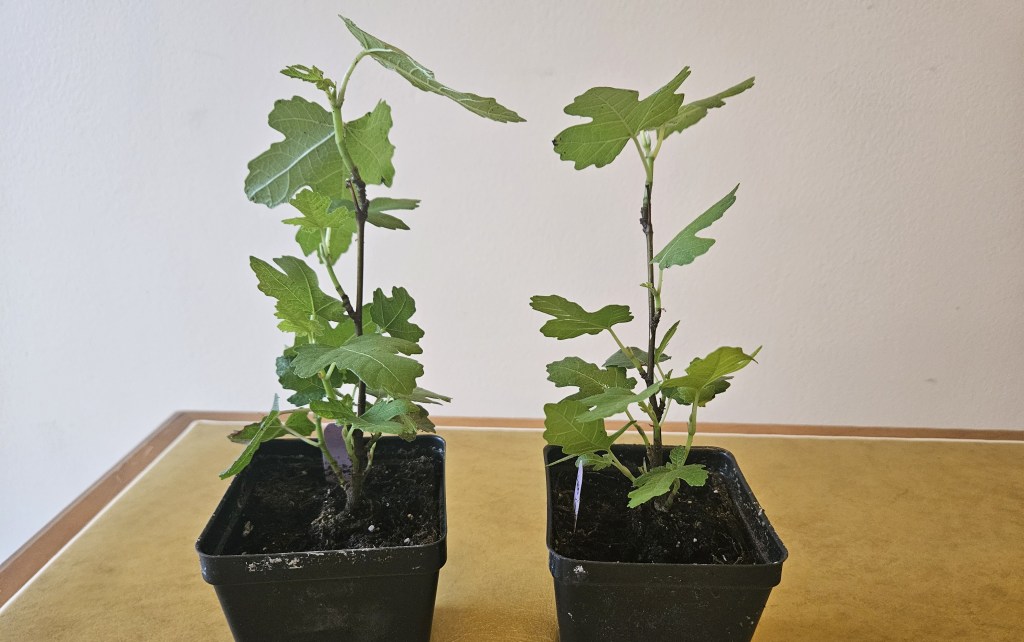
Then I arrive at my fig. It is now over six feet tall. I thought I had bought a “patio” fig tree, but now I wonder if I will need to transplant it. Maybe it and the raspberries. Or expand this area of the garden to wider than three feet.

And what are these growths on the stalk? Are these figs?

I read somewhere not to expect figs for three years. These growths are not ready-to-eat figs, but what promise they hold!

My friends who grow figs tell me that while fig trees thrive in most conditions, how much fruit they bear varies widely. One year they will have an abundance of fruit; the next year only a handful. And, in scientific parley, figs aren’t a fruit because they don’t come from a flower. Figs are the flower itself, inverted inward, containing little crunchies which are the fruit. Perhaps that is what makes them more nutritious than many fruits.

But geek-knowledge aside, these little blobs on their little stems mean my fig is moving in the right direction. And who among us doesn’t appreciate a little affirmation that we are moving in the right direction?

Therefore encourage one another and build each other, as indeed you are doing. 1 Thessalonians 5:11.

So, amid heat and lethargy and the lazy days of late summer, my fig tree proclaims the promise of good things to come. Maybe this year, maybe not, but sometime, God willing.

It’s tempting sometimes to become mired in the swamp of today’s dismal offerings. It’s hot. There is much that could be done, maybe even should be done, but there is nothing that must be done today. No one will care if I spend the day reading or binge-watching detective shows. What is the point of expending effort that undoubtably go unnoticed and unappreciated?

But those little baby figs tell me my efforts are not fruitless. Faithfulness in the little things like watering and weeding and tending my garden does not go unnoticed. Faithfulness in doing the laundry, cleaning the house, and preparing dinner is not unappreciated. Reading my Bible daily and spending time in prayer will bear fruit, maybe not today, but maybe sooner than expected.

So let us not grow weary in doing what is right, for we will reap at harvest time, if we do not give up. So then, whenever we have an opportunity, let us work for the good of all, and especially for those of the family of faith. Galatians 6:9-10.

Those little figs encourage me that I will have a harvest, but even if they weren’t there yet, I would have held out hope that they would show when the time was right. God is teaching me patience with these perennials. I’m to give them three years to bear fruit. Perhaps, as per Luke 13:6-9, even longer. Am I that patient with other people? Am I that patient with myself?

Back inside the coolness of my air-conditioned home, I push aside the urge to waste the day in worthless pursuits. There are little tasks to be done. There are responsibilities to uphold. Opportunities for faithfulness abound. There are figs on my tree. The promise of a harvest awaits.

Love in Christ, Betsy

Summer Harvest

Tomatoes! It feels like years since I have had a successful tomato garden. Oh, I have picked a few tomatoes and enjoyed them, but it’s been a while since I picked more than I could eat.

My daughter, Kat Bair, writes a blog as part of her job as a ministry consultant. She has written about me not giving up on having a garden just because I have had years of less-than-success with it. I’d never really thought about it that way.

Tomatoes will grow in my yard. I remember years of taking tomatoes with me everywhere I went to pass them along to others. My less-than-success has been due to learning how to do the things my husband used to do, trial and error, new methods, discovering the details that impact success. And the weather, which is beyond any of our control.

This year’s rain has really helped. The squirrels get their water elsewhere. The tomato and cucumber plants have ample water to refresh them on these hot days. Not the steady soaking showers of Spring, but the sudden claps of thunder and downpours brought on by heat and clouds.

If my soaker hose is analogous to reading the Bible and praying every day, these storms are like inspiration and direction from the Holy Spirit, sudden, unpredictable, powerful, restoring.

And the results are exhilarating. Tomatoes! Large Better Boys, Romas and Cherries, smaller Early Girls. Plenty for me and plenty to share!

The point is this: the one who sows sparingly will also reap sparingly, and the one who sows bountifully will also reap bountifully. 2 Corinthians 9:6.

It would have been easy to give up gardening over the past years. At times, the only thing that kept me planting and tending and watering was my commitment to you, readers, to write about it.

So, thank you. Your encouragement, your readership, has filled my tomato tray with fruit once more.

You, and of course, God, who sends the rains and the makes the sun to shine and enables the plants to bear flowers and produce tomatoes and cucumbers.

This fruit won’t last. It is here and good for eating for a limited time. I could preserve it somehow, and if food were scarce, I would, but I prefer to share my excess.

I pick out my best tomatoes and cucumbers and bag them up for the people with whom I will share them. A single tomato for those living in retirement homes, more for those at home with children.

I share because that is why God gives us excess – to share with those who need it and don’t have it, whatever “it” may be.

And if we preserve, continue working, continue praying, continue to be open to the soaking of prayer and the sudden storms of the Spirit, God will produce an abundant harvest in each of our lives.

So let us not grow weary in doing what is right, for we will reap at harvest time, if we do not give up. Galatians 6:9.

So here, in the middle of summer, persevere. Rest, rehydrate, and carry on. A harvest awaits.

Love in Christ, Betsy

First Tomatoes

I went out of town for a week and came home to red tomatoes! What a joy to see them there, peeking out from the green leaves. The squirrels didn’t steal them, the birds didn’t peck them, too much water didn’t split their sides. Ripe tomatoes!

The normal garden routine is to walk along the garden and watch the green tomatoes get bigger and bigger, then lighter and lighter, then see hints of pink and tints of orange arise. I put up the bird netting and seal off entry points for the squirrels and pray the tomatoes ripen before they are destroyed.

But sometimes the garden surprises me.

My little prodigy tomato plant brought me beautiful red cherry tomatoes while I wasn’t even looking.

Isn’t God amazing!

Should I be surprised they appeared the week of Pentecost, when God reminds us that He is the giver of gifts, the giver of power, and the source of all growth? God produced fruit on my tomato plant just as His Spirit produces fruit in our lives. Sometimes we work and struggle to help the fruit grow, and sometimes it suddenly appears like flames of fire or red tomatoes.

But there’s another reason these little tomatoes fill me with joy. For the past few years, my tomato plants have struggled. They may yet struggle this year, but these little red jewels fill me with hope and encouragement. Perhaps the effort I extend may actually result in the desired end – ripe tomatoes.

They are days when I love gardening for the activity itself – scooping up dirt in my hand and inhaling the soil’s scent. I sense a connection with the earth, the minerals in the dirt that are essential for life, the energy and life the soil brings. I sense the awakening of a long dormant part of my brain left by ancient ancestors who relied on the earth for daily survival.

Few things can compare to the scent of the basil and garlic plants, or the tart tang of tomato plant leaves. Sometimes just the joy of being outside makes gardening worthwhile. The bunnies and birds, the honeysuckle and fireflies, the tinkle of the creek and the swaying tree branches remind me of how good God is to us.

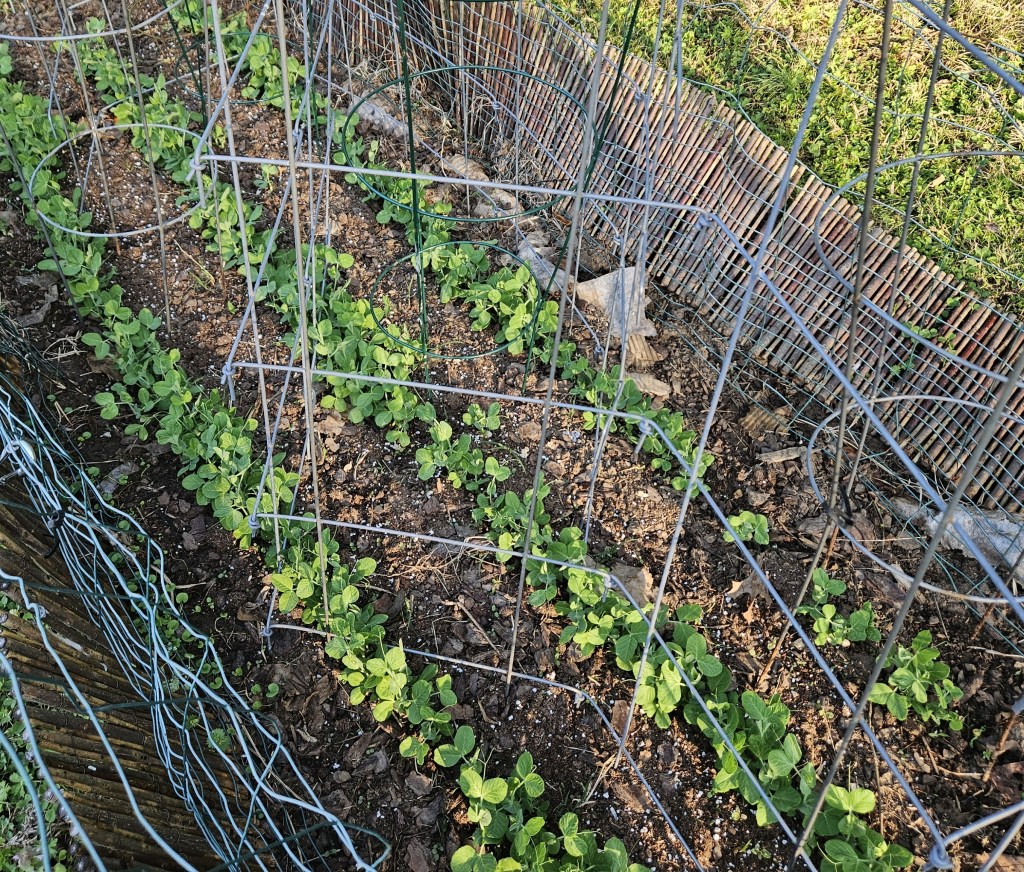
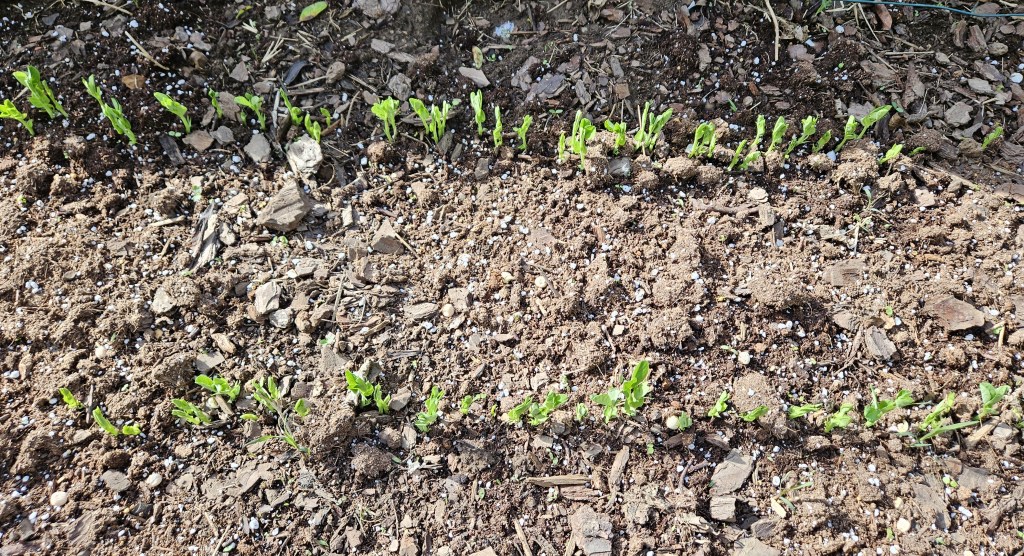
But I don’t garden for these sensations. I garden for the fruit. I want sugar snaps, cucumbers, peppers, and especially, I want tomatoes.

After walking in the creek for a while, I led my grandkids to the garden, and we picked those little red tomatoes. Two for each of them, which they ate walking beside the garden.

What a perfect gift.

Sometimes, I get tired of gardening and the effort it takes. Sometimes, the lack of visible results is discouraging. The same is true in my walk of faith. Sometimes, I get tired of extending the effort and discouraged by my lack of progress. Will reading my Bible today really make any difference? Do I really need to go to church today? I know I committed to this group, but they won’t miss me if I skip.

But then, God surprises me with a gift. Some word leaps off the page and I sense God speaking to my heart. I sit beside an old friend in the pew and reconnect. A woman in the group provides just the piece of information I need to finish my project. Ripe tomatoes on the vine.

His divine power has given us everything needed for life and godliness, through the knowledge of him who called us by his own glory and goodness. 2 Peter 1:3.

Put in the work. The tomatoes are worth it!

Love in Christ, Betsy