Holiday Spirit

Are you listening to carols on the radio? Have you bought all your presents? Are they wrapped? Are you headed to a Christmas party or luncheon or gathering? Do you have your festive clothes laid out? Have you made cookies? Is your mantle decorated? Are you in the Christmas spirit?

I am exhausted just writing this! Do I have time to write this? Do you have time to read it?

We all know that this is not what the true Christmas Spirit is, all this hustle and bustle and decorating and eating and gifting. But the pull is strong. We remember our friends and family and want to celebrate with them. We want to hear that glorious music, and the fun, silly songs as well. We want to cry when Clarence gets his wings and laugh at the leg lamp. We want to make those cookies with Grandmother’s recipe. We want to don our red and green attire and sip champagne.

All of this is wonderful if exhausting.

There have been Christmases when I was better at finding the quiet moments to contemplate the incarnation of God. There have been Christmases when I never found that moment, never took that moment.

I was at a lovely Christmas luncheon the other day and a young couple was entertaining us. In the middle of their rendition of “All I want for Christmas is You,” a wave of grief overtook me. Fortunately, all eyes were on the singers as my throat constricted and the tears threatened to roll down my cheeks. I can’t have what I would really like, at least not in this life. My husband is gone; my heart is broken and empty.

Perhaps that’s what all this merry making is about, filling the void in our hearts.

“What else does this craving, and this helplessness, proclaim but that there was once in man a true happiness, of which all that now remains is the empty print and trace? This he tries in vain to fill with everything around him, seeking in things that are not there the help he cannot find in those that are, though none can help, since this infinite abyss can be filled only with an infinite and immutable object; in other words by God himself.”
– Blaise Pascal, Pensées VII(425), 1672

This was true 350 years ago and it is true today. We cannot find happiness with the Spirit of Christmas. We can only find happiness, joy, and meaning, with the Spirit of Christ.

We will put our holiday decorations away in a few weeks, send our families back to their own homes, and try to lose the extra pounds we gained eating all those cookies. We’ll shift our thoughts from commemorating 2025 to embracing 2026. But that hole in my heart will still be there unless I invite His Holy Spirit to fill it.

Do you sense Him calling you? In the middle of all the celebrating and hustle and bustle, do you hear the still, small voice of God calling you?

Listen! I am standing at the door knocking; if you hear my voice and open the door, I will come into you and eat with you and you with me. Revelation 3:20.

And not just for a Holiday meal, forever.

And remember, I am with you always, to the end of the age. Matthew 28:20.

Are you in the Christmas Spirit? Take a moment this season and let the Spirit of Christ be in you. That is the only way that the infinite abyss of our hearts can be filled.

Love in Christ, Betsy

A Mouse in the House

I was watching tv the other night when a mouse ran across the hardwood floor in front of me. I froze. My blood pressure skyrocketed, and I felt my heart in my throat. Disgust gripped me over this two-inch mammal. It had to go.

For years I had cats. To be fair, I probably had mice then too, but the cats kept them at bay. When my last cat passed away at nineteen, I chose to replace my living room floors and furniture instead of replacing her. I finally have a fur and scratch free living room, but I also have a mouse.

I put out those friendly traps that supposedly poison the rodents, but this one seems immune. (At least I hope it is only one, although that sounds naïve.) I put out the ‘humane kill’ boxes and baited them to no avail. Every day I looked for signs of its presence and cleaned more of my kitchen, my closets, any potential hiding place.

And still, I would catch glimpses of it running down the hall, triggering my panic response. At night, my dreams would be nightmares of mice. (If only a nutcracker prince would kill them all!)

I finally laid down those sticky pads in multiple corners and around all the bait traps. It worked, but slowly. What a horrible way to die. Despite my aversion to rodents, I felt sorry that it had to die that way, stuck in place. But nothing else worked. And it had to go. For my sanity; for the cleanliness and sanctity of my home.

Do you think God looks at our sin that way?

There are six things that the Lord hates, seven that are an abomination to him: haughty eyes, a lying tongue, and hands that shed innocent blood, a heart that devises wicked plans, feet that run to evil, a lying witness who testifies falsely, and one who sows discord in a family. Proverbs 6:16-19.

Do you think He tries to rid His house of these things? Not just his church, but me, one of the houses where His Spirit lives? When I look at another with ‘haughty eyes,’ with disdain and contempt, does His pulse race and His stomach turn? When I ‘embellish the truth,’ does He set out traps to catch me in my lies? And when I ‘outsmart God’ in His attempts to humanely rid my life of sinful ways, is He left only painful and miserable ways to get rid of them?

I hope that I can be diligent in cleaning out my internal closets and cupboards. I pray that God will show me the evidence, the signs of sin’s presence in my life. And having seen my actions through God’s eyes, I pray God gives me the strength to keep my sin at bay.

My apologies if you are one of those people who decorate for Christmas with cute little stuffed mice dressed in holiday garb. I know at some level that mice are just doing what they do, that they enter my home for warmth and food and safety from hawks. But this is not the place for them. My home will not be a sanctuary for mice.

And my life will not be a sanctuary for sin and demons. I want my life to reflect God’s love for me, for you. I, like those football players, want to say. “First, all glory goes to God our savior.” I want to get rid of my sin for my sanity, for the cleanliness and sanctity of my home.

Search me, O God, and know my heart; test me and know my thoughts. See if there is any wicked way in me, and lead me in a way everlasting. Psalm 139:23-24.

I may get a cat in the spring. I could use help keeping the rodents out of my home. I thank God for the Holy Spirit to help me keep the sins out.

Love in Christ, Betsy

Planting Garlic

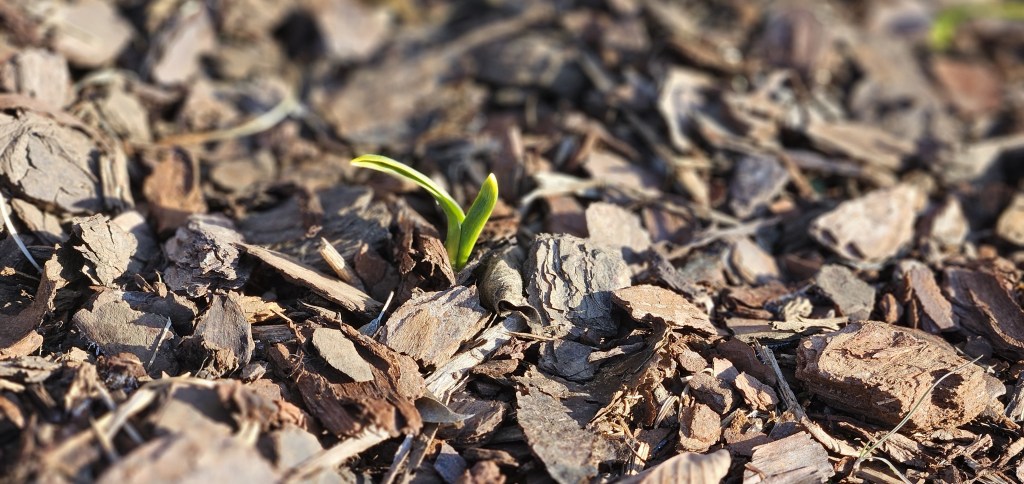
I planted my garlic this past weekend. It’s got me thinking about the seeds we plant in the “off season,” when all the focus is elsewhere.

December is a time when I am consumed with gatherings – family, friends, every group of which I am a part gathers this time of year. Ostensibly to celebrate the birth of Jesus the Christ, but usually just for the opportunity to dress up and gather, eat, drink, and perhaps exchange gifts. It’s a time to celebrate here and now, our family and friends. Anything beyond the here and now tends to focus on the past, childhood memories, family traditions.

The church calls this time Advent, the coming, and encourages us to look forward. We are asked to prepare ourselves in anticipation of the wonders God is about to perform. He planted a seed, the unformed nucleus of God enfolded into a perishable body, which grew into a man and lived among us for thirty-some years. He gave us a small child who changed the world, whose Spirit continues to change the world.

The word became flesh and dwelt among us, and we have seen his glory, the glory of the father’s only son, full of grace and truth. John 1:14

This is the week when I put away the pumpkins and fall colors and bring out the red and green. (I know, some of you are far ahead of me on this task.) And, in the middle of this, I planted garlic bulbs that I won’t dig up until summer.

Garlic cloves need to be planted after the first frost and before the ground is frozen solid. Like many bulbs, they need to spend a season underground in the cold, storing up nutrients and preparing themselves to grow. Unlike my sugar snaps and tomatoes, I need to plant garlic long before its growing season. I plant in the cold looking forward to the hot sun and lazy days of summer.

God planted a seed in my heart as well when I was cold-hearted and consumed with my immediate needs and wants. That seed took a long time to bear fruit in me. Now I think of the seeds that I have planted, that I am planting in my own life and in the lives of those around me. It may seem pointless, burying a seed in the cold and dark and trusting that God will transform it into fruit for His kingdom. But that is how seeds work.

Amid all our celebrating and gathering and living our lives, we can take a moment to plant a seed, a seed of love, a seed of kindness, a seed of connection. We can trust that God can transform that seed into a relationship with Him, even if we never see it or know of it.

This is Advent, the coming of Christ into the world. Not only as a one-time event two thousand years ago, but also as a daily event here and now. Christ comes to live with us, within us, within those around us. Perhaps all that is needed to sense His presence in the world is for us to take a moment and plant a seed.

You have been born anew, not of perishable but of imperishable seed, through the living and enduring word of God. 1 Peter 1:23.

I hope to plant more than garlic this Advent season. I hope to plant love. I hope God uses me to answer someone’s prayer. I pray that another will see how much God loves them through my words and actions.

Gather in celebration this Advent. Gather in love and plant some seeds.

Love in Christ, Betsy

Give Thanks

I am grateful to live in a country that intentionally sets aside a day to give thanks. As humans, we often let the day devolve into a day of political arguments, old scores, and overdoing it. I. like the biblical Martha, tend to focus on logistics and preparation and miss the important thing.

God gives us this day, this food, our breath, what little strength we have. (Deut. 8:11-18) God gives us the opportunity to live in communion with Himself, the giver of all good things, the creator of the universe, and the Lord of heaven’s armies.

This is the true gift for which I want to give thanks:

The word became flesh and dwelt among us, and we have seen his glory, the glory of the father’s only son, full of grace and truth. John 1:14

who, though he was in the form of God, did not regard equality with God as something to be exploited, but emptied himself. Philippians 2:8

He calls us to “abide with him.” (John 15)

Jesus came to them and said, “All authority in heaven and on earth has been given to me…remember, I am with you always, to the end of the age. Matthew 28:16,20.

So,

If we have died with him, we will also live with him;

if we endure, we will also reign with him;

if we deny him, he will also deny us;

 if we are faithless, he remains faithful – for he cannot deny himself. 2 Timothy 2:11-13.

Thanks be to God! His faithful love endures forever!

Love in Christ, Betsy

Tarps

For as long as I have had a garden, I have had weeds in my garden. My husband and I designed our garden space around the dimensions of weed barrier cloth, but that only keeps the weeds suppressed under the cloth. They soon resurface. I have spent hot hours pulling weeds. I have paid others to pull them. I have even considered elevated beds so grass from my yard wouldn’t invade my garden space. Of course, I would have to fill the raised beds with weed-free dirt, which probably doesn’t exist.

My efforts may have kept weeds at bay or out of sight for a while, but they always come back. I know people who love to weed, love to see the pristine results of their daily diligence. But daily diligence is not my strong suit. I reserve what little talent I have for that to devotional time and brushing my teeth. Nothing else receives daily attention.

So, there have always been weeds in my garden.

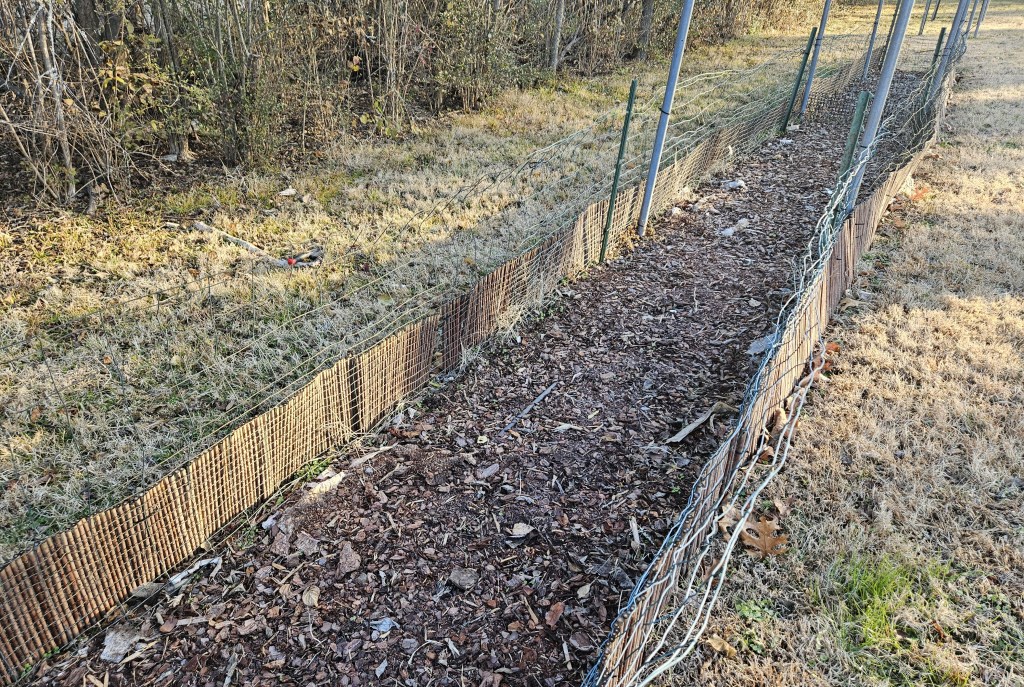
I am trying something new (to me) this year – occultation taps. These heavy-duty tarps block sunlight, UV rays, and water. The white underbelly of the tarp heats the soil, so the weed seeds germinate, and then kills them, leaving you with a weed-free garden to plant. Fingers crossed.

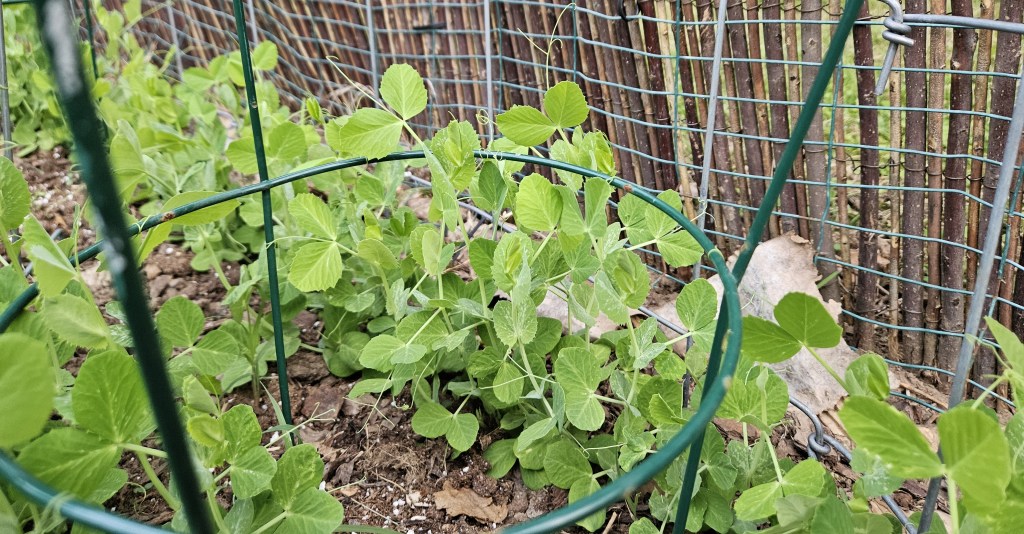
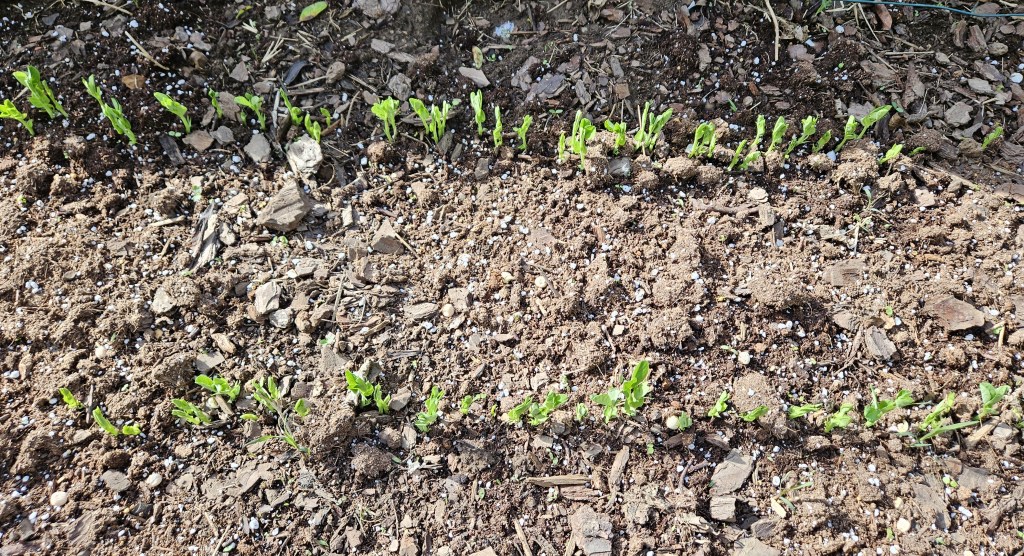
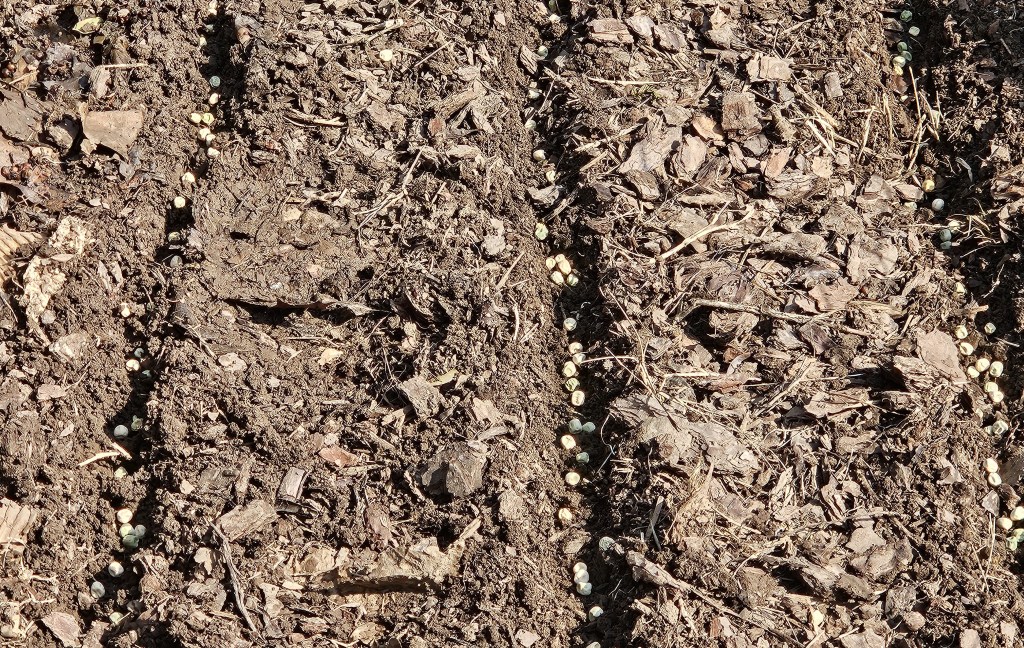
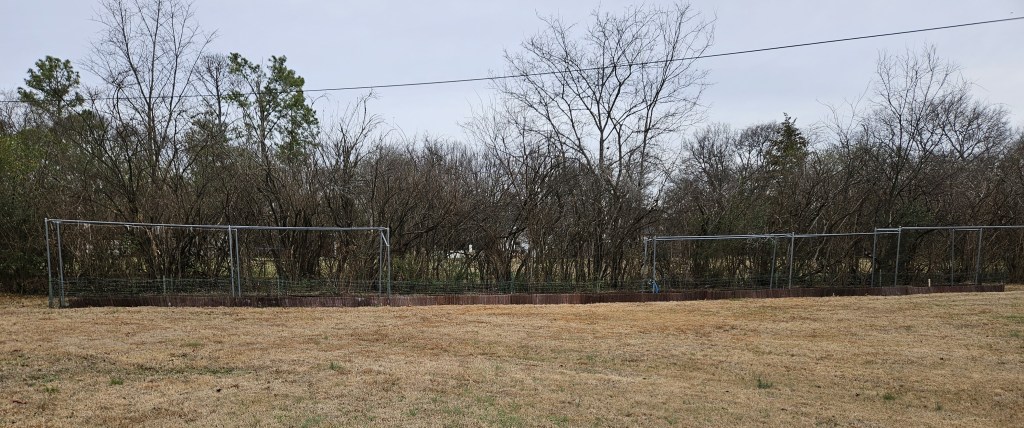
I put the tarps over my garlic beds about a month ago while it was still warm. I plan to plant garlic within the week, so we shall see. I also covered the sugar snap beds. Although occultation is only supposed to take a few weeks, I will leave my sugar snap beds covered until I plant them in late February or early March. Hopefully, we will have enough warm days over the winter for the tarps to work.

These tarps aren’t cheap or particularly easy to manipulate. It makes me wonder about the lengths I will go to get what I want, without submitting to the proven method of daily weeding. Is this stubborn orneriness? And if so, where else does it raise its head?

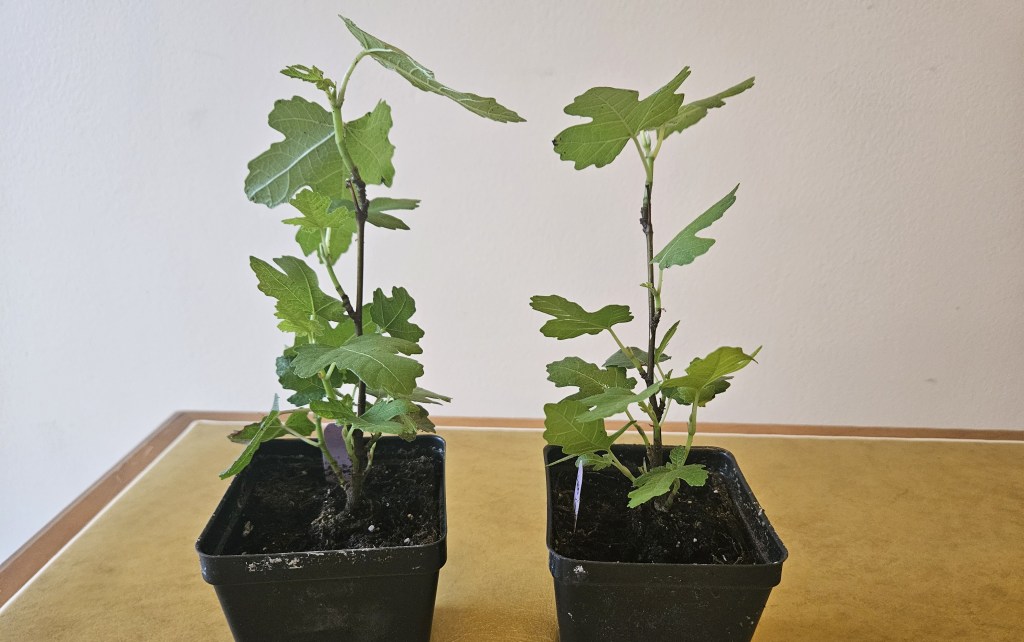
If you have read my musings for long, you know that I often talk about weeds. Perhaps I should spend more time talking about the wonders and joys of having a garden. Just before I took the above photo, I picked five ripe raspberries and one ripe fig from my garden. A November gift. Sweet and juicy, they were a divine reminder of why I have a garden. The fruit is worthy of any and all aggravation.

When we talk about the Christian life, what do we talk about? Do we only talk about the joyous fruit of communion with God, the times when we sense His presence, feel His love, hear His voice? Or do we talk more about the struggle of not conforming to the world, of keeping the weeds of self-interest, pride, and irritation at bay?

Neither one tells the whole story. Because, like my garden, the Christian life contains both glorious fruit and troublesome weeds. Green pastures and valleys of shadows, wondrous feasts and the presence of enemies. (Psalm 23)

I fear we tend to emphasis one over the other. I know a woman who couldn’t go to her big screen church after her husband died because she didn’t feel joyous enough to worship God. I know a man who attends a church where discussion is discouraged and congregants are spoon-fed “correct” answers to complicated issues. And I know that I am prone to dive into the struggles and difficulties and fail to share the absolute joy I find in communing with God.

I look forward to a weed-free garden. Until then,

By this everyone will know that you are my disciples, if you have love for one another. John 13:35.

Love in Christ, Betsy

Salt

I’ve been thinking a lot about salt recently. A friend of mine has a dozen different colors and flavors of salt. I have Morton’s. We both use salt on a regular basis. I bet you do too. Salt is in everything, as those of who have had to limit its intake can attest.

Salt makes food taste better. It’s just a rock, a crystallized mineral. It takes no action on its own. It didn’t rise out the ground eight thousand years ago and tell the ancient Balkans, Bulgarians, and Chinese that it could change their lives. They found this mineral in springs and rocks. They experimented with it, tasted it, and rubbed it on the most recent animal kill. They let it dissolve in water and soaked their aging vegetables in it.

What an amazing and life changing gift from the earth, from God. And it is just there for our use. Sometimes just sitting in rocks beside streams for animals to lick on their way past. Sure, we humans have mined it, processed it, commercialized it, and fought over it. But that is because salt is vital and necessary to our survival.

Salt not only makes things taste better. It is an essential element, a necessary electrolyte to keep us healthy and functioning. Salt is used in brining and pickling and smoking and canning, allowing for the safe preservation of our food. We gargle salt to heal our mouth sores and soak in it to heal our wounds. Salt is also used in chemical processes, water treatment, land stabilization, and de-icing.

You are the salt of the earth. Matthew 5:13.

Can our mere presence make this much of a difference to the world around us? Can we, by simply being available, add flavor to other’s lives, preserve their dignity, enhance their lives, and cure their ailments? Are we an essential element in each other’s lives?

Salt can also corrode, destroy, and kill. It has long been used to eradicate weeds. Conquering armies would salt grain fields to prevent growth. I’ve heard it’s deadly to slugs. The salty breeze from the ocean destroys a/c units, corrodes paint, and rusts the chairs. Road salt eats away your car’s paint and makes the metal rust. Too much salt in your diet causes hypertension and can be fatal. Ingesting salt water can lead to hallucinations and death.

So, is salt a preserver or a killer? Does it enhance life or corrode it? As eager as we are to classify things as ‘good’ or ‘bad,’ salt is just salt. It is not making any moral choices or grappling with complexities. We slap those attributes on it based on what it feels like to us in the moment.

Some people struggle to say that God is good. How could such a loving God do such and so? He gives us life. He flavors it and enhances it and preserves it. At times He seems to destroy it. I can’t see the world as He sees it. I don’t think I even want to. God is God. I will not slap my moral judgement on His actions.

Jesus tells we are the salt of the earth and urges us not to lose our saltiness. The thing is that salt never loses its saltiness. It’s what it is. We sense it as “unsalty” when it has been diluted. With too much water, too much starch, salt can be absorbed by its environment. But it is still salt.

We are here to flavor and enhance and cure. We may be called upon to destroy – false gods, heretical beliefs, sin in our lives. We, His children, are salt. He sends us out into the world to be – salt.

You shall not omit from your grain offering the salt of the covenant with your God; with all your offerings you shall offer salt. Leviticus 2:13.

You are the salt, my friend. Not because you have made yourself salt, but because God made you salt.

Love in Christ, Betsy

Connected and Important

I inhale still morning air, damp with the overnight rain. Even the birds are quiet this morning, sleeping in, observing the sabbath. Or maybe it’s just too early. The cloud cover keeps the sun hidden and the cooler temperatures urge us to nestle in our beds.

The smell of summer has passed. No tart tomato leaves or scents of wild onions or grass clippings. The air is damp and dying. Leaves gather and decay along the driveway. Soon the shorten hours of sunlight will bring out the vibrant oranges, reds, and yellows of the trees, but this morning there is only stillness, as if the world waits in anticipation, in preparation.

Sometimes I am brought to my knees by the amazing complexity of the world around me. Distant worlds that rotate while suspended in the air by unseen forces. Bumblebees and butterflies go about their daily tasks and thereby ensure the survival of thousands of plant species. Trees stretch unground, toss their seeds into the wind, and provide homes and nourishment for all kinds of animals.

What a gift to be part of this dynamic, interconnected, and diverse community! What a blessing to stand in my yard and sense how God makes us all dependent on each other, on all His creation. I am every bit as much a part of His endless creation as the blades of grass, the trees, and the bumblebees. And the animals that live all around me – birds, and possums, and squirrels, and mice, and ants, and worms, and gnats. As well as the hundreds of different plants that grow at my feet, in the hedgerow, along the creek, in the creek. The world, the world in which He put us, is an amazing place.

Make a joyful noise to the Lord, all the earth. Worship the Lord with gladness; come into his presence with signing. Know that the Lord is God. It is he who made us, and we are his; we are his people, and the sheep of his pasture. Psalm 100:1-3.

One of the things that science has discovered is that even the tiniest, most insignificant creatures in nature are vital to the health of the planet. The worms, the microbes, the fungi, the bees. Even the scary, bad ones. If you haven’t seen the story about the reintroduction of wolves to Yellowstone, watch it here now. Wolves changed the ecosystem, the landscape, and the biodiversity of Yellowstone.

Each of us, every person, every animal, every insect and bird, every plant, has a role in God’s earth. We are not merely tamers of it or custodians of it or savers of it. We are part of it. The eye cannot say to the foot, “I have no need of you.” (I Corinthians 12:21)

I’m not making a political statement. I am just awed by how God made us all interconnected and interdependent. God is an all-powerful creator who made galaxies and volcanic mountains. God also designed delicate flower petals, created intricate designs in snowflakes and spider webs, and developed complex DNA stands and molecular structures. He is concerned with all the little things that work together to create the big picture.

I dare say that He is concerned with how you spend your day today, with how I spend my day.

We are a part of his creation, a small but significant part. We can acknowledge that or pretend that our lives don’t matter, any more than the life of a bumblebee or a wolf matters, or the leaves on a tree matter. They do. They have a purpose. You have a purpose. I have a purpose. We are all important in the intricate, beautiful, and awe-inspiring thing called life on this earth.

Enter his gates with thanksgiving, and his courts with praise. Give thanks to him, bless his name. For the Lord is good; his steadfast love endures forever, and his faithfulness is to all generations. Psalm 100:4-5.

Love in Christ, Betsy

Rain

Into every life a little rain must fall. Save for a rainy day. As if rain were a bad thing.

My brother-in-law and I planned to spend this weekend pressure washing and resealing the lake house deck. The pressure washing took place on a sunny, warm day, but the resealing was postponed – rain was in the forecast.

Rain often interferes with our plans. It snarls traffic and forces us to adapt to its presence. But as a gardener, I know that rain is essential. Water is essential – for life, for growth, for bearing fruit.

My creek has been dry for weeks, the grass has turned brown, and leaves drop brittle and cracked. We needed this rain.

When I was younger, major weather events were often referred to as “Acts of God.” Hurricanes, earthquakes, tornados, flooding – all “Acts of God.” Now we refer to them, and a host of other variations from the norm, as “extreme weather conditions.” As if God were not a factor, did not create the world, did not establish weather patterns and variations in it.

Our weather derives from an amazing and complex balance of factors, including solar flares from millions of miles away, the churning magma at the center of our planet, gravitational pulls, and variations in the atmospheres beyond our reach. These forces interact with a myriad of factors within our reach – water and trees and ecological diversity, as well as man-made factors – to lead our forecasters to predict rainy or sunny days.

Sometimes weather events happen that we don’t remember having happened before. They have. Our lives are short compared with the earth’s. In 1811 and 1812, major earthquakes along the Mississippi River caused it to flow backward and create Reelfoot lake. 1815 was dubbed “The year without a summer” after a volcanic eruption in Indonesia caused the coldest summer on record in Europe. If we had had a twenty-four-hour international news cycle at the time, this decade would have had us in a panic.

Then he said to them, “Nation will rise against nation, and kingdom against kingdom; there will be great earthquakes, and in various places famines and plagues, and there will ne dreadful portents and great signs from heaven.” Luke 21:10-11.

Are these ‘Acts of God?’ Somehow, these cataclysmic events have not destroyed the earth or its inhabitants. Perhaps they have worked to stabilize the planet and create an even better environment for those of us who live here. Perhaps from a distance, from God’s perspective, earthquakes and volcanos and rainfall and drought are threads in a weaving that yields beauty and strength and durability.

I stand beside my little creek and listen to the faint gurgle as the water flows over the rocks. The breeze cools my cheeks, and leaves flutter to the ground beside me. Such a simple little creek flowing through what once was farmland on its way to the Harpeth River, to the Mississippi, to the ocean. Alive now with the recent rain. Sunlight filters through the trees and bounces back to me in the water. I sense the hand of God in this place, in this moment. Because a little rain fell.

Yet he has not left himself without a witness in doing good – giving you rains from heaven and fruitful seasons, and filling you with food and your hearts with joy. Acts 14:17.

Perhaps even a gentle rainfall is an act of God. Perhaps it is a result of the complex system that only a wise and wonderful God could create.

We can see rain as a bad thing; we can see a lot of things as “bad” when they aren’t what we want in the moment. But my little creek is reminding me that rain can be a very good thing, a gift, a witness to God’s good and loving nature.

Let it pour.

Love in Christ, Betsy

Pesto

The cool morning air chills my cheeks. Fall seems to have finally arrived. Soon it will be time to plant the garlic and cover the ground for the winter. Today, the basil calls me.

The cooler weather means the basil will soon die. Already her leaves yellow. Soon, I will no longer be able to pick fresh basil to add to my salads, my pizza, my sauces. Today, I need to preserve that flavor and aroma for colder months. Today, I need to make pesto.

My history with pesto is short and not illustrious. In the garden, the plant grows faster than my need for it, especially as I only cook for one – and that rarely. But the scent of basil on my hands makes the growing of it worthwhile, and the taste is heavenly.

My first attempts at making pesto were poor. I didn’t have the correct equipment or ingredients. I was “winging it,” as I am prone to do, and the results were thick, bitter, and black. Too much garlic, too much parmesan, not enough oil, not enough lemon juice.

I have made several small batches since then, working on the texture and taste that appeals to me. The recipes are fairly consistent, and not difficult, but my lack of precision lends variety to my batches. Even with this year-end batch, most of which I will freeze, I ran out of lemon juice and made the last batch with lime juice. I kinda like it!

As I enjoy my pesto on pasta, I give thanks that God created such pleasures for my senses. The vestiges of the Puritans which still echo in our society tell us sensual pleasure is a sin. But God made such amazing aromas and tastes and textures. God gave us the ability to smell and taste and sense. He wants us to appreciate these marvelous gifts He gives us. Not to excess, of course; not to the point that the gift becomes more important than the giver, but what a gift!

You are worthy, our Lord and God, to receive glory and honor and power, for you created all things, and by your will they were created and existed. Revelation 4:11.

He created a world filled with beauty and flavor and aromas and an endless array of tactile experiences. Not all of them are lovely. Not everything smells as good as basil or tastes as good as pesto. But isn’t that the beauty as well? The world would be a drab place if everything were the same. (Images from dystopian movies fill my head!)

Henry Van Dyke, the noted poet and theologian from the turn of the 20th century, reminds us that the “the woods would be very silent if no birds sang except those who sang best.” While he was encouraging us to use our God-given talents no matter how inadequate they may seem, he also speaks to the beautiful and joyful noise created by different birds’ unique voices. Or different humans’ unique voices. Or different flavors and aromas and textures. What beauty there can be in a diverse array of thoughts and ideas and attitudes and talents and looks and abilities if all are joined to give thanks and glory to God.

Without being joined with the nuts and cheese and garlic and oil and lemon juice, the basil leaves would wither on the vine or brown on the kitchen sink. Now they have been transformed into a delicious sauce that will bring flavor and joy to my meals for months to come.

God saw everything that he had made. And indeed, it was very good. And there was evening and there was morning, the sixth day. Genesis 1:31.

May you rejoice in God’s glorious creation today and give thanks for the multitude of sight and sounds and smells that fill your day.

Love in Christ, Betsy

A garden at Rest

I take my coffee and step outside, inhaling the cool morning air. Geese honk as they fly in formation against a cloudless blue sky. The grass is still green and wet with dew. Warm weather has kept the leaves green, but little pops of color are peeking through. October is a wonderful time to be outside.

I walk my garden, but there is nothing to see, nothing that demands my attention this morning. The basil still grows. I will need to make a batch of pesto before it gets too cold for the plant, but not today. My raspberry and fig still bear fruit, one fig and three or four raspberries a week. Nothing to pick this morning, but their perseverance impresses me.

Soon I will need to pull up the old cardboard and lay a tarp over the ground for the winter. This is a technique one of you suggested as an alternative method of reducing weeds (Thanks LS!), but it won’t happen today.

Today, my garden and I are at rest.

Not all my idleness is restful. Often, I am caught up in books or movies or football games and the hours spent sitting leave me exhausted, or worse, agitated. This is what the people in Jesus’ time were missing about the Sabbath. The rules that kept people idle had generated so much stress that the Sabbath was no longer restful, no longer a day of rest.

Rest comes from the confidence that God has our situation in His hands, and He loves us. It is not always time to plant, to harvest, to work in the garden. Sometimes, it is time to rest.

I can’t speak for you, but rest is hard for me to accept. I want to wrest my situation from God’s hands, take charge, devise a plan, and make it happen. Why put anything off until tomorrow? The world in which I live supports this kind of thinking. We are supposed to be doing something, striving toward a goal, expanding our social group, moving up through the ranks, being all that we can be.

For a few years, when people asked me what I did, I said “Nothing.” You can imagine the reactions I got. I later amended that to say, “I entertain myself well.” Now I say I write, but that always leads to questions about publication and what I am working on and my plans for the future. Perhaps I should say I’m at rest.

Take my yoke upon you, and learn from me; for I am gentle and humble in heart, and you will find rest for your souls. Matthew 11:29

This time of rest is good for the garden. Plants take nutrients and water from the soil, and the earth needs time to replenish these. All the little critters and microorganisms in the ground need uninterrupted time to turn dirt into nutrient-rich soil. The garden at rest is not idle; it is resting. Similar to what happens when we sleep, the garden at rest is busy below the surface.

The world can’t see it. I can’t see it. But I know God is in action preparing the garden for the future demands I will make on it. Like sleep prepares us for the next day. Like this time of rest prepares me for what God has in store for me.

For we are what he has made us, created in Christ Jesus for good works, which God prepared beforehand to be our way of life. Ephesians 2:10.

Will you join me and my garden and rest today? No stress, no agitation, no wresting your life out of God’s hands. Just rest. Breath in the cool air. Listen to the geese. Admire the cloudless blue sky. Trust God. He created this world, and He loves you.

Love in Christ, Betsy