Not a Bell Pepper

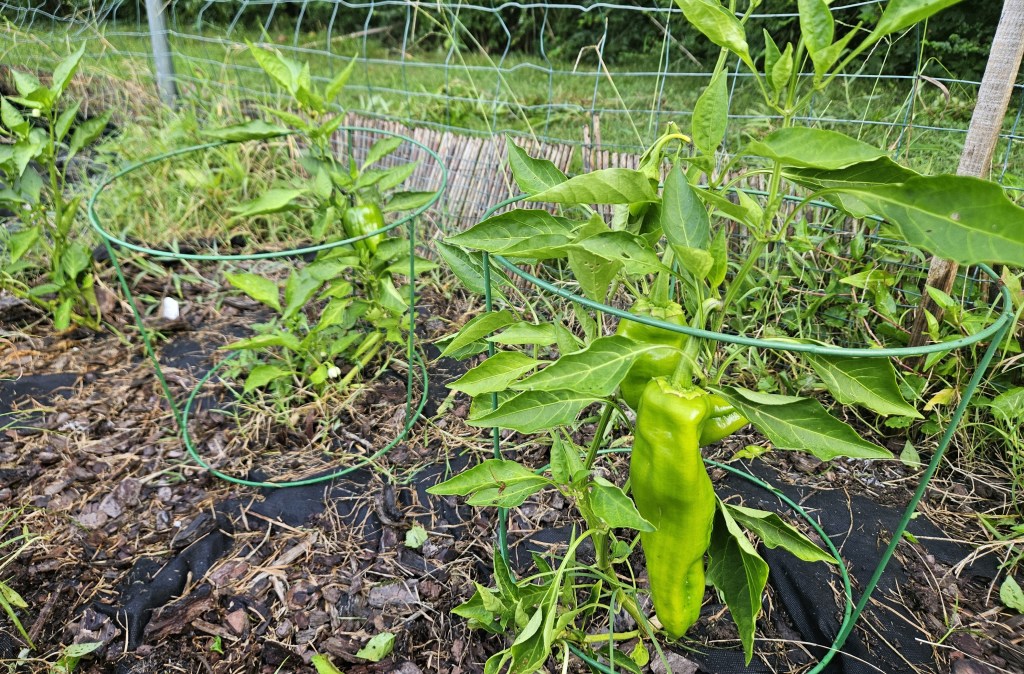
At the garden store this past spring, I bought two red bell peppers and one yellow bell pepper. This gorgeous pepper is not a bell pepper.

This has happened to me before. The plants look similar and are often returned by shoppers to an incorrect shelf. One year, the pepper we bought by mistake was so hot that we had to wash our hands after touching it. I think this is a Marconi, which is a sweet pepper, just not bell shaped. Of course, I won’t really know until I dare to taste it.

I am sure the plant had a little marker stuck in the soil to identify it. I even put those in the ground next to the plant. Only now, months later, it is not there. I can’t even blame the wrong plant on mislabeling. I may just have been too casual in identifying it. I may have assumed that since it was with the bell peppers, it was indeed a bell pepper. My bad.

You will know them by their fruits. Are grapes gathered from thorns, or figs from thistles? Matthew 7:16

That is not a bell pepper. Being close to plants growing the desired fruit does not make it those plants, any more than the weeds growing in my garden are peppers.

Going to church on Sundays does not make you a believer. If you are a believer, that is certainly where you want to be, who you want to associate with, how you connect with the larger body of Christ. If you are a bell pepper, you want to grow in the garden with the rest of the peppers.

But our presence is not the final word. God wants more from us than just proximity. He wants more than just the appearance of right living. He wants a man after his own heart (1 Samuel 13:14), a contrite heart (Psalm 51:17), someone who will love him (Matthew 23:37).

You shall love the Lord your God with all your heart, and with all your soul, and with all your might. Deuteronomy 6:5.

And if we do this, good fruit will follow. Because a good tree cannot bear bad fruit, nor can a bad tree bear good fruit. (Matthew 7:18).

I hope this is not bad fruit growing in my garden. I hope it’s just not what I was expecting. The truth will be in the taste, but I will let it grow for now.

It’s not unlike God to surprise us sometimes. I think He enjoys leaving us little surprise gifts, much like any parent wants to surprise their child with a treat. Or maybe He is encouraging me to be more alert when picking plants. Maybe He is showing me a pepper I will like better than the bells. Maybe He is teaching me that good fruit can look different from what I expect.

The plant is healthy. The plant is producing. The fruit looks like good, albeit unexpected, fruit. It may be a gift. I don’t want to pull it and discard the gift. I certainly don’t want to be found fighting against God because it was not what I expected (Acts 5:39).

When harvest time comes, when the pepper is ready to pick, the truth will be known. For now, I’ll pull only the weeds. I know they are not bearing any good fruit. I will let the pepper grow and see what God has in store.

Love in Christ, Betsy

Garlic Harvest

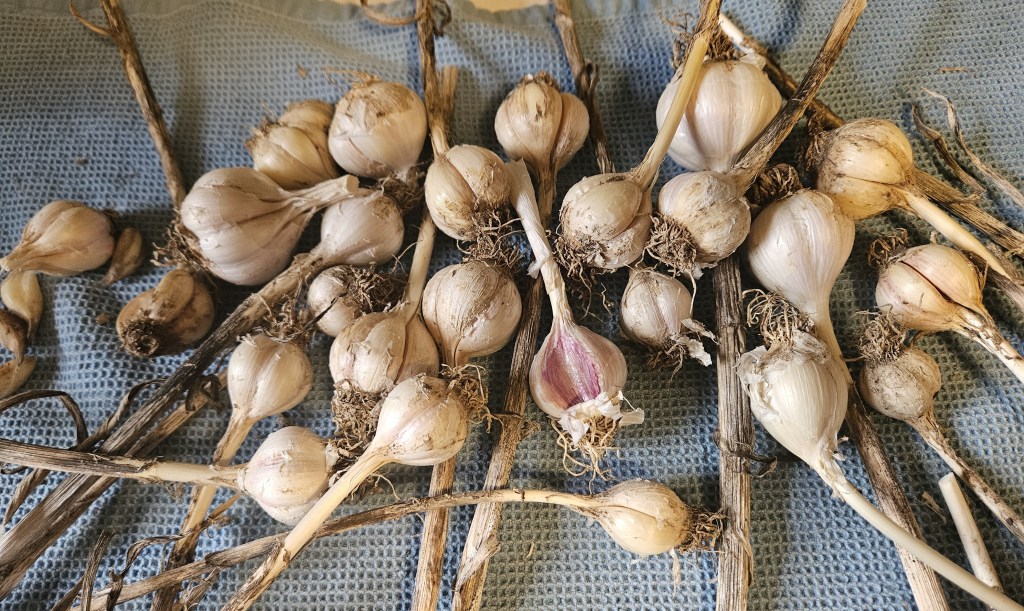
The plants were brown and brittle; it was time to harvest the garlic. With no effort, I grabbed the stiff stalks and pulled the bulbs from the ground. Some bulbs were noticeably larger than others, although I could not see much difference in the stalks.

That’s the tricky thing about root vegetables. It’s difficult to know the health or size of the root because we cannot see it through all the dirt. I had an indication that the garlic bulbs were growing because the plants sent up those amazing stalks and pincushion flowers. But I wasn’t sure they were healthy until I harvested them. They may have been moldy from too much rain.

The first root plants I grew, carrots, were a huge disappointment. Beautiful fluffy leaves, tiny sour carrots. You just don’t know until they are uprooted from the ground.

It’s got me thinking about the thief on the cross beside Jesus. I don’t know but I would have to guess that there was little if anything about his life up to that point which would indicate a good heart. Nothing that was visible or readily observable. In his own words, he deserved to be there on that cross.

And we indeed have been condemned justly. For we are getting what we deserve for our deeds, but this man has done nothing wrong. Then he said, “Jesus, remember me when you come into your kingdom.” He replied, “Truly I tell you, today you will be with me in Paradise.” Luke 23:41-43.

That tiny bulb of faith, invisible to those standing there, was of value to Jesus. The man’s bad deeds were discarded like the brown stalks of my garlic plants. It may seem a little unfair to the older brothers who bore good fruit and followed the rules. After all, Jesus tells us that we will know a tree by its fruit (Luke 6:43-45, Matthew 12:33). This man’s tree apparently bore bad fruit.

If we must be honest, though, our tree probably does as well. We tend to hold the standards we find easy to meet and dismiss the standards which feel unobtainable. But by God’s standards, we all have fallen short. All of us deserve to be punished for our attitudes and probably our deeds as well. Perhaps, like these garlic plants, we have born no fruit at all.

If we say that we have no sin, we deceive ourselves, and the truth is not in us. If we confess our sins, he who is faithful and just will forgive us our sin and cleanse us from all unrighteousness. 1 John 1:8-9.

And that, my friend, is the good news. God pulls up the brittle stalks we show the world and finds the hidden bulbs of our faith. Some are large, some are small, all are treasured.

As long as we have breath, we can call out the name of Jesus like the thief on the cross. And Jesus, who already knows you and wants you to know him, will respond. He, unlike us, can see through the dirt and grime of our lives and see what grows in the darkness. He sees that bulb of faith.

And he believed the Lord; and the Lord reckoned it to him as righteousness. Genesis 15:6.

All you need to do is to plant that first little garlic bulb. That prayer, that scripture, that calling out to Jesus, that instant of belief.

Today, you will be with me in Paradise.

Love in Christ, Betsy

Fruit and Blight

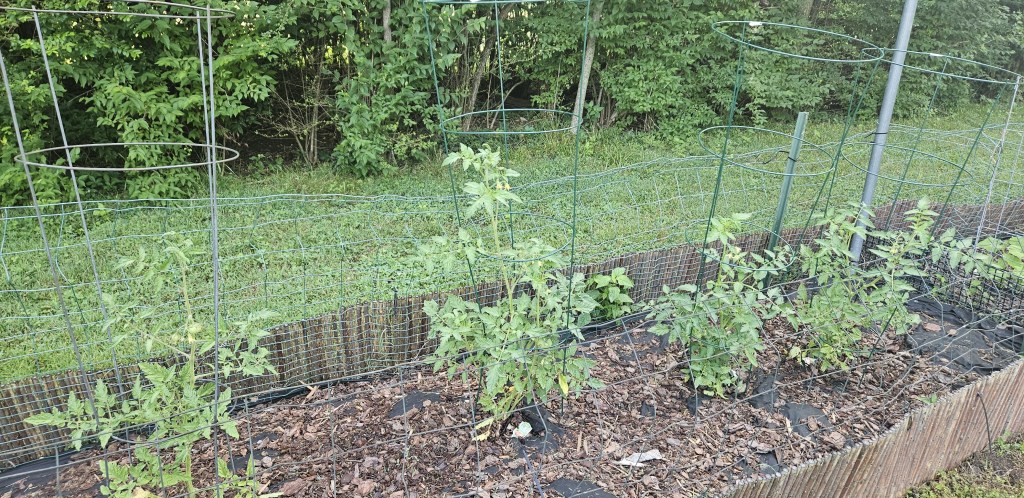
Long gone are the icy mornings and barren grounds of winter. If the calendar and the heat didn’t prove it, these tomatoes would.

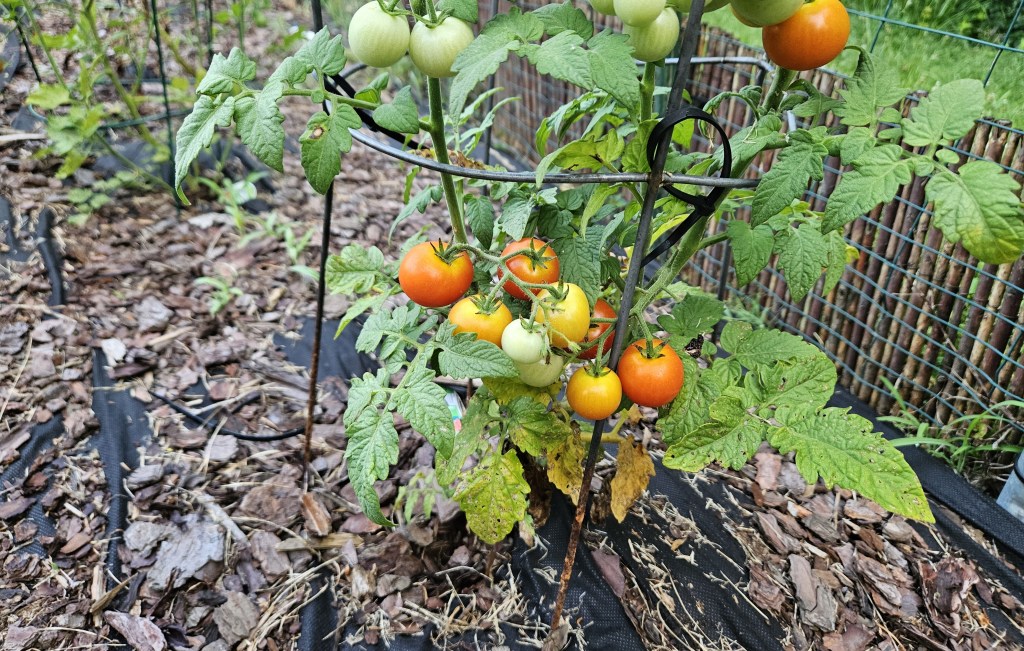
One of the benefits of growing cherry tomatoes is how quickly they ripen. My larger tomatoes are only light green now. These will slowly turn pink and then red, but it will be weeks. But these little beauties are ready to harvest now.

To plant something and actually produce food is amazing. Yes, you expect plants to produce when you plant them, but there are so often complications. The weather, the soil, predators, and storms often interrupt your plans and limit what grows. These lovely little red tomatoes validate the work. Clustered like grapes and sweet to the taste, they will brighten my meals for days.

Other seeds fell on good soil and brought forth grain, some a hundred-fold, some sixty, some thirty, Let anyone with ears, listen. Matthew 13:8-9.

Not all my soil is good. A problem has been brewing for years, and I have been ignoring it. Instead of the problem going away, however, it has gotten worse. Tomato blight. There are several different forms of this, but they are all based in the soil. There are diverse ways to combat tomato blight, most of which need to occur post-season.

For now, I am going to dig up my dead plants and the soil around them and put new dirt and new plants in the ground. The harvest will be late if this works, but at least I will get tomatoes.

In a “perhaps my husband knew best” nod, one of the main ways to reduce tomato blight is to let the ground be covered in clover during the off season. I have abandoned Nick’s practice of tearing down the fence and letting the garden go to grass over the winter. (In my yard, the ‘grass’ is predominately clover.) I stopped this practice to avoid tilling every spring, which is considered harmful as well. But the presence and frequency of blight have increased every year in my no-till garden.

Crop rotation is another option. As I am hoping to alter my garden space this fall, that may be the cure, but all of these are solutions for next year. For now, I will need to try a short-term fix in hope of recouping my lost plants.

All of which makes these little beauties an even better treat.

Amid the blight and dying plants, these tomatoes are bearing fruit. They are not letting the death of the larger tomato plants over there limit their growth or production here where they are. I can learn something from this.

No longer is the soil of our world conducive to bearing the fruit of the Holy Spirit. Perhaps it never has been. Kindness and gentleness are as rare as red tomatoes in a blighted field. On the other hand, what a treat when we see them! What a witness to the better way, to peace and love and joy, to the presence of God. We may be living in the time of Judges, when everyone does what is right in their own eyes, but we can keep our eyes on Jesus and bear the Spirit’s fruit.

By contrast, the fruit of the Spirit is love, joy, peace, patience, kindness, generosity, faithfulness, gentleness, and self-control. There is no law against such things. Galatians 5:22.

Join me in renewing my soil today so we can bear fruit. Such fruit is bright and cheerful and sweet and beneficial to the world.

Love in Christ, Betsy

Garlic Varieties

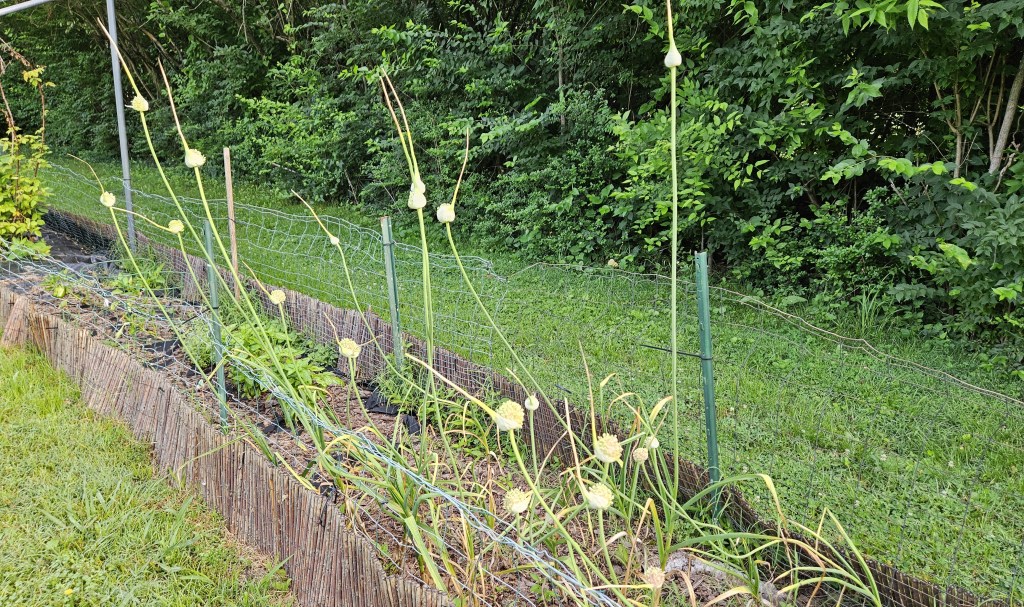
I planted a different kind of garlic this year than I have in the past. These are hard neck garlic instead of soft neck. I didn’t understand the difference until I grew them. After all, garlic doesn’t have a neck, right?

They could be called hard stalk and soft stalk, because these plants look quite different from my previous plants. This garlic is growing tall on stems that are as hard as bamboo, with fat white buds that are opening to fluffy purplish flowers. My others waved like tall grass, bending in the slightest breeze.

But as different as this plant looks to my eyes, both plants are still garlic. What makes them garlic is not the stem strength or the presence (or absence) of a flower. What makes them garlic is what is growing out of sight underground.

I know this because I planted them.

Could God be showing me something here?

How quick I am to judge those whose expressions of faith look different from mine. How quick others are to judge me. Do you raise your hands and jump about? Do you sit silently in your pew with your hands in your lap? Do you only listen to Christian radio? Do you watch church online or on the television? Do you preach the narrow path (Matthew 7:13-14) or that Jesus came for sinners (Mark 2:17)?

Unlike me, God knows what He planted. He knows the important part of our faith may be hidden in the dark underground, in the secret moments of our lives. Outwardly our faith may look quite different, but God sees the heart.

Perhaps it is not how we express our faith that is important in the end, but that our faith is growing deep withing us.

But the Lord said to Samuel, “Do not look on his appearance or the height of his stature, because I have rejected him; for the Lord does not see as mortals see; they look on the outward appearances, but the Lord looks on the heart.” 1 Samuel 16:7.

As mortals, we look at appearances. In the seventies, a question went around – “If you were arrested for being a Christian, would there be enough evidence to convict you?” Do you attend church? Is your Bible dust-free? Do you help the needy? Do you know praise music lyrics? We want that external evidence. We fret a little when our external evidence doesn’t look like other people’s. We fret when their faith doesn’t look like ours.

I’m not fretting over my garlic. I know what is growing in secret. The external evidence, as different as it may be, still indicates that something is growing. Hard neck, soft neck, flower or no flower, garlic is growing.

So that your alms may be done in secret; and your Father who sees in secret will reward you. … But whenever you pray, go into your room and shut the door and pray to your Father in secret; and your Father who sees in secret will reward you…. So that your fasting may be seen not by others but by your Father who is in secret; and your Father who sees in secret will reward you. Matthew 6:4, 6:6, 6:18.

I urge you today to rejoice in the variety of ways God allows us to express our faith, to share His love for us with each other, and praise Him. He knows what He planted. Let us help it grow, knowing that it grows in secret.

Love in Christ, Betsy

See the Bright Side

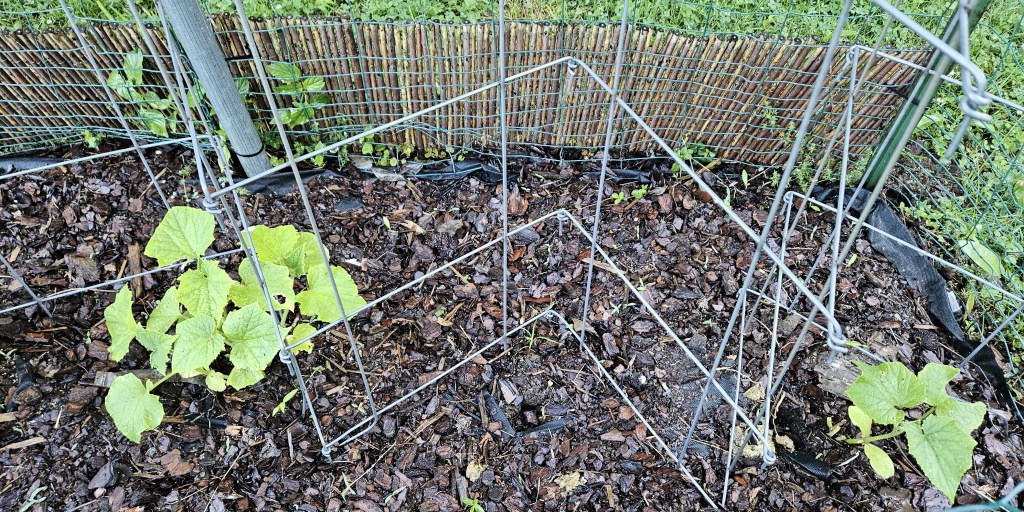
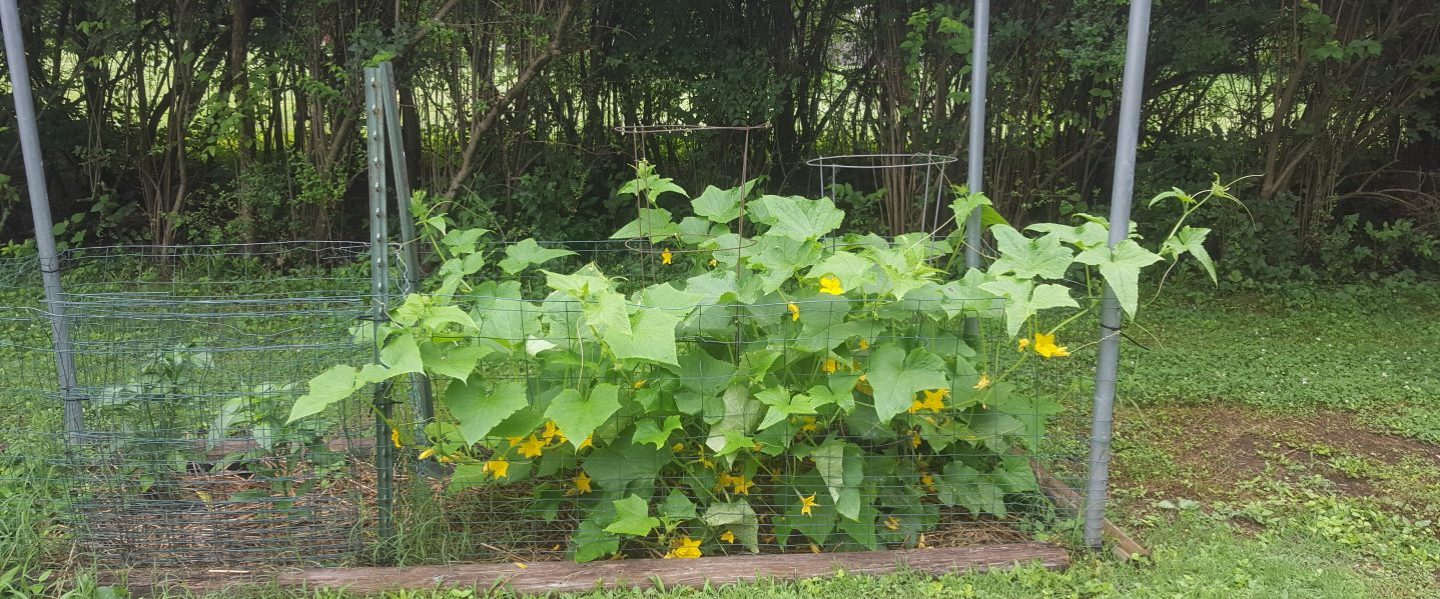
Something has taken three of my cucumber plants. Not nibbled them or broke their branches but taken the entire plant from the ground.

There are several possible culprits. Squirrels are always my first choice for the bad guys, but it’s not their usual method of destruction. It’s not really deer behavior either. It seems more like something a raccoon would do, and they definitely live in my yard. I suppose they could have climbed the fence, but they never have before.

Even more confusing is that they have taken the plants on three separate occasions. What animal has suddenly developed a taste for cucumber plants?

I could get upset about this, but I am choosing not to. Instead, I am trying to see the bright side of this development. Gardening gurus tell me that I should stagger plant my cucumbers, that is, plant a few, wait a few weeks, plant some more, wait, plant – therefore ensuring a longer harvest period. I have always ignored this advice and planted them all at the same time and harvested them all within a few weeks.

This year, for reasons beyond my control, I will be following their advice.

Sometimes, we just need to learn things the hard way. And it makes me wonder what other things God has had to teach me the hard way. Either because I would not follow advice, or because some lessons can only be learned through living through the situation.

My brothers and sisters, whenever you face trials of any kind, consider it nothing but joy, because you know that the testing of your faith produces endurance; and let endurance have its full effect, so that you may be mature and complete, lacking in nothing. James 1:2-4.

Now, that is looking on the bright side!

Perhaps I am growing into this approach to trials. I am not upset about the lost cucumber plants, but grateful for the (albeit forced) opportunity to stagger-plant. The disappointing lack of publisher interest in my fiction writing has pushed me to concentrate on a new devotional. A theological shift in an old group has led me to discover a new group that encourages me to question and grow in my faith. Sometimes trials draw us closer to a personal God, a redeeming Christ, a sustaining Spirit.

And if our goal truly is to become more Christ-like, if we truly are seeking the Kingdom of God first, then anything that furthers that end is a gift, a blessing, a cause for joy, even if not for giddy happiness. And this could be true for more than just stolen cucumber plants. This could be true for chronic disabilities, sudden health scares, the loss of friends and loved ones, disruptions of all shapes and sizes.

So, we do not lose heart. Even though our outer nature is wasting away, our inner nature is being renewed day by day. For this slight momentary affliction is preparing for an eternal weight of glory beyond all measure. 2 Corinthians 4:16.

I encourage you today to look on the bright side of whatever trial you are facing. An ailing parent, a struggling child, discord among friends, physical limitations, daily frustrations, cosmic fears, or garden thieves.

Knowing that suffering produces endurance, and endurance produces character, and character produces hope, and hope does not disappoint us, because God’s love has been poured into our hearts through the Holy Spirit that has been given to us. Romans 5:3-5.

Love in Christ, Betsy

Kind Words

A perfect morning. The sun shines in a clear blue sky. The grass is wet with dew. The ground is damp with yesterday’s rain. It’s 75 degrees at 7:30 in the morning. Perfect.

No harvest this morning. The sugar snaps are gone, and the rest have yet to produce. No “work” to be done, no harvest needing attention. Just a restful, beautiful morning to bask in God’s marvelous creation.

I congratulate the plants on their progress. What large new leaves the fig has grown, how healthy the oregano looks, and a tiny green pepper – congrats!

The evidence that talking to your plants helps them grow isn’t conclusive (Penn State Study), but it can’t hurt. They are living things that respond to their environment. I sense that they know that I care how they are doing. I check if their limbs need support and gently lift them onto the cages. I pull a few random weeds and try to make their environment as conducive to growth as possible.

I sense I should be doing this for the people God has put in my life as well.

Therefore, encourage one another and build each other up, as indeed you are doing. 1 Thessalonians 5:11.

Paul repeats this exhortation in Romans 14:19, Ephesians 4:29, and 1 Corinthians 14:26. The writer of Hebrews encourages us to meet together and encourage each other (10:24-25). This seems to be an important part of Christian living, and yet we need constant reminding to do it because we so often fail at it.

Some mornings, I don’t walk in my garden. It will be fine without me. Some Sundays, I don’t go to church. Some days. I don’t check on my friends who are hurting. Surely, they will be okay for a day or two without my interference.

Sometimes, when I do gather with friends, I am more focused on what others are doing wrong instead of what they are doing right. Usually, that is someone or a group of people who is not present with us. We bemoan what “they” are doing, all the people who have it wrong, who don’t agree with us. On occasion, I have been known to criticize someone I am with, in love, of course!

I rarely criticize my plants. (I would say ‘never,’ but I can’t be sure about that!) If they are struggling, I help them. If they need water, I water them. If they need support, I provide it. Gentle words of encouragement and praise. I don’t recall ever complaining about the cucumbers to the tomatoes, or vice versa, although they grow very differently.

Are you not a precious plant growing in God’s garden? You will grow differently than me. You will look different, act different, respond differently. You may bear different fruit. God may have given you a very different purpose for your time on this earth than He gave me.

But as it is, God arranged the members of the body, each one of them, as he chose. If all were a single member, where would the body be? As it is there are many members, yet one body. The eye cannot say to the hand, “I have no need of you,” nor again the head to the feet, “I have no need of you.” 1 Corinthians 12:18-21.

Instead, perhaps, we should be congratulating those who express their love for God differently from us – on their faith, their determination, their growth, and their evident love. Perhaps, we can learn to trust that God will produce in them the fruit He desires, just as we trust that He will produce that fruit in us.

And if I only spoke words of love and encouragement to those around me, what a beautiful day every day might be. It might even be perfect.

Love in Christ, Betsy

The Shift

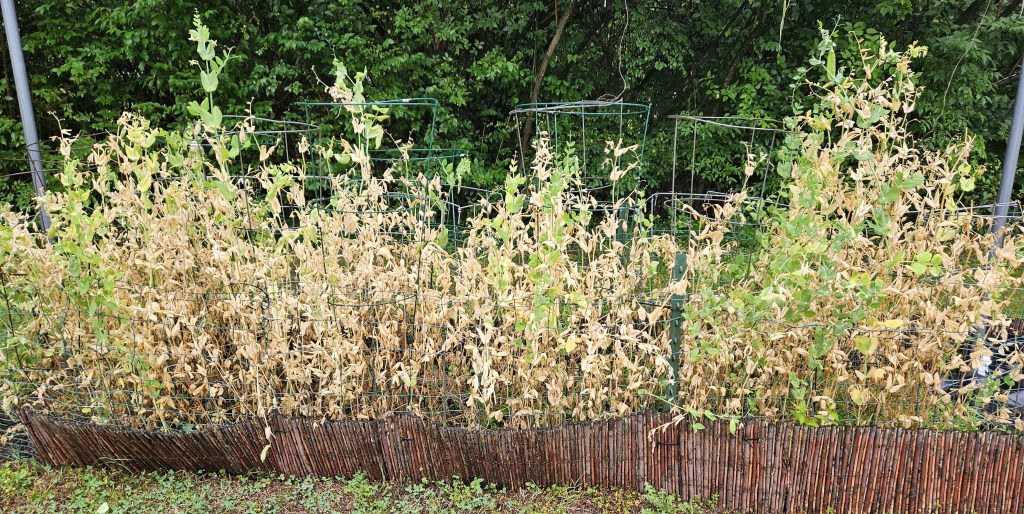
No matter what the calendar might indicate, summer is here. School is out, the pools are open, Memorial Day is over, and the sugar snaps have succumbed to the heat. It’s summer.

I had a good sugar snap harvest this year. Not my best but far from my worst. It was a little warm and dry for these plants, but the peas were sweet and crunchy and enough to share.

I could be sad about my brown and brittle plants. It would be wonderful if they could grow and produce all summer, but that is not what sugar snaps do in Tennessee. They grow in the Spring, they produce in May, and they die when the temperatures get into the eighties. Instead of being saddened by their relatively short lives, I am grateful for their delicious fruit and the joy of the harvest that they brought me.

Already the rest of my garden is calling for my attention. Leaves cover the fig and the raspberry. The tomato plants grow taller by the day. I have already picked basil leaves, and the garlic is beginning to mature. The garden continues to grow and produce.

After my husband died, I found it disturbing that the world continued. I suddenly understood the old practice of stopping the clocks, covering them even. If you can’t turn back time and bring your loved one back, at least you can try to stop it from moving on. Because you don’t want to get over their death. You don’t want it to be true, and the longer you live with the reality of their passing, the truer it becomes.

But while the sugar snaps are dead, the garden is not. I am coming up on the seven-year anniversary of Nick’s death. Time has continued. New plants have grown in my garden; new interests, new friends, and new hobbies have arisen to fill my days. Maybe even one day, romance may resurface, although I am not planting those seeds and am not ready for it to appear.

I sense the shift, though. Ever so slowly, I am turning my attention from the brown and brittle hurt of loss to the green and growing life around me. The lake beckons. My children and grandchildren thrive. My friend group expands. I find myself going to new venues to hear live music. I am learning to blend the old things and the new things.

For everything there is a season, and a time for every matter under heaven. Ecclesiastes 3:1.

I still twinge at the thought of moving on though. I still love my husband. I still miss him. But the hot weather that kills the sugar snaps makes the tomatoes and cucumbers grow. And their fruit is delicious as well. The garden has taught me that different fruits require different environments, that not all fruit appears at the same time, and that good things can grow under any circumstance. This is true in the garden; this is true in life.

We know that all things work together for good for those who love God, who are called according to his purpose. Romans 8:28.

And summer can be a glorious time, full of play and water sports, and vacations, and a break from routines. Summer is a time for beach reads and family reunions, travel and sitting by the water. Summer is a time for red tomatoes and purple figs, cucumber sandwiches and fresh raspberries.

Join me in the shift. Let’s turn our attention from grieving the loss of what was to celebrating what is and what will be.

Love in Christ, Betsy

Wealth

Few things make me feel wealthier than an abundant harvest. I know it is nothing compared with commercial ventures or multi-acre farms, but it is more than I can eat.

What makes you feel wealthy? You are, you know. The world may define wealth in terms of money and money alone, but we all know that is not the capital T truth. As “It’s a wonderful life” reminds us, wealth can be measured in different ways.

And yet, we still often judge ourselves and each other in terms of possessions, perceived financial wealth, and the ability to engage in expensive pursuits. And someone else always has more than we do.

But I tell you, if you are reading this, you are most likely wealthy compared to someone.

US citizens who account for the lowest 5% of income in the nation are richer than just under 70% of the remaining citizens of the world. (Cultural World.org ). Even the poor in the US are wealthy using money as a standard.

Today I challenge you to change that standard.

Using wealth as a measuring stick is nothing new. It was, and sometimes still is, seen as a sign of God’s favor.

“Again I tell you, it is easier for a camel to go through the eye of a needle than for someone who is rich to enter the kingdom of God.” When the disciples heard this, they were greatly astounded and said, “Then who can be saved?” Matthew 19:24-25.

But God can bless us in many ways that have nothing to do with finances. We can choose to measure wealth by other standards.

Has God blessed you with a spouse or friend whose love is unquestioned? You are wealthy. Has God blessed you with children who desire your company? You are wealthy. Do you have friends with whom you can share experiences, time to pursue your interests, and the freedom to follow your preferences? You are wealthy. Do you have food and water and a place to rest your head? You are wealthy.

I am wealthy from the gift of these sugar snaps. There are more here than I can eat before they start to sour. If I preserve them in any way, they lose their crispy crunchiness and the sweetness is diminished. The only thing I can do with such abundant wealth is share it with others.

Perhaps that is where using money as a measuring stick so often falls short. If perceived wealth is the measure, we must acquire more of it. The concept that we will have more only when we give some away seems counter-intuitive, maybe even a little crazy. But that is what Jesus tells us to do.

Give and it will be given to you. A good measure, pressed down, shaken together, running over, will be put into your lap; for the measure you give will be the measure you get back.” Luke 6:38.

And not just give of our finances but give of all the gifts God blesses us with. Sugar snaps of course, but also love and forgiveness, peace and joy. We can share our time and our unique skill set. We can share God’s love for people, animals, and plants.

The point is this: the one who sows sparingly will also reap sparingly, and the one who sows bountifully will also reap bountifully. 2 Corinthians 9:6.

Sow bountifully, give bountifully, and you will be truly wealthy.

Love in Christ, Betsy

Fruit!

Like green candy dangling from the vine, the sugar snaps are ready to pick. Crisp and crunchy and sweet. What a joy to have this harvest while my other plants are still in their infancy.

This fruit is not a surprise. I planted and cared for these vines precisely for this purpose. But my plans and effort do not always yield fruit. There have been years when the seeds didn’t sprout, years when the plants struggled to produce, years when I have not been here to harvest the peas.

The lack of fruit in the past makes these peas taste even sweeter.

Like the first morning I woke up looking forward to the day ahead. It was more than a year after Nick had died. Covid was in full swing; the world was depressed, and I was just one more sad soul. I didn’t plant sugar snaps that year. I didn’t plant anything. But it was a gorgeous sunny day, and I was going to spend it at the lake, on a boat, by myself. And I was looking forward to it.

The warm sun, the gentle breeze, the chirping birds, and the ripples of water against the shore were a feast for the senses, a gift from God that had nothing to do with the presence or absence of others.

We try, in this life. We try to be faithful, we try to be good, we try to be kind and loving. We try to be successful, or wealthy, or popular. We try to be good parents and good friends. We plant seeds and hope that they will grow. We water and feed and support. And, sometimes, we think we have accomplished what we set out to do. Other times, the seeds don’t sprout, we aren’t fruitful, or we can’t enjoy our success when it comes.

And then God reminds us that He, and He alone, is the giver of all good things.

Do not say to yourself. “My power and the might of my own hand have gotten me this wealth.” But remember the Lord your God, for it is he who gives you power to get wealth. Deuteronomy 8:17-18.

Occasionally, someone will taste one of my sugar snaps and want to grow their own. This is the best reward of all. You too can have this fruit in your life. It will take a little effort on your part, but it is so worth it. You will have failures and unproductive times, but when that fruit shows up, it is wonderful.

I pray the Holy Spirit bears such fruit in my life that others desire it and ask me how to grow it!

In your hearts sanctify Christ as Lord. Always be ready to make your defense to anyone who demands from you an accounting for the hope that is in you; yet do it with gentleness and reverence. Keep your conscience clear, so that, when you are maligned, those who abuse you for your good conduct in Christ may be put to shame. 1 Peter 3:15-17.

I crunch on another sugar snap and let the sweetness fill my senses. God is so good in His gifts to the world. Sunshine, water, fruit, hope, joy, peace, and something to look forward to.

I hope you step outside today, soak in the sunshine and breeze, listen to the birds and skittering animals, and sense God’s presence and love. I pray you take His seeds, plant them in your life, and bear sweet fruit to share with the world.

You can’t do it on your own. Only God can do it and only when you let Him. A great harvest awaits and the fruit is sweet.

Love in Christ, Betsy

The Importance of Water

It rained! Praise the Lord! And the rain stopped for Easter! God is so good!

Silly, letting weather affect my mood so, but I am grateful for the rain – and for the sun.

March was incredibly dry for Middle Tennessee. In a month when heavy rain often causes my creeks to overflow, this year, the third month brought little rain. I found myself carrying pitchers of water for my new trees and watering the garden like it was June.

Plants must have water.

As tempting as it is to fill my mornings with other things, if I don’t include time for watering my plants, they will suffer limited growth and limited fruit. It may take 5, 10, or 20 minutes, but I need to carve out the time to do this. Because not watering my plants may lead to no growth and no fruit.

I am grateful when the rain falls from the sky and relieves me of the obligation to water the garden. Rain is so much more beautiful and natural. But letting the environment, or the weather, determine the success of my garden is not wise. Letting the environment and my daily life determine my relationship with God is not wise either.

For my own growth and well-being, to have any chance of bearing the Spirit’s fruit, I need to spend time in prayer. When prayer doesn’t spring naturally from the rain or sunshine of daily life, I need to make the time to spend time with God. I need to carve out 5, 10, 20 minutes to be alone with God and water my soul with prayer and scripture.

There was a time when I rejected the idea of such a structured prayer time. Prayer shouldn’t be an obligation. I should come to the Lord when praise or despair leads me to Him. My prayer should spring spontaneously from my heart. Wasn’t that the problem with the Pharisees? They had made faith an obligation rather than a heartfelt choice.

But the garden has taught me that as beautiful as spontaneous rain falling from the heavens is, sometimes I need to get out my hose and water.

Sometimes the sunny dry weather we all enjoy can limit growth in my garden. The plants need water and I need prayer. If this does not happen spontaneously, I need to make it happen. Otherwise, I may become stagnate and begin to wilt. Otherwise, I may fail to grow, fail to bear His fruit. All for lack of water, all for lack of prayer.

The Lord will guide you continually, and satisfy your needs in parched places, and make your bones strong; and you will be like a watered garden, like a spring of water, whose waters never fail. Isaiah 58:11.

I encourage you to water your soul today. If God is not forcing you to your knees in praise or despair, take 5, 10, or 20 minutes to get there on your own.

And the God who sees you and hears your prayers will reward you with His presence, His love, and His fruit.

Praise the Lord. He is risen. He is risen indeed.

Love in Christ, Betsy