Armchair Quarterback

It’s football time!

Beyond watching the game, many of us also coach the players from our dens. Throw the ball! Run! Go for it! As if we know more about the situation then those athletes and coaches who have played and studied the game for years. As if we were physically or mentally capable of doing what they are doing. As if we were willing to dedicate that much of our life to this game. Because let’s face it, I am not. I do not have the skill set or raw talent they have. I have not spent hours on training and physical conditioning. I have not learned the nuances of my teammates or my opponents. I don’t know all the different options available and what determines which plays are carried out when. I have not immersed myself in strategy and analytics. So, what qualifies me to criticize these players and coaches who have?

And if that is true in football, it has become a national obsession with politics. I am completely unqualified and incapable of running for President, being elected President, or governing as President. My guess is that that is true for you as well. And yet, without being to understand the complexities of the job, we routinely criticize whoever holds that position. As if we could do a better job. As if meeting my expectations of leadership were the President’s objective, as if he should value my opinions at all. What hubris!

I fear we do this with God as well sometimes. We question His motives, His presence, His sovereignty. We think He doesn’t love us when we don’t get our way. We stomp our feet like an indignant three-year-old and scream. And when we have finished with our fit, God answers.

Where were you when I laid the foundations of the earth? Tell me, if you have understanding. Who determined its measurements – surely you know! Or who stretched the line upon it? On what were its bases sunk, or who laid its cornerstone when the morning stars sang together and all the heavenly beings shouted for joy? Job 38:4-7.

That is not to say that we should stop asking questions, stop trying to learn more. If we care about football, we should learn the rules, the strategies, and the physical demands of the game. If nothing else, it helps us realize how difficult their job really is. Asking questions and learning the answer may help us understand why the players we were yelling at from our couches did not throw or run or go for it.

And we certainly should care about how our leaders govern us. If there are issues that are important to us, we should be all means get involved in advocating for those issues, whatever they may be. But for the past fifty years, we have made a pastime of hating our President. No matter what our President is doing, we criticize his decisions and how they are made. As if we could do better.

And we should certainly bring our questions to God. We should study and read and learn and pray and worship and stomp our feet occasionally. From Abraham to Nicodemus, God welcomes our questions, our arguments, our wrestling. He wants us to ask because He wants us to get to know Him better.

And this is eternal life, that they may know you, the only true God, and Jesus Christ whom you have sent. John 17:3.

Sometimes a question is criticism and sometimes it is a pathway to deeper understanding. Let’s stop asking questions like we already know the right answer. Let’s admit that we are not trained athletes or successful politicians. Let’s admit that we are not God and resist the urge to criticize Him. Instead, let us bring all things to Him in prayer.

Love in Christ, Betsy

Roots

A few years ago, a best-selling Christian author told a story about a tree that had fallen in her yard.

She had installed an underground irrigation system to keep her grass and trees alive. It worked, but the system had encouraged the tree to send its roots out laterally through out the yard just under the water source. While the tree’s shallow roots brought ample water, when the storm came, the tree was unable to stay standing. Its roots were too shallow. To stay upright, the tree needed to develop deeper roots.

The speaker left the story there. We need to develop deeper roots to withstand the storms that life will certainly bring.

The story has stayed with me. What I keep returning to is what caused the tree to have shallow roots. The tree was doomed because it had never been forced to develop deep roots. It did not have to work for the water. There were no dry spells to encourage the roots to dig deep into the ground for hidden aquafers.

The woman meant well watering her yard. We all mean well when we make life easier for others. We care about our plants, our pets, our family, our friends, and even the wildlife around us.

But there is growing research that what we think is helpful may be harmful. Feeding wildlife can hinder their ability to forage naturally (Don’t feed the wildlife!). There is growing evidence that protecting our young children from failure and heartache limits their ability to manage those situations as adults (Let your children fail). And making water too easily accessible for our trees may prevent them from growing deeper roots.

Could this be true in our faith as well?

A woman once told me that she had been skipping going to her big screen church because she just didn’t feel happy enough to sing all that praise music and lift her hands. I wanted to ask her what being happy had to do with worshiping God, but instead I encouraged her to read the psalms.

I am weary with my moaning; every night I flood my bed with tears; I drench my couch with my weeping. Psalm 6:6.

Just maybe it is precisely the times of pain and thirst that encourage us to develop deeper roots of faith.

Can we believe in a God who lets thousands die in flooding? Who lets a child be abused? Can we worship a God who shatters our happy life? How will we know if our life is always easy and successful and well-watered?

When the storms of life come, and they do come, I want my roots to reach deep to find the hidden joys of a relationship with God. There is everlasting water there. It may not be easy water. It probably won’t be easy water. It may not contain the laughter of the water park, but it will bring peace and strength and faith.

Jesus said to her, “Everyone who drinks of this water will be thirsty again, but those who drink of the water that I will give them will never be thirsty. The water that I will give will become in them a spring of water gushing up to eternal life.” John 4:13-14.

Today, I will praise God for those days when He has led me develop deeper roots of faith. I thank Him for those days of drought and heat, of tears and sadness, of doubts and fears that have led me to dig deep and find His eternal water.

Would it be wrong to wish the same for you?

Love in Christ, Betsy

Change

The cucumber plants have died. The pepper plants are dying. It’s time to call the summer garden done and begin preparations for fall.

Change is never easy. The end of something you loved, successful or not, is a loss. The days are over when I can fix or improve this year’s harvest. It was what it was and now I must move on.

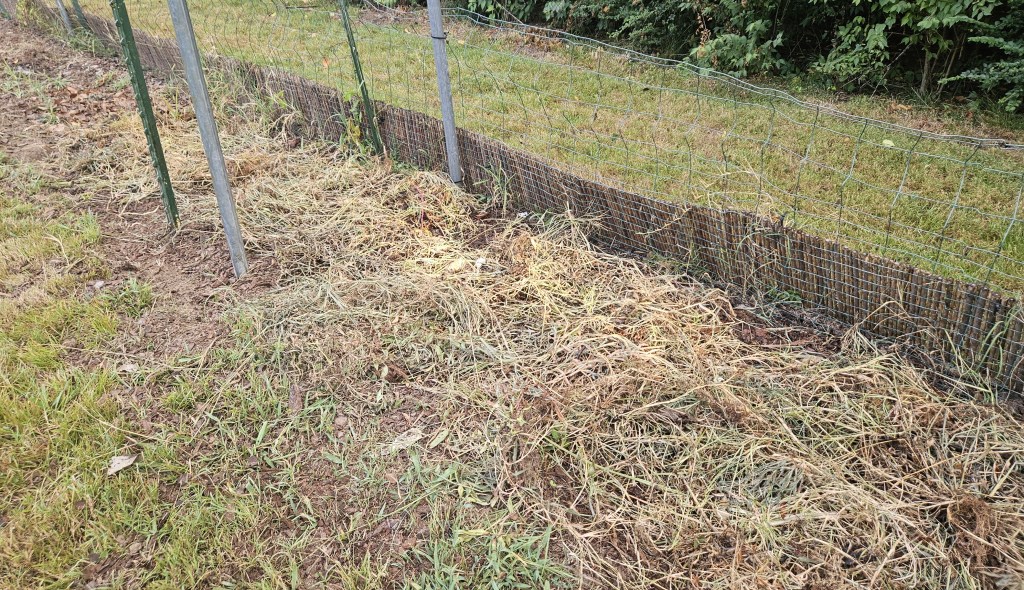
This year, that moving on involves work. My fence is broken down and torn apart in places. My soil is diseased and in need of restoration. My body tells me to stop bending over the fence to harvest and develop a means of easier access. So, I have called in my garden helpers, and we will slowly reconfigure the garden. It is too much to do in a day. And I have at best one morning a week to give to my garden. And I have some time before I need to plant again, so I am in no hurry.

This seems to be the way most change happens, slowly, over time, a little bit at a time. Not all change is good, but not all change is bad either. This tearing down of my garden feels destructive. I’m ripping up dead plants, pulling out supporting cages, and tearing down protective fences. This can’t be good, right?

Now I will tell you what I will do to my vineyard. I will remove its hedge, and it shall be devoured. I will break down its wall, and it shall be trampled down. Isaiah 5:5.

But the garden is such a glimpse of a larger reality. I know that all this destruction will enable my garden to produce more and better fruit in the future. I know that this destruction is not permanent. Like re-breaking a bone before you can set it properly, sometimes things have to get worse before they can get better.

We know it’s true, but it’s hard to see when our lives are being ripped up, our support pulled away, and our defenses destroyed. It just feels like destructive change. It feels like judgment.

Perhaps it is judgement, in the sense that I know my garden can produce better fruit than it did this past year. This year’s harvest was fine. I loved the few tomatoes I got, the random cucumbers, the scanty basil leaves, but I know the space has produced better in the past. If I want it to produce better in the future, some destruction needs to happen.

Perhaps God knows that you are capable of oh-so-much more than you are producing right now. Not that what you are giving to the world right now is bad or unappreciated, just that God wants your life to be abundant and your garden to be fruitful.

I am the vine, and my Father is the vinegrower. He removes every branch in me that bears no fruit. Every branch that bears fruit, he prunes to make it bear more fruit. John 15:1-2.

The problem, of course, is that the promised benefit is in the future. Right now, all we sense is destruction and judgment.

If, however, our desired goal is a closer relationship with God and if difficulties, change, and disruptions deepen and strengthen that relationship, then we can see them as pruning, as ensuring an abundant future. If our desire goal is a comfortable, easy life, we will not see the beauty in overturning the garden.

The transformation of my garden will take a while. I hope you will continue to join me by reading along. I can’t promise it will be pretty, but I am confident that God will bring something good out of all of it.

Love in Christ, Betsy

Figs

School has started and summer draws to a close. My garden is winding down as well. The leaves on the cucumber plants have begun to wither and there are no more blossoms on the peppers. Soon it will be time to harvest the basil and freeze pesto for the winter. But my figs – they are telling a different story.

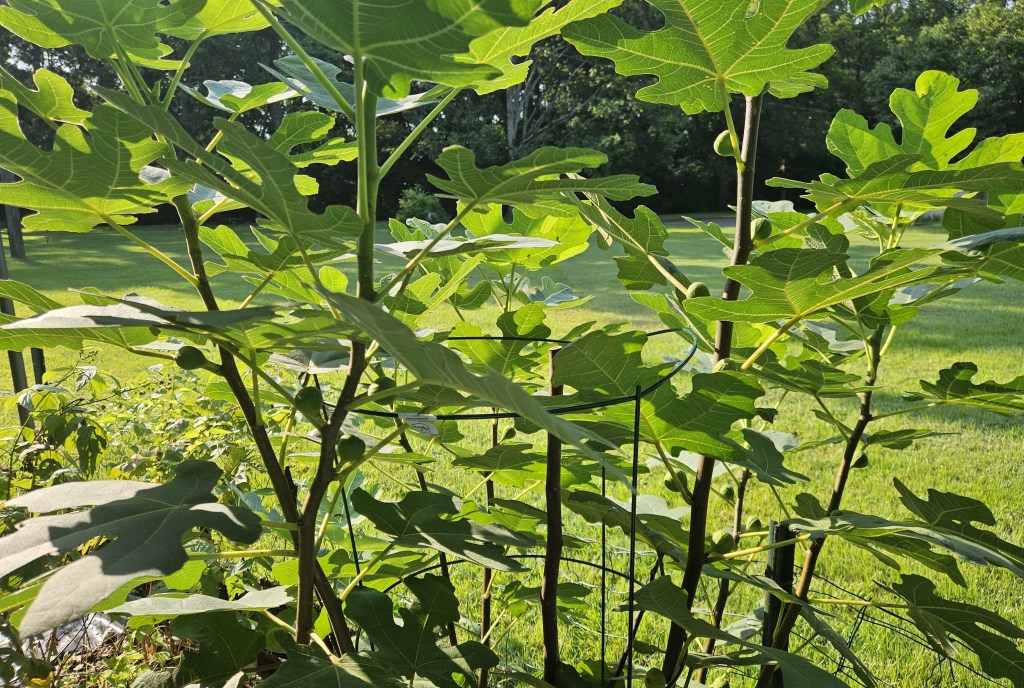
I have eaten ripe figs in early August, so I know that these figs may be ripening late, but what a gift! This is year three for my fig tree, the year they are due to bear fruit, and my little tree is loaded with green buds. As I slowly dismantle my garden, I know these buds will grow larger and turn purple, soft, and delicious.

The promise of fruit, the waiting as the plant grows, the excitement as the fruit appears, this anticipation is one of the great joys of gardening.

So often, our food needs are met immediately. We go to the store, get what we want, and eat it. Is it winter? That is no problem. Someone has shipped fruit and vegetables from a warmer clime or grown them in a hothouse. You can get almost any produce even on the coldest days. No waiting, no anticipation.

A garden reminds us that God did not create a world where our wants were met immediately. He created a world of seasons, of fluctuations in temperature and rainfall, of planting and waiting.

Be patient, therefore, beloved, until the coming of the Lord. The farmer waits for the precious crop from the earth, being patient with it until it receives the early and the late rains. James 5:7.

It’s hard to be patient. It’s difficult to wait. How long, O Lord?

As children, we must wait to grow up, until we are large enough, smart enough, old enough, until we are mentally and physically capable. As adults we must wait (hopefully) for the right spouse, the right job, the right place to live. We wait to have children and then wait for them to mature. We wait for wrong doers to be brought to justice and good people to get a reprieve from their troubles. We wait for God to change the people around us and, if we are honest, to change us as well. We wait for figs to ripen.

While waiting, we continue in our daily tasks of tending. We water and weed the garden. We struggle at the challenges of the day. We help those around us. We aid those who are hurting and love our neighbors. We pray and meditate on scripture. We listen for God’s call to us and follow Him.

He has told you, O mortal, what is good; and what does the Lord require of you but to do justice, and to love kindness, and to walk humbly with your God? Micah 6:8.

And as we go about our tasks, the fig ripens. The child grows up, we find a soulmate, we find purpose in a vocation, wrongs are righted, and prayers are answered. We may even realize that we have been changed by the presence of the Holy Spirit in our lives.

The day will come when these figs are ready to harvest. The day will come when we are ready to face the Lord. The day will come when God puts all his enemies under his foot. Until that time, persevere in your daily tasks, pray without ceasing, savor the joy of anticipation, learn the peace of patience, wait for the fig to ripen.

Because those figs would not taste good today, but in the future, they will be delicious!

Love in Christ, Betsy

Compost

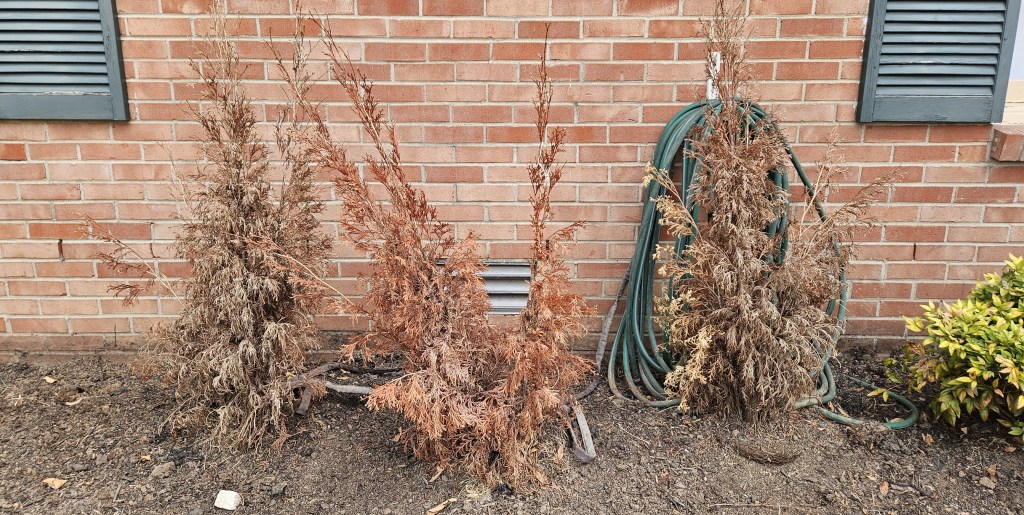
I am grateful for the tomatoes I picked earlier in the season because that is all I am getting this year. The blight has taken the rest of my plants, including the new ones. The ground is soggy from all the rain preventing me from taking much more action this late in the season.

My friend’s garden has yielded abundant large red tomatoes, but not my garden, not this year.

Failure is just a way of showing us where we can improve. A challenge; a test. My soil is damaged and I will need to intentionally restore it this fall.

To help the effort, I started a compost pile where the sugar snaps grew. I collect my non-animal food trash, add it to dead leaves and old straw, and toss them with a rake every few days. Our daily rains have kept the pile damp and moldering. The ever-growing combination of leaf litter, coffee grounds, straw, and vegetable waste will not only benefit the ground it’s on now but hopefully replenish the tomato plot when I move it there.

My original plan was to move the compost in September, but since my tomato plants are all dead or dying, I will move it in August. When I take down the fence in September, I can begin working the compost into the soil where I plant the tomatoes and let some clover grow.

There’s no guarantee that this will work. But if I am to produce tomatoes, I need to provide the plants with better soil. Like the gardener and the fig tree, I’m not willing to accept the failing crop.

Then he told this parable: A man had a fig tree planted in his vineyard; and he came looking for fruit on it and found none. The gardener replied, “Sir, let it alone for one more year, until I dig around it and put manure on it.” Luke 13:6,8.

Manure. Vegetable waste. Leaf litter. Refuse or worse. This is what the soil needs to enable the plant to bear fruit. Throw some s*** at it.

Yep, that may be what we need as well. It’s certainly not what we want. We don’t want to be mushrooms, kept in the dark and fed manure. We don’t want our lives uprooted and covered in cast-off trash and excrement. Even if that’s not literal, life can feel that way at times, and it is not fun.

But sometimes that may be just what we need. We may need to feel like we’ve been dug around. We may feel like all we get are the dregs. We may feel put upon and afflicted. We may be put upon and afflicted.

So, we do not lose heart. Even though our outer nature is wasting away, our inner nature is being renewed day by day. For this light and momentary affliction is preparing us for an eternal weight of glory beyond all measure. 2 Corinthians 4:16-17.

We just need to have faith that God is doing something, something that will enable us to bear good fruit. We may need what is afflicting us, whatever compost has been tossed in our lives, to grow. Whatever gross, yucky, trashy, uncomfortable thing is going on in our lives right now might be just what we need. Faith says God knows what He is doing and that He will work all things together for good for those that love Him (Romans 8:28).

Failure shows us where we can improve. My soil needs improvement and replenishment. My life may as well. That may come from God digging around and adding manure to my life, just as I dig around and add compost to my garden. All in preparation for a bountiful harvest and the weight of glory.

Love in Christ, Betsy

Savor the Tomato

There are moments when life just feels a little overwhelming, when it feels hard even though I know it’s not. There are moments when I doubt what I am doing and why; when I wonder if I am just a happy hamster running around and getting nowhere.

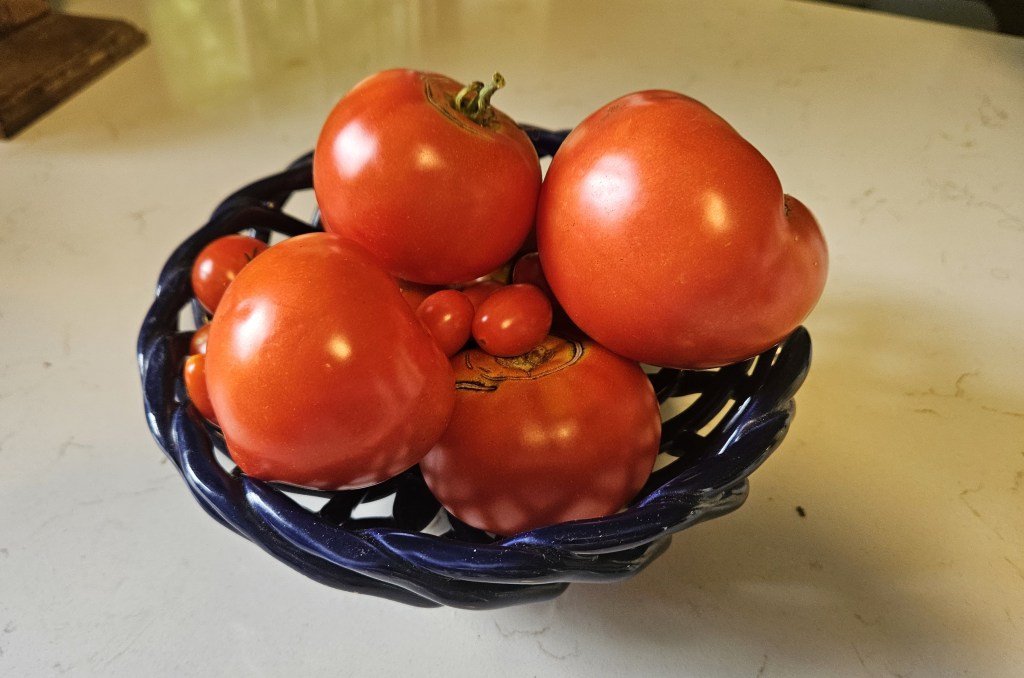
But then, like a pot of gold at the rainbow’s end, I have ripe tomatoes. The birds did not get them; the squirrels did not get them; the blight did not get them. Red, ripe tomatoes grown in my back yard. They are almost too precious to cut into and eat, but I do. Uneaten, they will rot on the counter and that would be too great a waste.

I eat the smaller ones like an apple. They are tangy and juicy and taste like summer. The smell reminds me of my grandparents and my husband. I sense a connection with a long line of ancestors who grew their own food. This is how food should be. A reward for effort and diligence, a gift that grows through God’s miracle of seed and transformation, connecting me with the earth in a way that the ones on sale at Kroger can’t.

I slice and eat the large tomato on white bread with mayo and salt. I only eat white bread with tomatoes and cucumbers in an effort not to overpower their flavors with the flavor of the bread. There is something of childhood in the soft squares of white bread, a simplicity lost in the multigrain, nutty, textured bread I usually favor.

It’s a lot of emotions for lunch.

God said, “See, I have given you every plant yielding seed that is upon the face of all the earth, and every tree with seed in its fruit; you shall have them for food.” God saw everything he had made, and indeed, it was very good. Genesis 1:29,31.

Too often I go through the motions. I do what needs to be done without much thought. I lose myself in a book or a movie. I eat the food in front of me and talk to the people around me and remember very little of it. This simple meal of homegrown tomatoes reminds me to be fully present in every moment as I am in this one.

This food, these people, these tasks have meaning and purpose. Their stories are the culmination of generations of stories. Our interactions are woven into a tapestry that will ripple through future generations. Don’t breeze through it; don’t let it pass without giving it your attention. Somehow, the simple act of savoring this one tomato sandwich has slowed time for me, infused this moment with meaning, and shown me a purpose in my actions. I work in the garden so that I can savor this sandwich. I write this so perhaps you can savor this moment as well.

We are all so beautifully connected and interrelated, with each other, with those who came before us and those that will come after us, with the earth and everything on it. This moment may only be a drop of rain in a torrential storm, but without the individual drops there would be no rain at all.

I give thanks to God for this moment, this tomato, this opportunity to share His wonders with you. It is indeed very good.

Bless the Lord, O my soul, and all that is within me, bless his holy name. Bless the Lord, O my soul, and do not forget all his benefits. Psalm 103:1-2

Love in Christ, Betsy

Leap of Faith

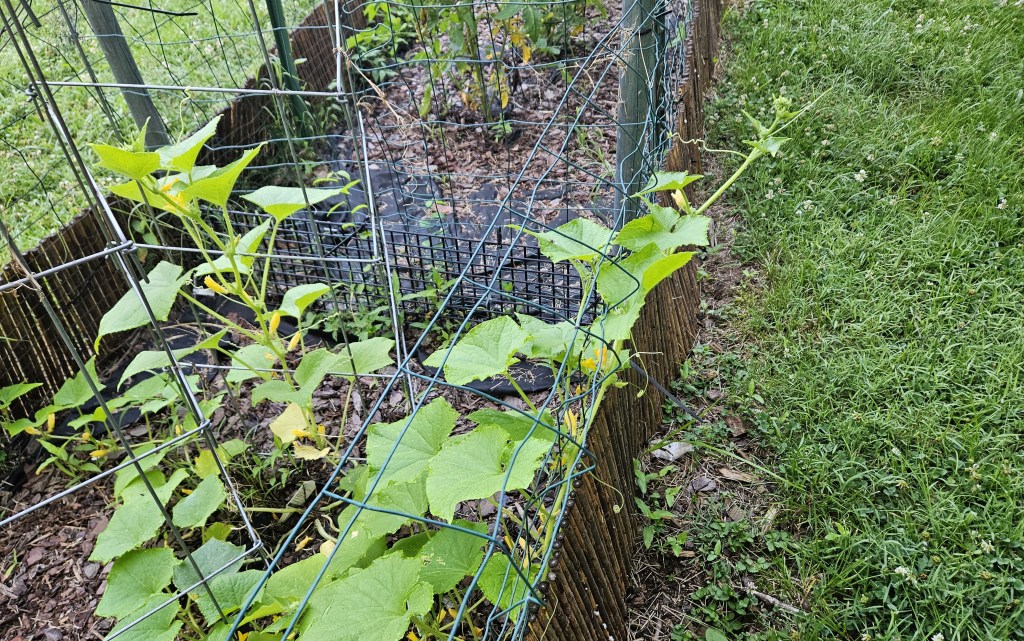
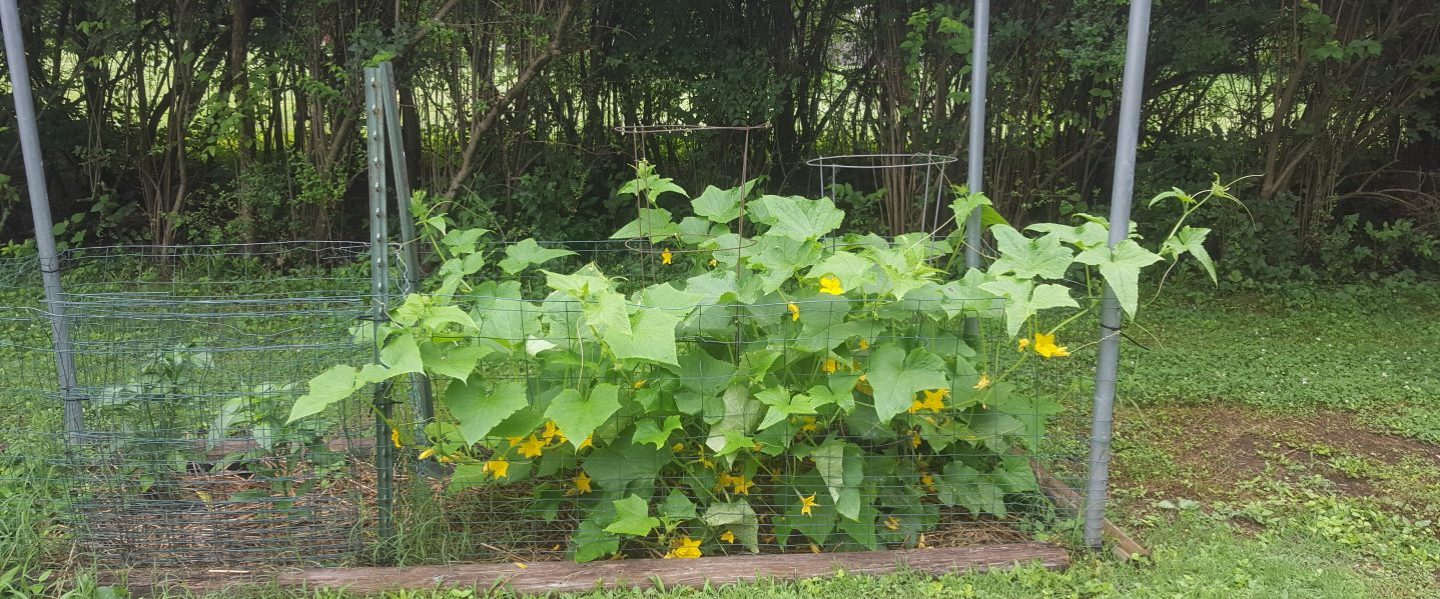
Oh, these enthusiastic cucumbers! Provided with easy access to climbing trellises, they instead reach for the fence and once secure there, leap into space, fully expecting to find something there.

I am a little frustrated that they aren’t as obedient as the tomatoes that grow peacefully withing their prescribed area. But, for the most part, I admire them. Just because the trellis is there doesn’t mean it limits their growth. They are secure enough to try new things, branch out (literally) into new territory, take a leap of faith. The structure is there if they need it, but who knows what new avenues may be available?

Perhaps they know at some level that if their wanderings get too out of hand or become dangerous to themselves or other plants, I, as the gardener, will corral them back into the garden space.

Perhaps we can have the faith of a cucumber as well.

The structure of the church is a good thing. It keeps us grounded in Biblical tradition and the wisdom learned by those who went before us. But that structure is a trellis and not a cage. Listen to your spiritual leaders but take everything to God in prayer. The Holy Spirit lives in believers and is there to remind us of scripture and lead us to truth. Anyone who reads the Bible regularly in a spirit of prayer knows that God reveals different things at different times through the same words.

Indeed, the word of God is living and active, sharper than any two-edged sword, piercing until it divides soul from spirit, joints from marrow; it is able to judge the thoughts and intentions of the heart. Hebrews 4:12.

The word of God may encourage us to make a leap of faith. It could be that what we have heard said is no longer the standard; Jesus may be giving us a new and better one. (Matthew 5:21-48). We may love our spiritual leaders and appreciate the structure they provide for our growth, but Jesus encourages us to do more than recite their beliefs. He calls us to listen to Him, to God, to Jesus, to the Holy Spirit. He wants us to put our faith, not in the wisdom of those around us, but in Him and Him alone.

I have said these things to you while I am still with you. But the Advocate, the Holy Spirit, whom the Father will send in my name, will teach you everything, and remind you of all that I have said to you. John 14:25-26.

I have faith that The Holy Spirit will correct my thinking if my wanderings go too far or become dangerous to my faith or the faith of others. God wants me to grow and bear fruit. He has put this desire in me, to reach, to grow, to take the leap of faith, to move forward even when the support is not obvious. Perhaps he has put that urge in you as well.

Do not fear, for I am with you, do not be afraid, for I am your God; I will strengthen you, I will help you, I will uphold you with my victorious right hand. Isaiah 41:10.

Is there something you have always been told that may need rethinking today? Ask God’s Holy Spirit to open your heart to the scriptures and take a leap of faith.

Love in Christ, Betsy

Fruit and Blight

Long gone are the icy mornings and barren grounds of winter. If the calendar and the heat didn’t prove it, these tomatoes would.

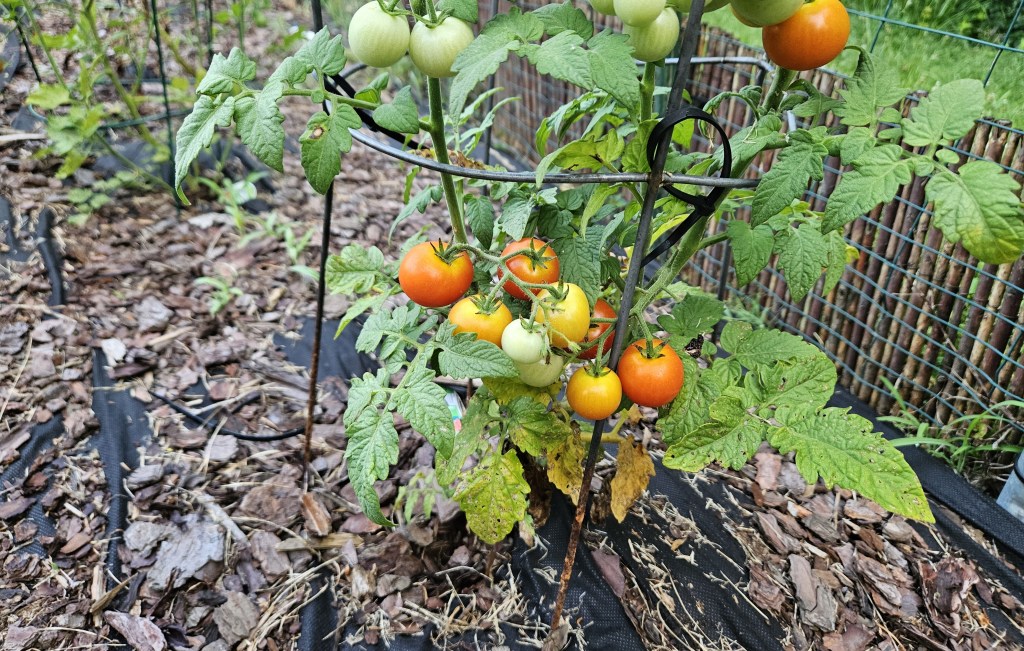
One of the benefits of growing cherry tomatoes is how quickly they ripen. My larger tomatoes are only light green now. These will slowly turn pink and then red, but it will be weeks. But these little beauties are ready to harvest now.

To plant something and actually produce food is amazing. Yes, you expect plants to produce when you plant them, but there are so often complications. The weather, the soil, predators, and storms often interrupt your plans and limit what grows. These lovely little red tomatoes validate the work. Clustered like grapes and sweet to the taste, they will brighten my meals for days.

Other seeds fell on good soil and brought forth grain, some a hundred-fold, some sixty, some thirty, Let anyone with ears, listen. Matthew 13:8-9.

Not all my soil is good. A problem has been brewing for years, and I have been ignoring it. Instead of the problem going away, however, it has gotten worse. Tomato blight. There are several different forms of this, but they are all based in the soil. There are diverse ways to combat tomato blight, most of which need to occur post-season.

For now, I am going to dig up my dead plants and the soil around them and put new dirt and new plants in the ground. The harvest will be late if this works, but at least I will get tomatoes.

In a “perhaps my husband knew best” nod, one of the main ways to reduce tomato blight is to let the ground be covered in clover during the off season. I have abandoned Nick’s practice of tearing down the fence and letting the garden go to grass over the winter. (In my yard, the ‘grass’ is predominately clover.) I stopped this practice to avoid tilling every spring, which is considered harmful as well. But the presence and frequency of blight have increased every year in my no-till garden.

Crop rotation is another option. As I am hoping to alter my garden space this fall, that may be the cure, but all of these are solutions for next year. For now, I will need to try a short-term fix in hope of recouping my lost plants.

All of which makes these little beauties an even better treat.

Amid the blight and dying plants, these tomatoes are bearing fruit. They are not letting the death of the larger tomato plants over there limit their growth or production here where they are. I can learn something from this.

No longer is the soil of our world conducive to bearing the fruit of the Holy Spirit. Perhaps it never has been. Kindness and gentleness are as rare as red tomatoes in a blighted field. On the other hand, what a treat when we see them! What a witness to the better way, to peace and love and joy, to the presence of God. We may be living in the time of Judges, when everyone does what is right in their own eyes, but we can keep our eyes on Jesus and bear the Spirit’s fruit.

By contrast, the fruit of the Spirit is love, joy, peace, patience, kindness, generosity, faithfulness, gentleness, and self-control. There is no law against such things. Galatians 5:22.

Join me in renewing my soil today so we can bear fruit. Such fruit is bright and cheerful and sweet and beneficial to the world.

Love in Christ, Betsy

Garlic Varieties

I planted a different kind of garlic this year than I have in the past. These are hard neck garlic instead of soft neck. I didn’t understand the difference until I grew them. After all, garlic doesn’t have a neck, right?

They could be called hard stalk and soft stalk, because these plants look quite different from my previous plants. This garlic is growing tall on stems that are as hard as bamboo, with fat white buds that are opening to fluffy purplish flowers. My others waved like tall grass, bending in the slightest breeze.

But as different as this plant looks to my eyes, both plants are still garlic. What makes them garlic is not the stem strength or the presence (or absence) of a flower. What makes them garlic is what is growing out of sight underground.

I know this because I planted them.

Could God be showing me something here?

How quick I am to judge those whose expressions of faith look different from mine. How quick others are to judge me. Do you raise your hands and jump about? Do you sit silently in your pew with your hands in your lap? Do you only listen to Christian radio? Do you watch church online or on the television? Do you preach the narrow path (Matthew 7:13-14) or that Jesus came for sinners (Mark 2:17)?

Unlike me, God knows what He planted. He knows the important part of our faith may be hidden in the dark underground, in the secret moments of our lives. Outwardly our faith may look quite different, but God sees the heart.

Perhaps it is not how we express our faith that is important in the end, but that our faith is growing deep withing us.

But the Lord said to Samuel, “Do not look on his appearance or the height of his stature, because I have rejected him; for the Lord does not see as mortals see; they look on the outward appearances, but the Lord looks on the heart.” 1 Samuel 16:7.

As mortals, we look at appearances. In the seventies, a question went around – “If you were arrested for being a Christian, would there be enough evidence to convict you?” Do you attend church? Is your Bible dust-free? Do you help the needy? Do you know praise music lyrics? We want that external evidence. We fret a little when our external evidence doesn’t look like other people’s. We fret when their faith doesn’t look like ours.

I’m not fretting over my garlic. I know what is growing in secret. The external evidence, as different as it may be, still indicates that something is growing. Hard neck, soft neck, flower or no flower, garlic is growing.

So that your alms may be done in secret; and your Father who sees in secret will reward you. … But whenever you pray, go into your room and shut the door and pray to your Father in secret; and your Father who sees in secret will reward you…. So that your fasting may be seen not by others but by your Father who is in secret; and your Father who sees in secret will reward you. Matthew 6:4, 6:6, 6:18.

I urge you today to rejoice in the variety of ways God allows us to express our faith, to share His love for us with each other, and praise Him. He knows what He planted. Let us help it grow, knowing that it grows in secret.

Love in Christ, Betsy

See the Bright Side

Something has taken three of my cucumber plants. Not nibbled them or broke their branches but taken the entire plant from the ground.

There are several possible culprits. Squirrels are always my first choice for the bad guys, but it’s not their usual method of destruction. It’s not really deer behavior either. It seems more like something a raccoon would do, and they definitely live in my yard. I suppose they could have climbed the fence, but they never have before.

Even more confusing is that they have taken the plants on three separate occasions. What animal has suddenly developed a taste for cucumber plants?

I could get upset about this, but I am choosing not to. Instead, I am trying to see the bright side of this development. Gardening gurus tell me that I should stagger plant my cucumbers, that is, plant a few, wait a few weeks, plant some more, wait, plant – therefore ensuring a longer harvest period. I have always ignored this advice and planted them all at the same time and harvested them all within a few weeks.

This year, for reasons beyond my control, I will be following their advice.

Sometimes, we just need to learn things the hard way. And it makes me wonder what other things God has had to teach me the hard way. Either because I would not follow advice, or because some lessons can only be learned through living through the situation.

My brothers and sisters, whenever you face trials of any kind, consider it nothing but joy, because you know that the testing of your faith produces endurance; and let endurance have its full effect, so that you may be mature and complete, lacking in nothing. James 1:2-4.

Now, that is looking on the bright side!

Perhaps I am growing into this approach to trials. I am not upset about the lost cucumber plants, but grateful for the (albeit forced) opportunity to stagger-plant. The disappointing lack of publisher interest in my fiction writing has pushed me to concentrate on a new devotional. A theological shift in an old group has led me to discover a new group that encourages me to question and grow in my faith. Sometimes trials draw us closer to a personal God, a redeeming Christ, a sustaining Spirit.

And if our goal truly is to become more Christ-like, if we truly are seeking the Kingdom of God first, then anything that furthers that end is a gift, a blessing, a cause for joy, even if not for giddy happiness. And this could be true for more than just stolen cucumber plants. This could be true for chronic disabilities, sudden health scares, the loss of friends and loved ones, disruptions of all shapes and sizes.

So, we do not lose heart. Even though our outer nature is wasting away, our inner nature is being renewed day by day. For this slight momentary affliction is preparing for an eternal weight of glory beyond all measure. 2 Corinthians 4:16.

I encourage you today to look on the bright side of whatever trial you are facing. An ailing parent, a struggling child, discord among friends, physical limitations, daily frustrations, cosmic fears, or garden thieves.

Knowing that suffering produces endurance, and endurance produces character, and character produces hope, and hope does not disappoint us, because God’s love has been poured into our hearts through the Holy Spirit that has been given to us. Romans 5:3-5.

Love in Christ, Betsy