Planting Garlic

I planted my garlic this past weekend. It’s got me thinking about the seeds we plant in the “off season,” when all the focus is elsewhere.

December is a time when I am consumed with gatherings – family, friends, every group of which I am a part gathers this time of year. Ostensibly to celebrate the birth of Jesus the Christ, but usually just for the opportunity to dress up and gather, eat, drink, and perhaps exchange gifts. It’s a time to celebrate here and now, our family and friends. Anything beyond the here and now tends to focus on the past, childhood memories, family traditions.

The church calls this time Advent, the coming, and encourages us to look forward. We are asked to prepare ourselves in anticipation of the wonders God is about to perform. He planted a seed, the unformed nucleus of God enfolded into a perishable body, which grew into a man and lived among us for thirty-some years. He gave us a small child who changed the world, whose Spirit continues to change the world.

The word became flesh and dwelt among us, and we have seen his glory, the glory of the father’s only son, full of grace and truth. John 1:14

This is the week when I put away the pumpkins and fall colors and bring out the red and green. (I know, some of you are far ahead of me on this task.) And, in the middle of this, I planted garlic bulbs that I won’t dig up until summer.

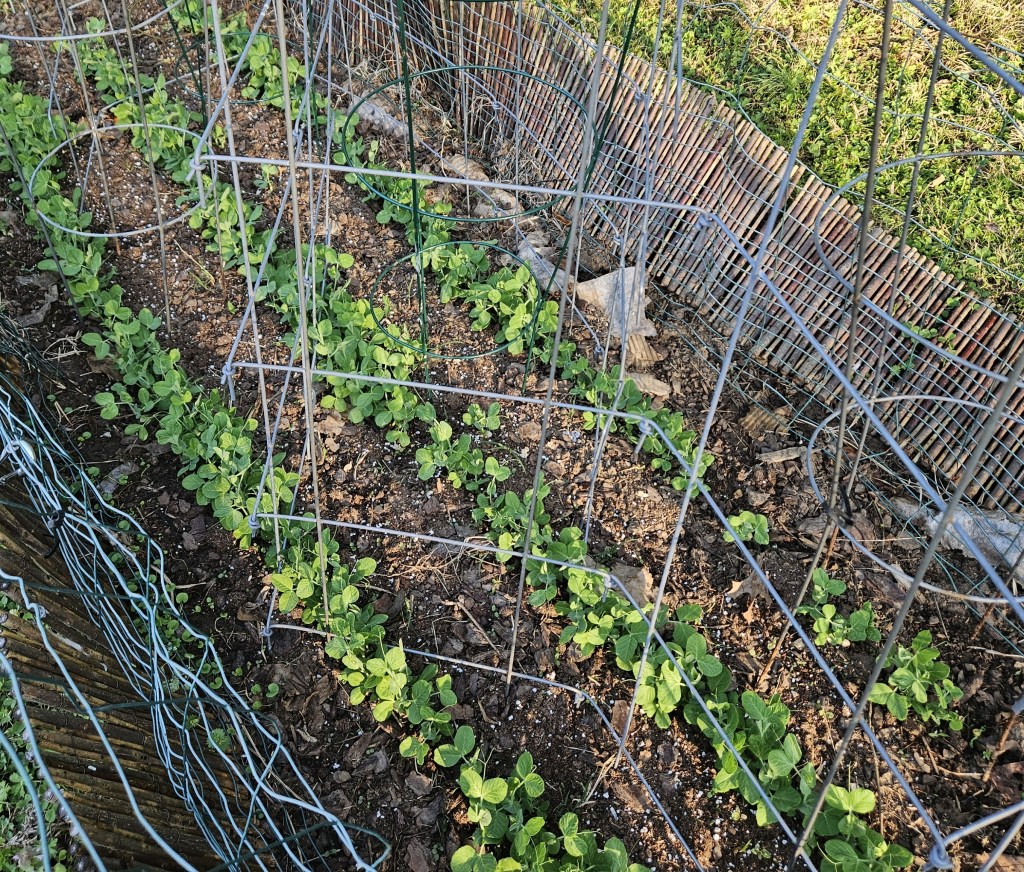
Garlic cloves need to be planted after the first frost and before the ground is frozen solid. Like many bulbs, they need to spend a season underground in the cold, storing up nutrients and preparing themselves to grow. Unlike my sugar snaps and tomatoes, I need to plant garlic long before its growing season. I plant in the cold looking forward to the hot sun and lazy days of summer.

God planted a seed in my heart as well when I was cold-hearted and consumed with my immediate needs and wants. That seed took a long time to bear fruit in me. Now I think of the seeds that I have planted, that I am planting in my own life and in the lives of those around me. It may seem pointless, burying a seed in the cold and dark and trusting that God will transform it into fruit for His kingdom. But that is how seeds work.

Amid all our celebrating and gathering and living our lives, we can take a moment to plant a seed, a seed of love, a seed of kindness, a seed of connection. We can trust that God can transform that seed into a relationship with Him, even if we never see it or know of it.

This is Advent, the coming of Christ into the world. Not only as a one-time event two thousand years ago, but also as a daily event here and now. Christ comes to live with us, within us, within those around us. Perhaps all that is needed to sense His presence in the world is for us to take a moment and plant a seed.

You have been born anew, not of perishable but of imperishable seed, through the living and enduring word of God. 1 Peter 1:23.

I hope to plant more than garlic this Advent season. I hope to plant love. I hope God uses me to answer someone’s prayer. I pray that another will see how much God loves them through my words and actions.

Gather in celebration this Advent. Gather in love and plant some seeds.

Love in Christ, Betsy

Tarps

For as long as I have had a garden, I have had weeds in my garden. My husband and I designed our garden space around the dimensions of weed barrier cloth, but that only keeps the weeds suppressed under the cloth. They soon resurface. I have spent hot hours pulling weeds. I have paid others to pull them. I have even considered elevated beds so grass from my yard wouldn’t invade my garden space. Of course, I would have to fill the raised beds with weed-free dirt, which probably doesn’t exist.

My efforts may have kept weeds at bay or out of sight for a while, but they always come back. I know people who love to weed, love to see the pristine results of their daily diligence. But daily diligence is not my strong suit. I reserve what little talent I have for that to devotional time and brushing my teeth. Nothing else receives daily attention.

So, there have always been weeds in my garden.

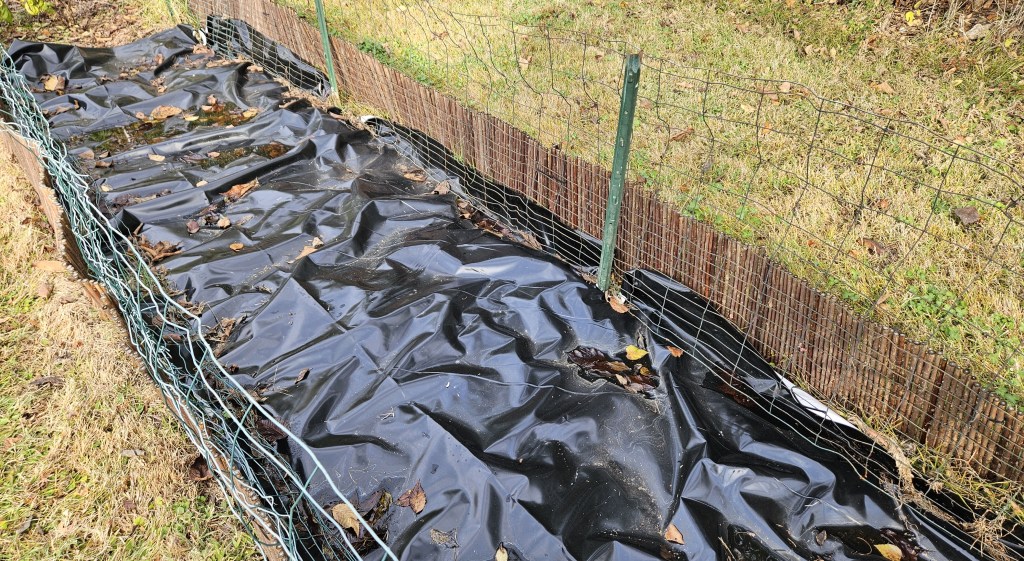
I am trying something new (to me) this year – occultation taps. These heavy-duty tarps block sunlight, UV rays, and water. The white underbelly of the tarp heats the soil, so the weed seeds germinate, and then kills them, leaving you with a weed-free garden to plant. Fingers crossed.

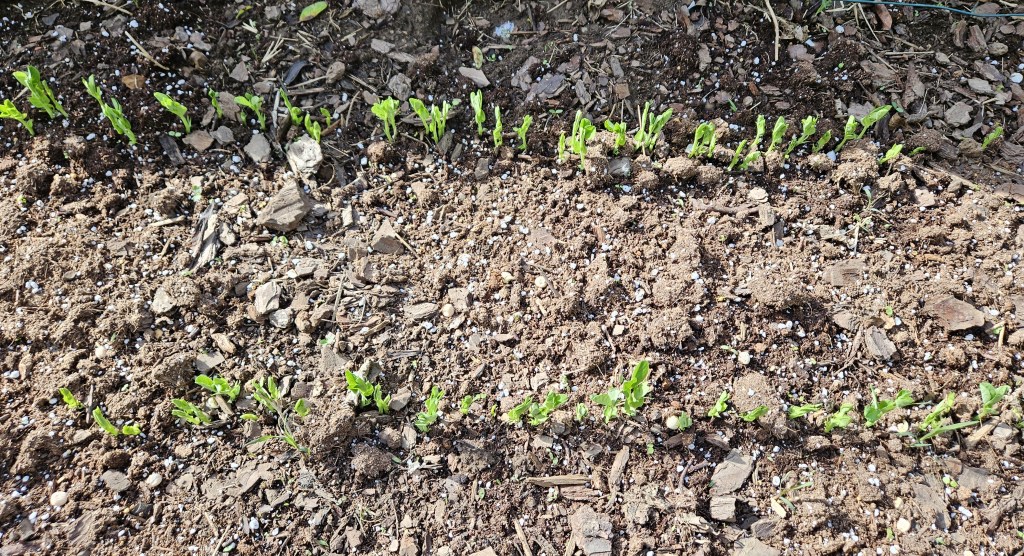
I put the tarps over my garlic beds about a month ago while it was still warm. I plan to plant garlic within the week, so we shall see. I also covered the sugar snap beds. Although occultation is only supposed to take a few weeks, I will leave my sugar snap beds covered until I plant them in late February or early March. Hopefully, we will have enough warm days over the winter for the tarps to work.

These tarps aren’t cheap or particularly easy to manipulate. It makes me wonder about the lengths I will go to get what I want, without submitting to the proven method of daily weeding. Is this stubborn orneriness? And if so, where else does it raise its head?

If you have read my musings for long, you know that I often talk about weeds. Perhaps I should spend more time talking about the wonders and joys of having a garden. Just before I took the above photo, I picked five ripe raspberries and one ripe fig from my garden. A November gift. Sweet and juicy, they were a divine reminder of why I have a garden. The fruit is worthy of any and all aggravation.

When we talk about the Christian life, what do we talk about? Do we only talk about the joyous fruit of communion with God, the times when we sense His presence, feel His love, hear His voice? Or do we talk more about the struggle of not conforming to the world, of keeping the weeds of self-interest, pride, and irritation at bay?

Neither one tells the whole story. Because, like my garden, the Christian life contains both glorious fruit and troublesome weeds. Green pastures and valleys of shadows, wondrous feasts and the presence of enemies. (Psalm 23)

I fear we tend to emphasis one over the other. I know a woman who couldn’t go to her big screen church after her husband died because she didn’t feel joyous enough to worship God. I know a man who attends a church where discussion is discouraged and congregants are spoon-fed “correct” answers to complicated issues. And I know that I am prone to dive into the struggles and difficulties and fail to share the absolute joy I find in communing with God.

I look forward to a weed-free garden. Until then,

By this everyone will know that you are my disciples, if you have love for one another. John 13:35.

Love in Christ, Betsy

A Little Change

I made a little change in my garden to solve a nagging problem.

Change can be hard, but what if God is calling us to do just that, change?

I’ve had a problem with my lawn service this summer. They come when I am not home. And their mower sprays grass clipping all over my garden plants.

If I were home when they were mowing, I would ask them not to do this. I’m not sure why this is even so much of a problem this year since it hasn’t been in the past. Perhaps they have a new mower, but the problem may be mine. Since I did not pull up all my landscape timbers last year, they have sunk lower into the ground. Several of them are rotting away. The accumulation of grass clipping has hastened this process.

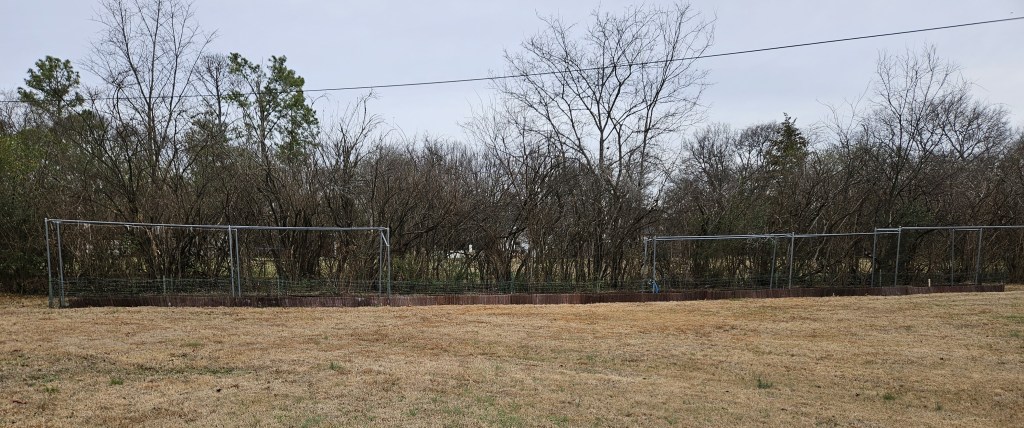
I could text my mower about the problem. I considered replacing all the landscape timbers. But I decided instead to edge the garden with a taller “clipping barrier.” Of course, the stores don’t carry foot-tall edging, so I had to order a trial sample to see if it would work. I like the look.

This edging may help with critter control as well. It’s different. Time alone will tell if it’s better.

My daughter, who works with ministry innovators, often writes about how change often happens slowly, develops through necessity, and occurs when we are focusing on something else. I look at my garden as the sixth summer without my husband draws to a close and I see change.

The bones of my garden are the same. Same poles, same fence posts, same location. But I no longer dismantle it; I no longer let the garden return to grass every year. I have perennial fruit trees and herbs. I pay helpers to assist me. And now I have foot high edging. I am adapting, slowly, by necessity, to gardening without him.

All in an effort to bear fruit.

There’s a lot of discussion about change in the church. When is change necessary to bear fruit for God and when is it conforming to the world? Jesus was an agent of change. He ate with simmers, broke sabbath laws, and overturned the tables in the temple.

The pharisees and their scribes were complaining to his disciples, saying, “Why do you eat and drink with tax collectors and sinners?” Jesus answered, “Those who are well have no need of a physician, but those who are sick. I have come to call not the righteous, but sinners to repentance.” Luke 5:30-32.

The established church leaders didn’t like the change. And Jesus didn’t stop at changing the status quo. He sent the Spirit to live within us and change our focus, our attitudes, our actions, and our lives. He takes our established garden and slowly transforms it into a more gracious, more loving, more fruitful place.

Several hundred years ago, women who used herbs to cure ailments were considered witches. Now it’s a multi-million-dollar business. Most Christians have no qualms putting aloe on a burn, drinking chamomile tea to relax, or taking garlic to reduce cholesterol. Some Christians even advocate turning away from established medicine to more homeopathic remedies. They should be grateful the church no longer labels them witches for this.

Is God calling you to make some changes this fall?

Perhaps minor changes like a better edging around your garden space, a more sacred quiet time alone with the Lord, a more intentional effort to keep the litter at bay.

Maybe He is calling you to make a radical change, eat with sinners and social outcasts, try an herbal remedy, go against established church tradition.

I pray that God will always keep me open to the changes He calls me to make. I pray that He will continue to call me, sinner that I am. And I pray that He will bear His fruit in my life and in yours.

Love in Christ, Betsy

Hope in a Raspberry

I step outside and breathe in the cool morning air. I shiver at the breeze, and the dew is almost cold on my feet. Such a change from the scorching temperatures of only a week ago. It feels like a gift.

I had a tough weekend. I went to a writer’s conference at which my book-in-progress was a finalist for an award. Not only did it not win, but it was also trashed in critiques sessions and firmly rejected by agents. I tell you this not to generate your sympathy, but because sometimes life is like that. We do our best at the time, but sometimes it is just not good enough.

I came home wondering if I could do better or if I should abandon this pursuit. How much effort do I continue to put in this garden when it is not bearing fruit?

These were the thoughts that swilled in my head when I stepped outside. The unexpected chill brought me out of that inner world and into the present.

It is a beautiful morning. Wisps of white clouds stretch across a Carolina blue sky. Birds sing and a bumble bee searches the flowers on my aging cucumber vines.

I’ve taken down the bird netting and pulled up the dead tomato plants. Most of my garden is ready to rest, tired from a fruitful summer. But not all of it.

The basil still grows, and I snip off the tall blossoms and inhale their sweet scent. My entire body smiles at this gift. The smell of fresh basil overpowers my sense of failure, and all the negative words fade away. What a simple and beautiful gift this tiny plant is.

For we are the aroma of Christ to God among those who are being saved and among those who are perishing. 2 Corinthians 2:15.

I lift my eyes in praise for this heavenly aroma and there, on the tips of my raspberry bush, are bright red berries. I was told not to expect fruit this year and was surprised by a few berries in the spring. I am even more surprised by these berries in August.

I have not paid attention to my raspberry bush this summer except to trim it back as it expanded into the yard. Without my notice, this plant had generated new life and now displays its fruit to the world.

Unexpected fruit. I had put the plant in the ground and kept it alive, but beyond that, this raspberry bush is simply doing what it was created to do – grow and bear fruit. No one is teaching it how to do this or telling it if it is doing it well or poorly. The bush is not waiting for another’s affirmation. It is not trying to solve world hunger. It is absorbing the heat of the day and the cool of the morning and bearing fruit.

This is something every one of us can do.

An old saying reminds us that the world would be a quiet place if only the birds with the best voices sang. And the world would starve if only the best plants produced fruit.

I pull off the red berries and eat them on the spot. Sweet and tender, they nearly dissolve on my tongue. This fruit may not be changing the world, but it is changing my world this morning.

Refreshed, I return to my office and start to type. I do not need the world’s affirmation to do what God has put upon my heart to do. I need simply to do it and let Him use that fruit however He sees fit.

For we are what he has made us, created in Christ Jesus for good works, which God prepared beforehand to be our way of life, Ephesians 2:10.

God is so good.

Love in Christ, Betsy

Rethinking No-Till

Weeds are taking over my garden. Sigh. For years I, well, someone (for years that someone was my husband), tilled the garden ground every year to prepare it for seeds and plants. For the past two years I have been trying the no-till method. Just cover the ground with cardboard to suppress the weeds. No arduous tilling required.

Guess what? It doesn’t work.

I had hoped that I could find one action that would keep the weeds from invading my garden. But tilling doesn’t prevent weeds from returning and covering them with cardboard doesn’t prevent them from surfacing. Weeds are only kept at bay by constant, consistent, and diligent weeding. Sigh.

The daily attention to keeping undesirable plants out of my garden is tiresome. The temptation to just let a few remain is strong. The problem is, soon the few become many and spread throughout the garden. Soon the weeds are growing among my tomato plants, stealing their water and nutrients.

Hiding the weeds does not make them go away. Even the one-time upheaval of tilling will not keep them at bay forever. These weeds, which are prevalent and pervasive in my yard, want my garden as well. But my garden is set aside for a special purpose, and weeds are not welcome there.

And others are those sown among thorns; these are the ones who hear the word but the cares of the world, and the lure of wealth, and the desire for other things come in and choke the word, and it yields nothing. Mark 4:18-19.

I did not sow my tomatoes among weeds, among thorns, but weeds have entered my garden and are choking my plants. Am I letting the cares of the world choke the effects of the word in me as well?

Weeds are not bad things. They are, by definition, just plants growing where we don’t want them to grow. Cares of the world, the lure of wealth, and the desire for things are not bad. But my relationship with God is more important. And if I want that relationship to bear Godly fruit to share with the world, I need to weed those cares and desires from my life.

Covering them up doesn’t work. Even the one-time mass upheaval of repentance and revival doesn’t work. The weeds will return without constant, consistent, and diligent attention on my part.

Search me, O God, and know my heart; test me and know my thoughts. See if there is any wicked way in me and lead me in the way everlasting. Psalm 139:23-24.

I don’t enjoy this process any more than I enjoy weeding. My ego would like me to believe that I don’t have any wicked ways in me. But who am I kidding? Those weeds are hiding just under the cardboard, seeking a weak spot where they can break through and spread across my life.

Sure, I can let a few remain. That would be the easy thing to do. The problem is, soon the few become many and spread throughout the garden. Soon the weeds are growing among my tomato plants, stealing their water and nutrients. Soon, I will be bearing the weeds of the world, wealth, and other things instead of bearing the fruit of the Holy Spirit.

Just as I water daily, I need to pull weeds daily. Just as I water the Spirit with prayer daily, I need to pull the weeds of worldly concerns daily. Because I am God’s garden, set apart from the yard to bear His fruit.

But you are a chosen race, a royal priesthood, a holy nation, God’s own people, in order that you may proclaim the might acts of him who called you out of darkness into his marvelous light. 1 Peter 2:9.

I don’t want the weeds to choke that out.

Love in Christ, Betsy

Figs!

I head out to the garden when the sun is just barely peeking over the treetops before it gets too hot. The humidity still brings sweat to my arms. I carry a bag but there is little to harvest. All but two of my tomato plants have succumbed to age and heat. The cucumber vines still bear small cucumbers and yellow blossoms, the promise of future fruit, but today, my garden seems as battered by the heat as I am.

I pick one cucumber and deadhead my basil. The garlic is not ready to uproot, and the oregano never took root. Despite my efforts to prune my raspberry, it still grows with a fervor that would be impressive if it weren’t inside my garden fence.

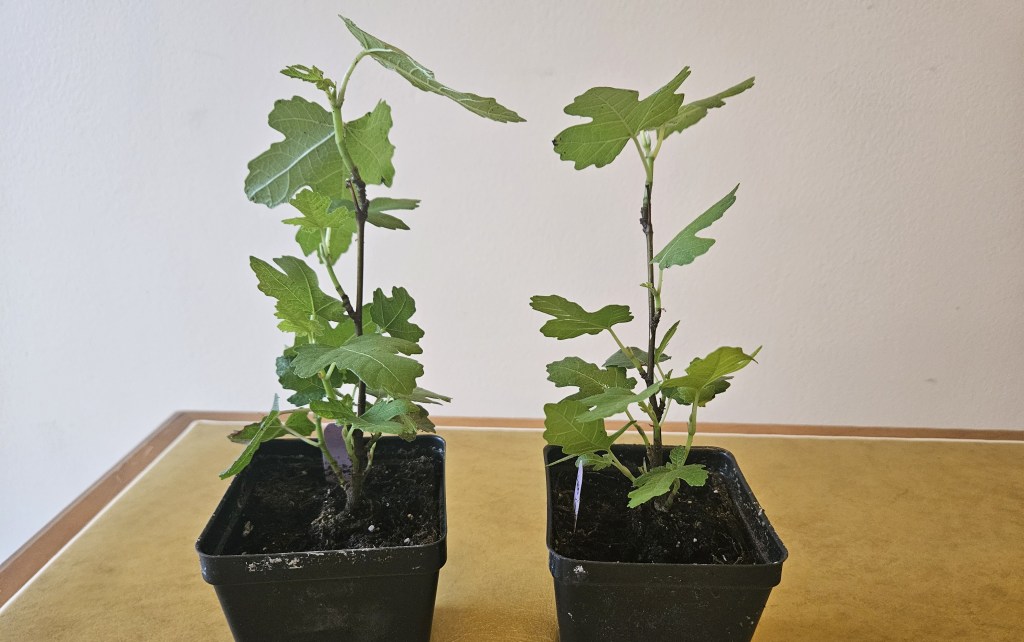
Then I arrive at my fig. It is now over six feet tall. I thought I had bought a “patio” fig tree, but now I wonder if I will need to transplant it. Maybe it and the raspberries. Or expand this area of the garden to wider than three feet.

And what are these growths on the stalk? Are these figs?

I read somewhere not to expect figs for three years. These growths are not ready-to-eat figs, but what promise they hold!

My friends who grow figs tell me that while fig trees thrive in most conditions, how much fruit they bear varies widely. One year they will have an abundance of fruit; the next year only a handful. And, in scientific parley, figs aren’t a fruit because they don’t come from a flower. Figs are the flower itself, inverted inward, containing little crunchies which are the fruit. Perhaps that is what makes them more nutritious than many fruits.

But geek-knowledge aside, these little blobs on their little stems mean my fig is moving in the right direction. And who among us doesn’t appreciate a little affirmation that we are moving in the right direction?

Therefore encourage one another and build each other, as indeed you are doing. 1 Thessalonians 5:11.

So, amid heat and lethargy and the lazy days of late summer, my fig tree proclaims the promise of good things to come. Maybe this year, maybe not, but sometime, God willing.

It’s tempting sometimes to become mired in the swamp of today’s dismal offerings. It’s hot. There is much that could be done, maybe even should be done, but there is nothing that must be done today. No one will care if I spend the day reading or binge-watching detective shows. What is the point of expending effort that undoubtably go unnoticed and unappreciated?

But those little baby figs tell me my efforts are not fruitless. Faithfulness in the little things like watering and weeding and tending my garden does not go unnoticed. Faithfulness in doing the laundry, cleaning the house, and preparing dinner is not unappreciated. Reading my Bible daily and spending time in prayer will bear fruit, maybe not today, but maybe sooner than expected.

So let us not grow weary in doing what is right, for we will reap at harvest time, if we do not give up. So then, whenever we have an opportunity, let us work for the good of all, and especially for those of the family of faith. Galatians 6:9-10.

Those little figs encourage me that I will have a harvest, but even if they weren’t there yet, I would have held out hope that they would show when the time was right. God is teaching me patience with these perennials. I’m to give them three years to bear fruit. Perhaps, as per Luke 13:6-9, even longer. Am I that patient with other people? Am I that patient with myself?

Back inside the coolness of my air-conditioned home, I push aside the urge to waste the day in worthless pursuits. There are little tasks to be done. There are responsibilities to uphold. Opportunities for faithfulness abound. There are figs on my tree. The promise of a harvest awaits.

Love in Christ, Betsy

Space to Grow

A friend of mine recently posted how her pumpkin and squash vines were taking over her garden.

Vines will do that. The first year my husband and I planted a garden, we put winter squash, summer squash, and cucumbers in a row with no dividers, no fence, and no trellises. They were everywhere. Twisting among themselves, growing across the yard, bearing fruit in the neighbor’s yard.

My friend says her vines have overpowered the rest of her garden, wrapped around the tomatoes, covered the herbs, choked the daintier flowers. Vines such as squash, cucumber, pumpkin, and zucchini grow horizontally, ever outward in search of new frontiers, boldly going where we would prefer that they not go.

Over the years I’ve learned to plant my vines far from the rest of my plant, surround them with fencing and give them something, anything, to climb on. None of this stops them from sending out tendrils into open spaces to explore beyond my boundaries, but it does slow them down and protect the rest of my garden.

At some point, their inquisitive and enthusiastic spirit will redirect its energies into producing fruit – cucumbers, squash, and pumpkins. If you give them enough space, this will happen before they overtake and overwhelm the rest of your garden.

Don’t you know people like that? At times, I am that person.

To my admittedly limited knowledge, no one has developed a less explorative vine, one that will color inside the lines and that knows its place.

As a gardener, it is my job to give these vines the space to explore without letting them infringe on my more sedate plants.

Like good stewards of the manifold grace of God, serve one another with whatever gift each of you have received… so that God may be glorified ion all things through Jesus Christ. 1 Peter 4:10-11.

Society today tends to value cooperation, collaboration, consensus, and cohorts. But some people need the opportunity to stretch and explore and seek new spaces. And just as my cucumbers are rarely stopped by my fencing, our efforts to constrain such free spirits rarely works. And maybe it shouldn’t. Maybe God made them that way for a reason, just as He made my cucumber vines.

We can encourage those plants to be more sensitive to the needs of those around them. We can give them space to explore where they are not infringing on others. Hopefully, we will encourage them to grow freely and with abandonment in the space provided while we provide a protected space that nurtures our plants with a quieter spirit.

There is room in my garden for diverse types of plants. There is room in God’s garden for every kind of plant. He created them all. He knows what is best for each one of them, and for each one of us. He is working to create the ideal environment for each of us to bear fruit for His kingdom.

There’s a good chance that my space won’t look the same as yours.

For just as the body is one and has many members, and all the members of the body, though many, are one, so it is with the body of Christ. But as it is, God arranged the members if the body, each one of them, as he chose. If all were a single member, where would the body be? The eye cannot say to the hand, “I have no need of you,” nor again the head to the feet, “I have no need of you.” On the contrary, the members of the body that seem to be weaker are indispensable. 1 Corinthians 12:12,14,17-18, 21-22.

Good news, my friend. Grow in peace.

Love in Christ, Betsy

Summer Harvest

Tomatoes! It feels like years since I have had a successful tomato garden. Oh, I have picked a few tomatoes and enjoyed them, but it’s been a while since I picked more than I could eat.

My daughter, Kat Bair, writes a blog as part of her job as a ministry consultant. She has written about me not giving up on having a garden just because I have had years of less-than-success with it. I’d never really thought about it that way.

Tomatoes will grow in my yard. I remember years of taking tomatoes with me everywhere I went to pass them along to others. My less-than-success has been due to learning how to do the things my husband used to do, trial and error, new methods, discovering the details that impact success. And the weather, which is beyond any of our control.

This year’s rain has really helped. The squirrels get their water elsewhere. The tomato and cucumber plants have ample water to refresh them on these hot days. Not the steady soaking showers of Spring, but the sudden claps of thunder and downpours brought on by heat and clouds.

If my soaker hose is analogous to reading the Bible and praying every day, these storms are like inspiration and direction from the Holy Spirit, sudden, unpredictable, powerful, restoring.

And the results are exhilarating. Tomatoes! Large Better Boys, Romas and Cherries, smaller Early Girls. Plenty for me and plenty to share!

The point is this: the one who sows sparingly will also reap sparingly, and the one who sows bountifully will also reap bountifully. 2 Corinthians 9:6.

It would have been easy to give up gardening over the past years. At times, the only thing that kept me planting and tending and watering was my commitment to you, readers, to write about it.

So, thank you. Your encouragement, your readership, has filled my tomato tray with fruit once more.

You, and of course, God, who sends the rains and the makes the sun to shine and enables the plants to bear flowers and produce tomatoes and cucumbers.

This fruit won’t last. It is here and good for eating for a limited time. I could preserve it somehow, and if food were scarce, I would, but I prefer to share my excess.

I pick out my best tomatoes and cucumbers and bag them up for the people with whom I will share them. A single tomato for those living in retirement homes, more for those at home with children.

I share because that is why God gives us excess – to share with those who need it and don’t have it, whatever “it” may be.

And if we preserve, continue working, continue praying, continue to be open to the soaking of prayer and the sudden storms of the Spirit, God will produce an abundant harvest in each of our lives.

So let us not grow weary in doing what is right, for we will reap at harvest time, if we do not give up. Galatians 6:9.

So here, in the middle of summer, persevere. Rest, rehydrate, and carry on. A harvest awaits.

Love in Christ, Betsy

Summer Love

You may know it’s summer because the kids are out of school or the Fourth of July is mere days away, but I know it is summer when I have my first tomato sandwich.

Few things compare to the call of a red tomato dangling from its plant. It calls to something deep inside us – Take, eat. For the past few years, the squirrels have been taking and eating, sensing that same call. This year, it’s my turn.

I usually prefer my sandwiches on rye bread, probably Germanic genes expressing themselves, but not for a tomato sandwich. Only white bread will do, a soft and unassuming base to highlight the tang and tart and sweet of the tomato.

Later in the summer when the newness of having tomatoes wear off, I will add basil and fresh mozzarella to my sandwich, but I savor the first tomato sandwich without distractions.

I take a bit and let my taste buds absorb every drop of the tomato’s tang and its salty juices. The tender meat of the tomato fills my mouth and makes my eyes light up. Wow. That is good!

I have been looking forward to this sandwich since I put that little plant in the ground months ago. This sandwich is why I put that plant in the ground. Why I watered it and weeded it and fenced it and draped bird netting over it. All for this sensation.

My brothers and sister, whenever you face trials of any kind, consider it nothing but joy, because you know that the testing of your faith produces endurance; and let endurance have its full effect, so that you may be mature and complete, lacking in nothing. James 1:2-4.

At the risk of being sacrilegious, my friends, enduring the struggle of establishing a garden, tending it, and protecting it from predators has produced joy, this first tomato sandwich, lacking in nothing.

The garden isn’t a perfect metaphor for my walk of faith, but it’s a good one. Too often I focus on the grind of gardening, the daily attention it requires, the myriads of things that can go wrong, the nagging doubt that I am doing it wrong, the constant comparisons to other gardens.

But God calls us to tend our own garden. He promises it will be worth it. He encourages us to stick with it because the tomato sandwich it will generate is priceless.

In fact, the fruit that God promises to produce is so wonderful that any effort we may exert to encourage its growth will be washed away in the sheer joy of tasting the fruit. Every effort is worthwhile; nothing else compares.

Again, the kingdom of heaven is like a merchant in search of fine pearls; on finding one pearl of great value, he went and sold all that he had and bought it. Mattthew 13:45.

This tomato sandwich will soon be gone, and I will want another. A self at peace, a content and restful spirit, an open and generous heart, the joy of loving another, these fruits are eternal. These fruits only God can produce in us.

This tomato, like all my tomatoes, is a summer love. Wonderful, exciting, fulfilling, and short-lived.

God wants to grow eternal fruit in me, fruit that I can share with a hungry world, fruit that enlivens our senses and delights our souls.

By contrast, the fruit of the Spirit is love, joy, peace, patience, kindness, generosity, faithfulness, gentleness, and self-control. There is no law against such things. Galatians 5:22.

He wants to grow that fruit in you as well. It may take a little effort on your part, a commitment to continue when it feels difficult or pointless. But one day that tomato will ripen and you will get to savor His love, and Wow. That is good!

Love in Christ, Betsy

Enthusiasm

I thought my cucumbers were enthusiastic plants, climbing their supports and stretching outside the fence, but they are mild in comparison to this raspberry plant!

In her second year, my raspberry plant has already birthed three new plants in the cracks in the cardboard covering. She is almost six feet tall. I sense I need to cut her back, hem her in, trim off the excess.

I have seen articles and studies on pruning, but I skim right past them. Tomato plants and cucumbers don’t require pruning. Although it’s possible they could be better if I did prune them…

Pruning is an important part of growing perennial plants, but I am new to perennials and have much to learn. Seeing this raspberry bush take over my garden and reach into the yard makes me want to learn. This can’t be best for the plant, best for the berry harvest, or best for me.

And yet, her growth is thrilling. Her enthusiasm for growth is contagious. I want to grow with enthusiasm and burst out all over the place!

My mother used to tamp down my enthusiasm on a regular basis, to the point where I felt like a wild pony trapped in a corral. But she understood. She had been a cheerleader in her youth; enthusiasm runs in my genes. Perhaps she was trying to prune me.

He removes every branch in me that bears no fruit. Every branch that bears fruit, he prunes to make it bear more fruit. John 15:2.

I am tempted to use this as my guide for how to prune. I am sure Jesus’ listeners at the time knew how to prune; they were grape and olive growers. They were being asked to apply their gardening knowledge to spiritual growth. Perhaps that is what the Holy Spirit would like me to do – learn how to prune this raspberry bush, when and how and to what extent, and apply that knowledge to my spiritual life.

Perhaps the goal should not be excessive growth that spreads out everywhere, but a contained healthy plant that produces much fruit. My smaller tomato plants are covered in green tomatoes, while this huge raspberry produces few berries.

And her uncontained growth is casting a shadow on my fig tree, growing straight and true beside her.

Do nothing from selfish ambition or conceit, but in humility regard others as better than yourselves. Let each of you look not to your own interests, but to the interests of others. Philippians 2:3-4.

There’s a chance I, like my raspberry plant, have focused on the wrong thing – expansion verses fruit. There’s the possibility that my naturally enthusiastic self has spread beyond my boundaries and overshadowed another.

The raspberry bush cannot prune herself. It’s as if her enthusiastic nature can’t be contained. And I don’t want to stifle her; I just want her focused more on fruit than expansion. And that will allow my fig tree to flourish as well.

As for pruning my own enthusiasm, Jesus promises that the Holy Spirit will do this if we let him. He will prune us so that we will bear more fruit.

So, I will learn what I need to know about pruning and try to redirect my raspberry plant’s focus. Find the best way to encourage productive growth. Cut out the excess that her enthusiasm has rendered. I need to let the Holy Spirit do the same with me.

When the Spirit of truth comes, he will guide you into all the truth; for he will not speak on his own, but will speak whatever he hears, and he will declare to you the things that are to come. John 16:13.

The first thing I need to do is learn. The main thing I need to do is listen. The Master Gardener, the creator of all gardens, the creator of all life, knows what I need to do.

Love in Christ, Betsy