Surprise!

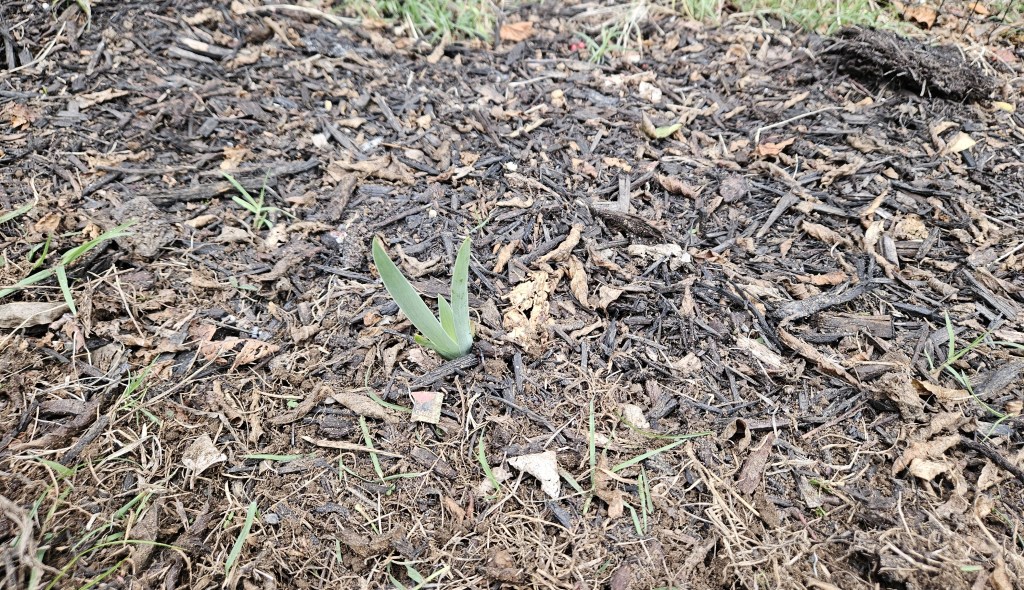
We were working the garden, tiling up the ground that will be made into a walkway in my expanded garden, when we found this lovely surprise!

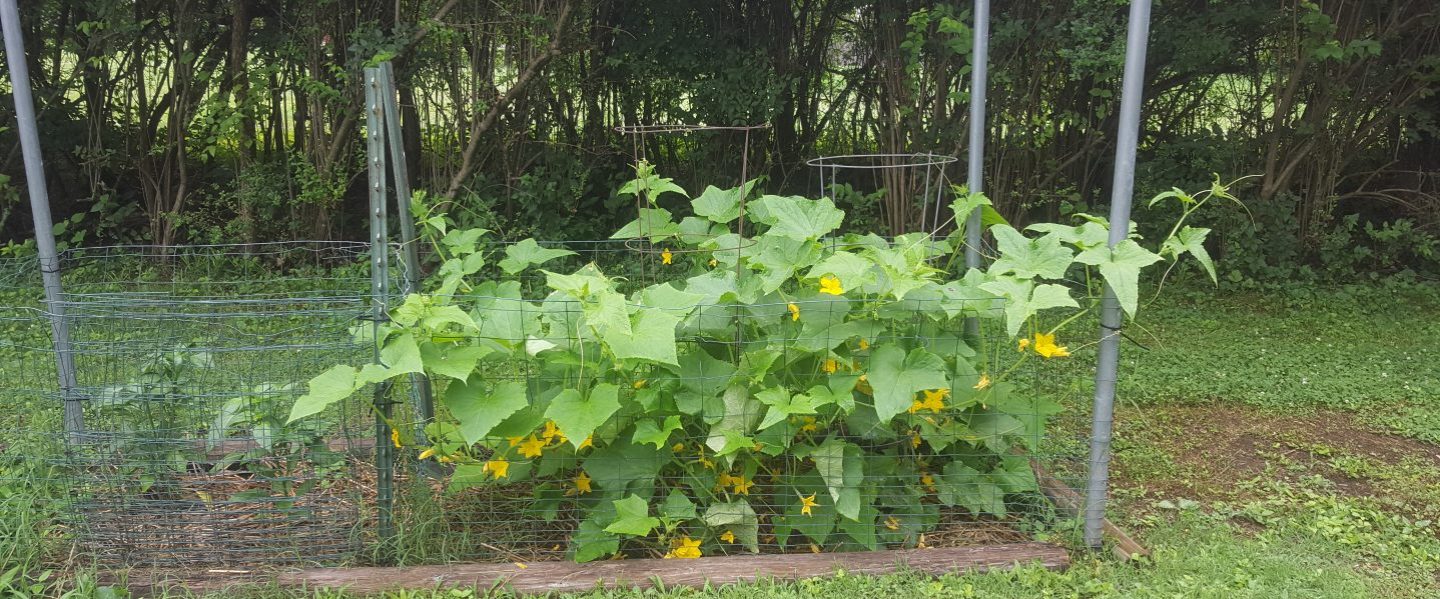
The garden is ready for hibernation. A few leaves remain on the basil and on the fig tree, but most of the plants are dead and many have been pulled and discarded. The compost pile grows on the space dedicated to tomatoes. Coffee grounds and eggshells, leaf litter and gutter gleanings mix with rotting vegetables to cover the ground.

But as we were working the ground, we stopped in admiration of this little hardy plant. I do not grow iris in my vegetable garden. Yet here is it. Growing green late in November.

I can only imagine that a tiny bulb was gathered when we thinned the mulch in the iris beds a few months ago. We had put some of the excess mulch over the sugar snap area of the garden, apparently taking the small iris bulb with us. Talk about bloom where you are planted! We didn’t even plant it. We accidently threw it there.

Against its will, we moved this iris from its home and discarded it in distant land, where it was left unattended and ignored. I was not even aware of its presence in this area of the garden. If I had not been preparing a walkway, I may not have noticed it until I planted sugar snaps in March.

What an inspiration. There are times I find myself in unfamiliar territory, not what I had planned, not what I wanted. I may feel alone and ignored, unfamiliar with the landscape. I may be the only one of my kind around me. But I am not out of place, no matter how much I may feel that I am.

Thus says the Lord of hosts, the God of Israel, to all the exiles whom I have sent into exile from Jerusalem to Babylon: Build houses and live in them; plant gardens and eat what they produce… multiply and do not decrease. But seek the welfare of the city where I have sent you into exile and pray to the Lord on its behalf, for in its welfare, you will find your welfare. Jeremiah 28:4-7.

This was a literal command from God to physical exiles. Much like my little iris, they were to work to thrive and multiply in the new place someone else put them. Refugees come to this country from throughout the world, often plucked from refugee camps and sent by the United Nations to the U.S. to places they have never been. The challenges they face to thrive and multiple in this country are staggering and yet, daily we add citizens to our rosters.

While not nearly as dramatic, many of us have moved from our known home to a new place, somewhere with unfamiliar customs. Even those of us who aren’t moving physically occasionally find ourselves in new situations, new environments with different surroundings and people we don’t know. How do you navigate without your spouse? Without the home where you raised your children? Without the church community you loved? Without your dearest friend?

Take heart from my iris, friend.

Do not remember the former things or consider the things of old. I am about to do a new thing; now it springs forth, do you not perceive it? I will make a way in the wilderness and rivers in the desert. Isaiah 43:18-19.

Embrace your new situation. This iris growing in its new home brings me joy. You too can bring joy to others in your new situation. Put down roots and trust in God.

Love in Christ, Betsy
At Home

One of the gifts of aging is an urge to slow down and enjoy the moments of anticipation. So much of my time in my younger years was filled with an eagerness for the future. I couldn’t wait to be sixteen, to be twenty-one, to get married, to have children, to get them out of diapers.

But now, I want it all to slow down. I want to spend more time right now, before the grandkids get older, before the birthdays come, even before my house is full for the holidays. I want to savor these days of cool mornings and warm afternoons. I want a pause before the next big thing.

I understand that cruise passengers often have a day “at sea,” with no outings planned. A day to rest, reflect, and appreciate the ocean. In The Midwife’s Tale, this remarkable woman had days in her diary marked “at home.” One can only presume that she was spending time with her children, taking care of her abode, engaging in the everyday, unremarkable tasks of life. The older I get, the more I appreciate days like that.

We are saturated with things to do, people to see, challenges to face. We want to do everything, and we want to be doing everything right now. I find myself so afraid of missing a wonderful experience that I am missing the joy of rest, reflection, and appreciation.

The pandemic forced us all into days “at home.” The world shuddered at the imposed idleness, unable to cope with the stillness. It was so hard to slow down. Disease made us do that. Disease can still make us do that. Perhaps we should do that voluntarily.

And on the seventh day God finished the work he had done. And he rested on the seventh day from all the work he had done. So, God blessed the seventh day and hollowed it because on it God rested from all the work that he had done in creation. Genesis 2:2-3.

People, being people, took God’s call to have a day of rest to a ridiculous extreme. To this day, devout Hasidic Jews won’t push an elevator button on the sabbath. But we have overreacted in the opposite direction. There are no days of rest in our culture, no days when the stores are closed and people are encouraged to spend a day “at home,” no days when some wonderful experience doesn’t call us away from rest and reflection.

Instead, we must carve out that time for ourselves. Like the garden, we need a space, a small portion of our yard, which is dedicated to growing God’s fruit. I have found myself enlarging that space, just as I am enlarging my garden. I may not grow more, but I think I will grow better.

When I was in my teens, I penned, “Going very fast sometimes, I wonder if I am really moving.” (adolescent angst!) But the sentiment returns when my life gets busy. The restlessness we often sense in our soul may be better satisfied with silence than activity. And while none of us want to return to endless days “at home,” perhaps we would benefit from a regular pattern of them, say one day out of seven.

It’s difficult to do though, in this culture of busy-ness. There is so much to do and so much more that we could be doing. What will people think if I just choose not to take advantage of the opportunities available?

Do not be conformed to this world but be transformed by the renewing of your minds, so that you may discern what is the will of God – what is good and acceptable and perfect. Romans 12:2.

That takes time, friend. Spend a day “at home.” Let God renew your mind.

Love in Christ, Betsy

Inequity of Circumstance

Why are some children born into poverty and some into wealth? The baby has no say in the matter. Furthermore, the wealth of the parents is no indicator of their love or of the child’s happiness in life. There are plenty of stories of abuse across all financial spectrums and plenty of stories of selfless love.

When those of us in comfortable positions look at those in desperation, we are still tempted to ask, “Who sinned, this man or his parents?” (John 9:2) And when those of us in desperate situations see those in ease, we are still tempted to ask, “Why do the wicked prosper?” (Job 21:7)

Perhaps our relative wealth has little to do with our sinfulness or our wickedness, or our righteousness or faith. Perhaps we are only given the answer that Jesus gave his disciples:

Jesus answered, “Neither this man nor his parents sinned; he was born blind so that God’s works might be revealed in him. John 9:3.

Or born wealthy so that God’s works might be revealed. For wealth is not something we are to use for our own benefit but for the benefit of others. We are told to welcome the stranger (Hebrews 13:2). We are told to feed the hungry, cloth the naked, and care for the sick (Matthew 25:25-26). We are warned about amassing treasure on earth (Matthew 6:19).

We are all so guilty of judging others based on their appearances and judging ourselves in the process. We are tempted to use wealth as a measuring stick. We conform to the culture’s concept of success, eager to impress and have others think well of us. Or maybe that is just me. It is a constant battle to not covet financial success.

I have never been wealthy. Nor have I ever been poor. I have always had two coats. Perhaps one of them was for me to give away.

I suspect that whatever financial situation we find ourselves in, God’s call to us is the same.

“Which commandment is the first of all?” Jesus answered, “The first is, ‘Hear, O Israel, the Lord our God, the Lord is one; you shall love the Lord your God with all your heart, and with all your soul, and with all your mind, and with all your strength.’ The second is this, ‘You shall love your neighbor as yourself.’ There is no other commandment greater than these.” Mark 12:29-30.

We are not to judge based on wealth or circumstance. Jesus tells us not to judge at all (Matthew 7:1). It’s a tall order. We see an inequity of wealth or circumstance, and we want to ascribe a cause, place blame, or credit. But, perhaps, each of us was born the way we were so that God’s works could be revealed in us. It may involve a healing of our body, a healing of our heart, or a healing of our mind. I suspect that if we all had everything we wanted in life, we would find little need to turn to God.

What do you need today? If you are in a dire situation, I pray God sends you someone to help. If you have plenty, I pray God uses you to help another. That is the body of Christ in action. We show our love of God by loving others.

Beloved, let us love one another, because love is from God; everyone who loves is born of God and knows God. Whoever does not love does not know God for God is love. 1 John 4:7-8.

We love. No matter what our circumstances may be; no matter what someone else’s circumstances may be. This is how we reveal God’s works.

Love in Christ, Betsy