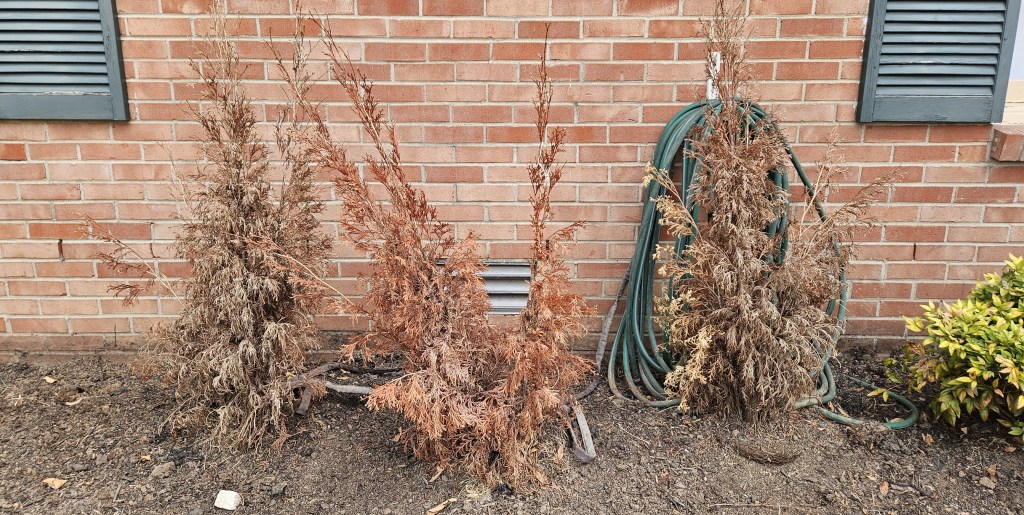
Roots

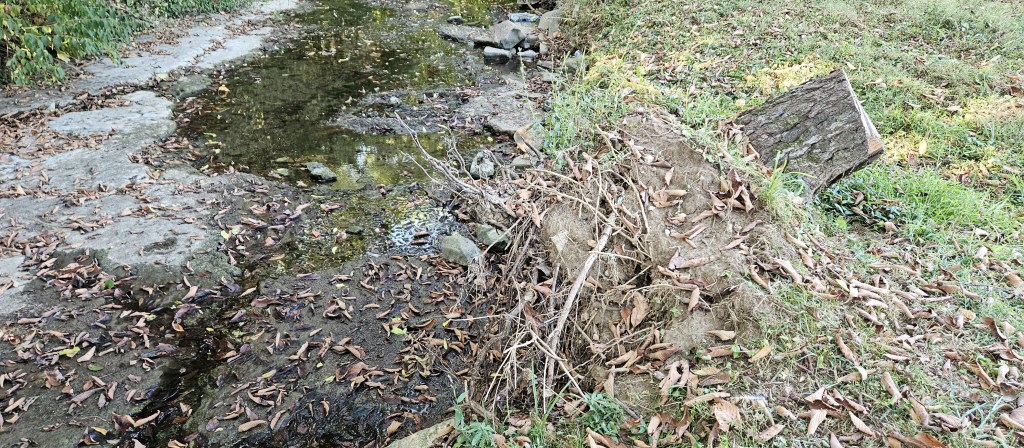
A few years ago, a best-selling Christian author told a story about a tree that had fallen in her yard.

She had installed an underground irrigation system to keep her grass and trees alive. It worked, but the system had encouraged the tree to send its roots out laterally through out the yard just under the water source. While the tree’s shallow roots brought ample water, when the storm came, the tree was unable to stay standing. Its roots were too shallow. To stay upright, the tree needed to develop deeper roots.

The speaker left the story there. We need to develop deeper roots to withstand the storms that life will certainly bring.

The story has stayed with me. What I keep returning to is what caused the tree to have shallow roots. The tree was doomed because it had never been forced to develop deep roots. It did not have to work for the water. There were no dry spells to encourage the roots to dig deep into the ground for hidden aquafers.

The woman meant well watering her yard. We all mean well when we make life easier for others. We care about our plants, our pets, our family, our friends, and even the wildlife around us.

But there is growing research that what we think is helpful may be harmful. Feeding wildlife can hinder their ability to forage naturally (Don’t feed the wildlife!). There is growing evidence that protecting our young children from failure and heartache limits their ability to manage those situations as adults (Let your children fail). And making water too easily accessible for our trees may prevent them from growing deeper roots.

Could this be true in our faith as well?

A woman once told me that she had been skipping going to her big screen church because she just didn’t feel happy enough to sing all that praise music and lift her hands. I wanted to ask her what being happy had to do with worshiping God, but instead I encouraged her to read the psalms.

I am weary with my moaning; every night I flood my bed with tears; I drench my couch with my weeping. Psalm 6:6.

Just maybe it is precisely the times of pain and thirst that encourage us to develop deeper roots of faith.

Can we believe in a God who lets thousands die in flooding? Who lets a child be abused? Can we worship a God who shatters our happy life? How will we know if our life is always easy and successful and well-watered?

When the storms of life come, and they do come, I want my roots to reach deep to find the hidden joys of a relationship with God. There is everlasting water there. It may not be easy water. It probably won’t be easy water. It may not contain the laughter of the water park, but it will bring peace and strength and faith.

Jesus said to her, “Everyone who drinks of this water will be thirsty again, but those who drink of the water that I will give them will never be thirsty. The water that I will give will become in them a spring of water gushing up to eternal life.” John 4:13-14.

Today, I will praise God for those days when He has led me develop deeper roots of faith. I thank Him for those days of drought and heat, of tears and sadness, of doubts and fears that have led me to dig deep and find His eternal water.

Would it be wrong to wish the same for you?

Love in Christ, Betsy

Change

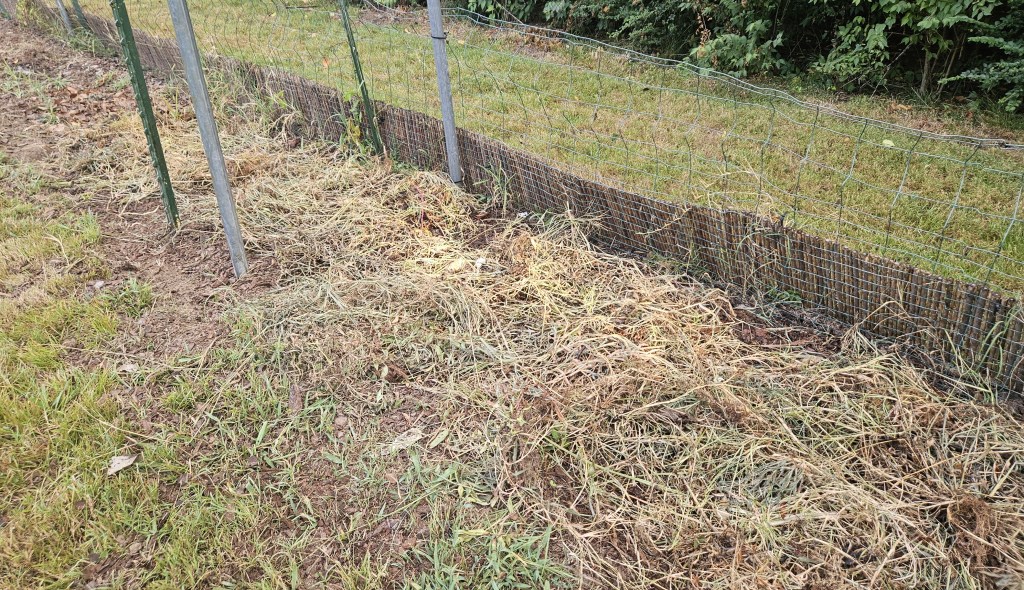
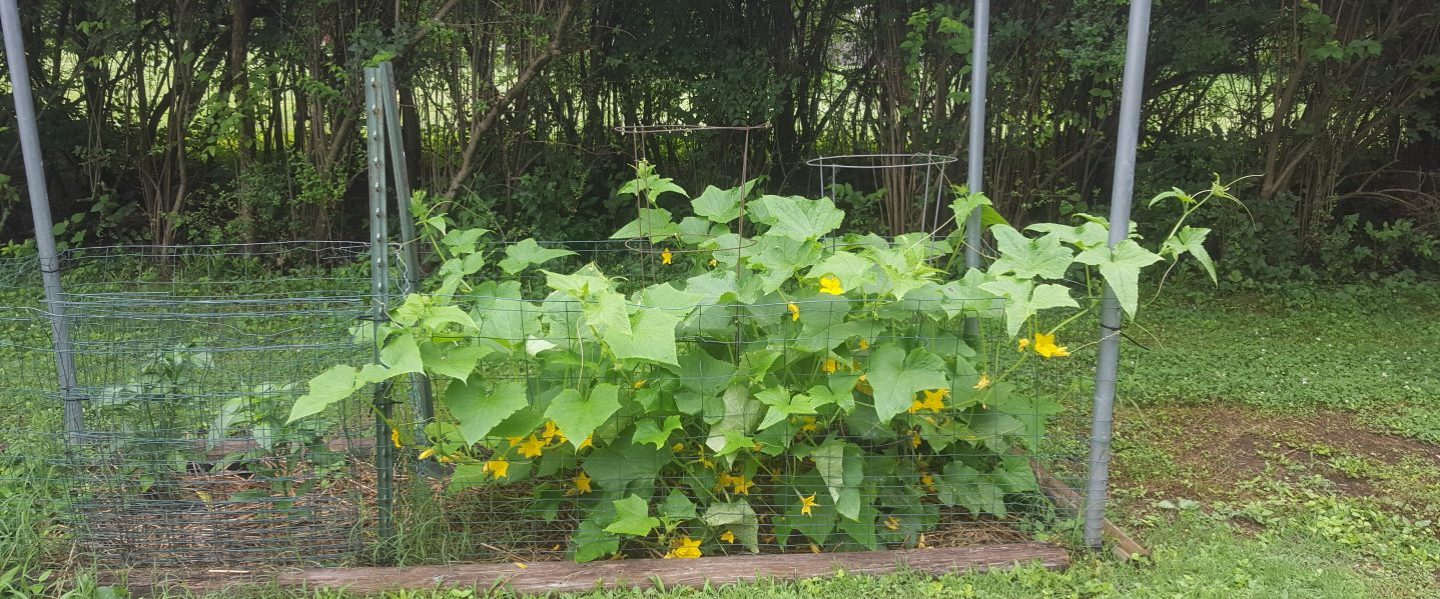
The cucumber plants have died. The pepper plants are dying. It’s time to call the summer garden done and begin preparations for fall.

Change is never easy. The end of something you loved, successful or not, is a loss. The days are over when I can fix or improve this year’s harvest. It was what it was and now I must move on.

This year, that moving on involves work. My fence is broken down and torn apart in places. My soil is diseased and in need of restoration. My body tells me to stop bending over the fence to harvest and develop a means of easier access. So, I have called in my garden helpers, and we will slowly reconfigure the garden. It is too much to do in a day. And I have at best one morning a week to give to my garden. And I have some time before I need to plant again, so I am in no hurry.

This seems to be the way most change happens, slowly, over time, a little bit at a time. Not all change is good, but not all change is bad either. This tearing down of my garden feels destructive. I’m ripping up dead plants, pulling out supporting cages, and tearing down protective fences. This can’t be good, right?

Now I will tell you what I will do to my vineyard. I will remove its hedge, and it shall be devoured. I will break down its wall, and it shall be trampled down. Isaiah 5:5.

But the garden is such a glimpse of a larger reality. I know that all this destruction will enable my garden to produce more and better fruit in the future. I know that this destruction is not permanent. Like re-breaking a bone before you can set it properly, sometimes things have to get worse before they can get better.

We know it’s true, but it’s hard to see when our lives are being ripped up, our support pulled away, and our defenses destroyed. It just feels like destructive change. It feels like judgment.

Perhaps it is judgement, in the sense that I know my garden can produce better fruit than it did this past year. This year’s harvest was fine. I loved the few tomatoes I got, the random cucumbers, the scanty basil leaves, but I know the space has produced better in the past. If I want it to produce better in the future, some destruction needs to happen.

Perhaps God knows that you are capable of oh-so-much more than you are producing right now. Not that what you are giving to the world right now is bad or unappreciated, just that God wants your life to be abundant and your garden to be fruitful.

I am the vine, and my Father is the vinegrower. He removes every branch in me that bears no fruit. Every branch that bears fruit, he prunes to make it bear more fruit. John 15:1-2.

The problem, of course, is that the promised benefit is in the future. Right now, all we sense is destruction and judgment.

If, however, our desired goal is a closer relationship with God and if difficulties, change, and disruptions deepen and strengthen that relationship, then we can see them as pruning, as ensuring an abundant future. If our desire goal is a comfortable, easy life, we will not see the beauty in overturning the garden.

The transformation of my garden will take a while. I hope you will continue to join me by reading along. I can’t promise it will be pretty, but I am confident that God will bring something good out of all of it.

Love in Christ, Betsy

Just Enough

I am new to growing figs, but I was encouraged to grow them by the baskets full of figs that friends have shared in the past. Too much to eat, too much to process, too much to share. For some reason, that has not been my experience.

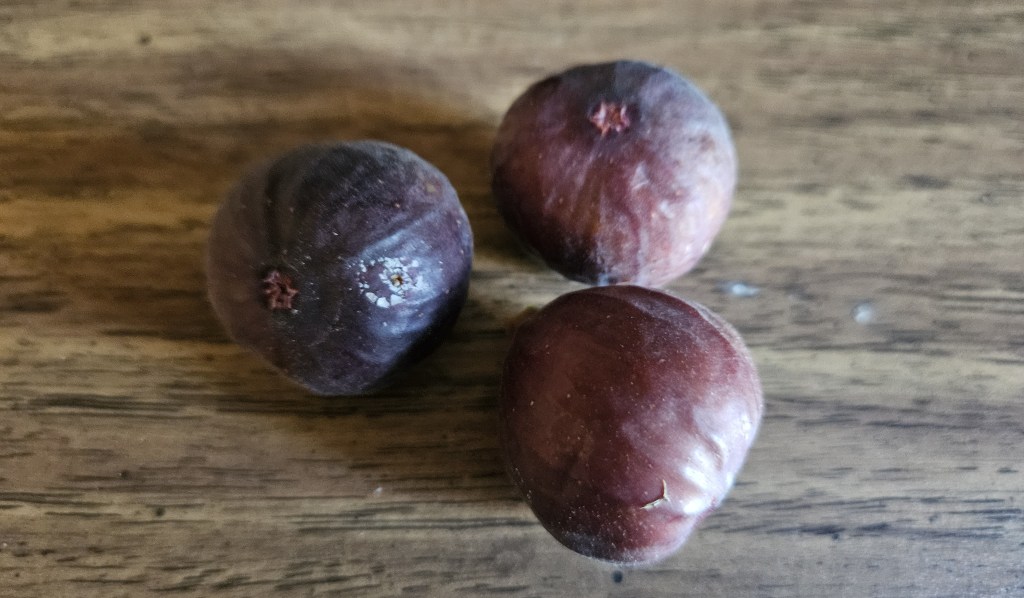
My tree is producing figs and they are delicious! Sweet and pithy, they dissolve in my mouth, and I love having them available. But they ripen one at a time every few days. So, if I share a ripe fig with you, it is the one and only ripe fig I have that day. Tomorrow I may have another one, but if I don’t eat it soon, it will become overripe.

As grateful as I am for each and every fig, I also feel a little, well, disappointed. I don’t want to share the few I have and yet I would like to have enough to share them with others, let others share my joy, perhaps brag a little. And there’s the rub. I want a big harvest partially so you will be impressed by my big harvest.

See how God has blessed me! Oh, yes. God definitely gets the credit. I can not make a single fig appear, or a tomato or a cucumber or even a basil leaf. But there is still pride in showing off how much God has blessed my gardening efforts, and some embarrassment when those blessings seem a little scarce and far apart.

Am I now seeking human approval or God’s approval? Or am I trying to please people? If I were still pleasing people, I would not be a servant of Christ. Galatians 1:10.

Sometimes, God seems to give to us abundantly and sometimes only just what we need for today. And it is tempting to think that this has something to do with us, with our efforts and attitudes, with our righteous living or poor decision making. But it could have more to do with God than with us.

Perhaps he gives us abundance so that we can share, just enough so that we can trust in His providence, and not quite enough so that others can be generous. Perhaps a limited supply is the blessing.

So, God has blessed me with a few ripe figs, and I am grateful for them. I don’t have enough to make fig preserves or take a basket to my friends, but I have one for today and one for tomorrow and what more, really, does anyone need?

Give us this day our daily bread. Matthew 6:11.

In this culture where more is better, we may confuse abundance with blessing. It may be tempting to think that riches signify God’s approval. God may give us riches for His purposes, but He may also call us to sell all that we own (Mark 10:21). He may tell us to take nothing with us (Luke 9:3). He may even turn our idea of blessing on its head.

Blessed are you when people revile you and persecute you and utter all kinds of evil against you falsely on my account. Rejoice and be glad, for your reward is great in heaven, for in the same way they persecuted the prophets who were before you. Matthew 5:11-12.

These ripening figs are a gift. An underserved gracious gift from a loving God. I will be grateful and not complain that there is not more. I do not need more. He has provided what I need, my daily fig.

Love in Christ, Betsy