Roots

A few years ago, a best-selling Christian author told a story about a tree that had fallen in her yard.

She had installed an underground irrigation system to keep her grass and trees alive. It worked, but the system had encouraged the tree to send its roots out laterally through out the yard just under the water source. While the tree’s shallow roots brought ample water, when the storm came, the tree was unable to stay standing. Its roots were too shallow. To stay upright, the tree needed to develop deeper roots.

The speaker left the story there. We need to develop deeper roots to withstand the storms that life will certainly bring.

The story has stayed with me. What I keep returning to is what caused the tree to have shallow roots. The tree was doomed because it had never been forced to develop deep roots. It did not have to work for the water. There were no dry spells to encourage the roots to dig deep into the ground for hidden aquafers.

The woman meant well watering her yard. We all mean well when we make life easier for others. We care about our plants, our pets, our family, our friends, and even the wildlife around us.

But there is growing research that what we think is helpful may be harmful. Feeding wildlife can hinder their ability to forage naturally (Don’t feed the wildlife!). There is growing evidence that protecting our young children from failure and heartache limits their ability to manage those situations as adults (Let your children fail). And making water too easily accessible for our trees may prevent them from growing deeper roots.

Could this be true in our faith as well?

A woman once told me that she had been skipping going to her big screen church because she just didn’t feel happy enough to sing all that praise music and lift her hands. I wanted to ask her what being happy had to do with worshiping God, but instead I encouraged her to read the psalms.

I am weary with my moaning; every night I flood my bed with tears; I drench my couch with my weeping. Psalm 6:6.

Just maybe it is precisely the times of pain and thirst that encourage us to develop deeper roots of faith.

Can we believe in a God who lets thousands die in flooding? Who lets a child be abused? Can we worship a God who shatters our happy life? How will we know if our life is always easy and successful and well-watered?

When the storms of life come, and they do come, I want my roots to reach deep to find the hidden joys of a relationship with God. There is everlasting water there. It may not be easy water. It probably won’t be easy water. It may not contain the laughter of the water park, but it will bring peace and strength and faith.

Jesus said to her, “Everyone who drinks of this water will be thirsty again, but those who drink of the water that I will give them will never be thirsty. The water that I will give will become in them a spring of water gushing up to eternal life.” John 4:13-14.

Today, I will praise God for those days when He has led me develop deeper roots of faith. I thank Him for those days of drought and heat, of tears and sadness, of doubts and fears that have led me to dig deep and find His eternal water.

Would it be wrong to wish the same for you?

Love in Christ, Betsy

The Heat

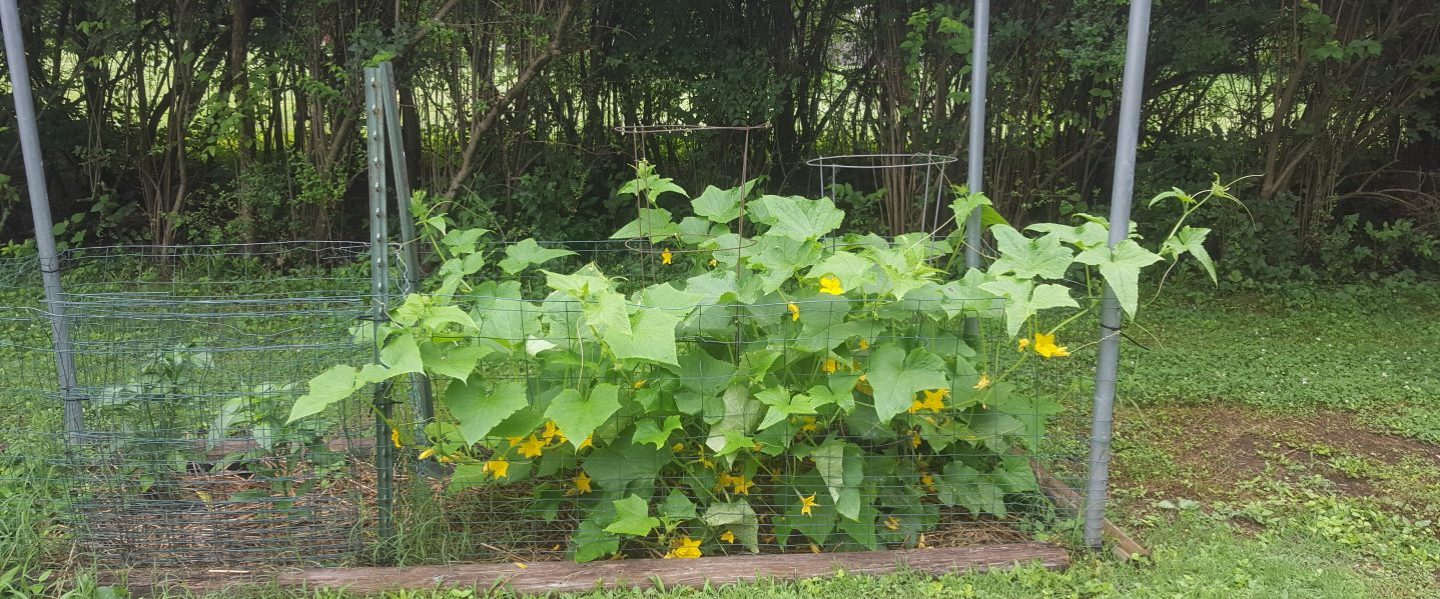
With the sun below the tree line, my garden is pleasant this early in the morning. But my cucumbers tell the story. They are dying under the relentless heat. The soaker hose brings them water every morning and blossoms emerge as the plants struggle to produce. I admire their determination. Perhaps the heat will moderate, and the cucumbers will survive. I wish there was more I could do for them.

As I head indoors, I feel almost guilty. My cucumbers do not have the luxury of coming with me. Due to circumstances beyond their control, the cucumber plants must stay outside under the grueling heat all day. Suddenly I see the woman at the intersection who spends the entire day walking back and forth under the sun with her cardboard sign. Did circumstances beyond her control put her there; keep her there? Did some bad decision twenty years ago make her stand under the sun today?

I don’t walk in my garden in the heat of the day, but many people don’t have the luxury of avoiding the heat. They may work outside. They may live outside.

The topper on my boat was bent during a storm on Father’s Day. Now when I go out on the lake, I go in the morning before it gets too hot, at least until I get the topper fixed. And I spend a lot of time in the water. What if these luxuries were not available to me? Would I be strong enough to stand beside this woman at the intersection for even an hour? Or would I, like my cucumber vines, wither in the heat?

How did our ancestors manage? Were they that much stronger than I am, or did they not have any alternatives? Drought and famine caused Jacob and his family to cross the desert and move to Egypt, caused Naomi to move to Moab and return with Ruth. Economic hardships have brought millions of families to the United States from every continent. I have never faced that level of heat.

But many people face it every day.

Not all my garden suffers. The tomatoes have fruit; the peppers have budding flowers; the basil is thriving. But my cucumbers are hurting.

For just as the body is one and has many members, and all the members of the body, though many, are one body, so it is in Christ…that there may be no dissension within the body, but the members may have the same care for one another. If one member suffers, all suffer together with it. 1 Corinthians 12:12,25-26.

We have become divided, and some members of our body are suffering. I do not have the answer for this except to pray and care for one another. The cool weather which was good for my sugar snaps would stunt my peppers and tomatoes. The heat which is wilting my cucumbers is encouraging my basil and fig to grow.

I can’t make it cooler for my cucumbers. I am not sure God would want me to if I could. Perhaps my call is simply to do what I am doing. Give them water, give them some added nutrients, do what I can to help them survive the heat. God may have a higher purpose in the heat, drought, and famine. He may be building a nation in exile. He may be bringing Ruth to a new husband. He may be populating a new country with a mix of nationalities. He may be growing new things in His garden.

What I can do is love. Love my garden, love nature, love people, love the church, the body of Christ.

Love is patient; love is kind; love is not envious or boastful or arrogant or rude. It does not insist on its own way; it is not irritable or resentful. It does not rejoice in wrongdoing but rejoices in the truth. It bears all things, believes all things, hopes all things, endures all things. 1 Corinthians 13:4-7.

I will strive today to not demand my own way, to not be irritable and resentful, to endure all things. Even the heat.

Love in Christ, Betsy